
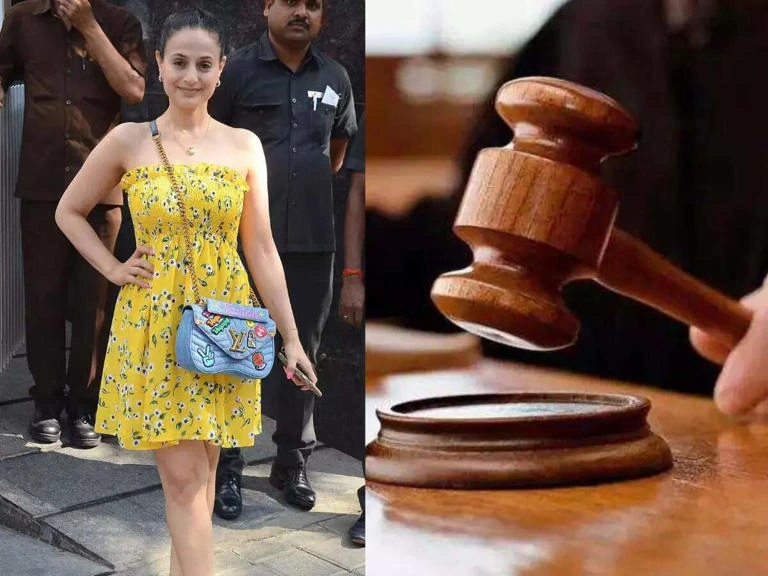
Ameesha Patel Faces Non-Bailable Warrant in Cheque Bounce Case After Rajpal Yadav? Here’s What the Actor Said
17-feb-2026, 12:50 PM The entertainment industry is once again in the spotlight—not for a film release or a box-office clash—but for legal trouble involving prominent actors. After recent reports surrounding Rajpal Yadav, fresh headlines now claim that Ameesha Patel is facing a non-bailable warrant in connection with a cheque bounce case.
But what exactly is the case about? Has a warrant really been issued? And what has Ameesha Patel said in response? Here’s a detailed breakdown of the controversy that has stirred conversations across the entertainment industry.
What Is the Cheque Bounce Case About?
Cheque bounce cases fall under Section 138 of the Negotiable Instruments Act in India. Such cases typically arise when a cheque issued by an individual or company is dishonoured by the bank due to insufficient funds or other technical reasons.
In Ameesha Patel’s case, reports suggest that the matter relates to financial transactions involving film production commitments. Allegedly, a cheque issued in connection with a professional agreement was dishonoured, leading the concerned party to initiate legal proceedings.
While legal disputes in the entertainment industry are not uncommon—especially in film financing and production agreements—what makes this case headline-worthy is the mention of a non-bailable warrant (NBW).
What Is a Non-Bailable Warrant?
A non-bailable warrant is issued by a court when an accused repeatedly fails to appear before the court despite summons or bailable warrants. It is considered a serious procedural step and is usually issued to ensure the presence of the accused during legal proceedings.
However, the issuance of a warrant does not automatically imply guilt. It is part of a legal process aimed at ensuring cooperation with the judicial system.
Ameesha Patel’s Response
Soon after reports about the alleged non-bailable warrant surfaced, Ameesha Patel reportedly addressed the matter. According to statements attributed to her, the actor clarified that:
The matter is sub-judice (under legal consideration).
There has been misinformation circulating regarding the nature of the warrant.
Her legal team is handling the situation appropriately.
Sources close to the actor suggest that she has denied any deliberate wrongdoing and emphasized that the issue is being legally addressed.
In such cases, it is common for celebrities to rely on their legal counsel to resolve disputes quietly rather than engage in public back-and-forths.
A Pattern? Rajpal Yadav’s Legal Troubles
Interestingly, this development comes shortly after reports involving Rajpal Yadav surfaced in connection with a financial dispute case. While the two cases are unrelated legally, the timing has drawn public attention.
Rajpal Yadav’s case also reportedly revolved around financial obligations and cheque dishonour proceedings. Legal issues of this nature are often complex and can stretch over several years due to procedural requirements and appeals.
The coincidence of two high-profile actors facing similar financial allegations has fueled online discussions about accountability in the film industry.
Financial Disputes in Bollywood: Not Uncommon
The Hindi film industry, often referred to as Bollywood, operates on large-scale investments and intricate contractual agreements. Delays in film releases, production setbacks, distributor disagreements, and financing gaps sometimes lead to financial conflicts.
Cheque bounce cases involving actors or producers have surfaced in the past as well. These disputes usually stem from:
Film production funding arrangements
Profit-sharing agreements
Advance payments and signing amounts
Event appearance fees
In many situations, such matters are eventually settled outside court through negotiation.
Ameesha Patel’s Career and Public Image
Ameesha Patel rose to fame with blockbuster hits in the early 2000s and remains a recognizable name in the industry. Her recent return to mainstream attention through major projects has kept her in the public eye.
Legal controversies, however, can impact public perception—even when the final outcome remains undecided. In the age of social media, headlines often travel faster than verified court orders, leading to confusion among fans.
For celebrities, maintaining transparency while respecting legal boundaries becomes crucial during such times.
Legal Experts Weigh In
Legal experts often emphasize that cheque bounce cases, though serious, are civil-criminal hybrid matters. They typically begin with a legal notice demanding payment within 15 days. If unresolved, a complaint is filed in court.
The court may issue summons. If the accused does not appear, the court can escalate the matter to a bailable warrant and eventually to a non-bailable warrant.
However, courts also allow remedies such as:
Filing for anticipatory bail
Challenging the warrant in a higher court
Seeking settlement through compromise
Therefore, the issuance of an NBW does not automatically lead to arrest if the accused approaches the court promptly.
Social Media Reactions
As expected, social media platforms have been buzzing with mixed reactions:
Some users are demanding accountability.
Others are urging caution, reminding people that legal proceedings must run their course.
Fans of Ameesha Patel have expressed support, calling for patience until official clarification emerges.
The digital age has amplified the speed at which legal news spreads, often without complete context.
Industry Silence or Support?
So far, there has been no significant public reaction from fellow actors or industry bodies regarding the reported warrant. In most cases involving ongoing litigation, industry peers prefer not to comment until matters are resolved.
The entertainment industry tends to treat financial disputes as private matters unless they escalate significantly.
What Happens Next?
The next steps in the case will depend on court proceedings. If a non-bailable warrant has indeed been issued, the actor’s legal team may:
Seek cancellation of the warrant
Appear before the court voluntarily
Attempt an out-of-court settlement
Legal processes in such cases can take time, and developments may unfold gradually.
Conclusion
The reports of a non-bailable warrant against Ameesha Patel in a cheque bounce case have certainly grabbed attention, especially following recent headlines involving Rajpal Yadav. However, it is important to remember that legal proceedings are part of due process and do not determine guilt at this stage.
Ameesha Patel has reportedly maintained that her legal team is handling the matter and that misinformation may be circulating. As the case progresses, clarity will emerge through official court updates.
Until then, the situation serves as a reminder of how financial disputes—even in glamorous industries—can quickly become public controversies.
For now, all eyes remain on the legal developments ahead.