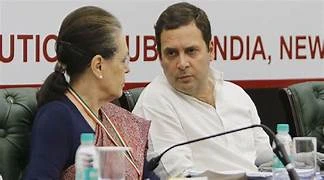
Congress Announces UP Assembly Gherao in Lucknow, Leaders Placed Under House Arrest
17-feb-2026, 12:07 PM Political tensions in Uttar Pradesh intensified after the Indian National Congress announced a large-scale “Vidhan Sabha gherao” in Lucknow. Ahead of the planned protest, authorities placed several Congress leaders under house arrest, citing concerns over law and order. The development has triggered a fresh political confrontation in India’s most politically significant state.
The episode reflects deeper tensions between the ruling establishment and the opposition, with both sides framing the situation through sharply contrasting narratives — one of democratic dissent and the other of preventive security action.
The Background of the Protest
The Congress party declared its intention to gherao the Uttar Pradesh Assembly as part of a broader protest campaign against the state government. Party leaders alleged failures in governance, citing concerns over unemployment, inflation, farmer distress, women’s safety, and administrative inefficiencies.
According to Congress officials, the protest was meant to amplify the voices of ordinary citizens and bring pressing issues directly to the state legislature’s doorstep. They described the gherao as a “peaceful democratic action” aimed at holding the government accountable.
However, the announcement immediately triggered heightened security preparations in Lucknow, particularly around the Vidhan Sabha complex, a high-security zone.
Preventive House Arrests
In a move that escalated tensions, local authorities reportedly placed several senior Congress leaders under house arrest before they could mobilize supporters. Police also imposed restrictions on gatherings in sensitive areas and erected barricades to prevent large crowds from approaching the Assembly premises.
Officials justified the preventive measures by pointing to the possibility of traffic disruptions, public inconvenience, and security risks near the legislative building. The administration emphasized its responsibility to maintain order and prevent any untoward incidents.
Congress leaders, however, strongly criticized the action. They accused the state government of misusing police powers to suppress opposition voices and weaken democratic protest.
A Constitutional Question
The confrontation has revived debate over the constitutional balance between the right to protest and the state’s authority to impose restrictions.
Article 19 of the Indian Constitution guarantees citizens the right to freedom of speech and peaceful assembly. At the same time, these rights are subject to “reasonable restrictions” in the interest of public order and security.
Supporters of the Congress argue that preventive house arrests undermine democratic norms and discourage legitimate political expression. They contend that peaceful protests are fundamental to a functioning democracy and should not be preemptively curtailed.
On the other hand, defenders of the administration argue that large-scale mobilizations near government institutions can pose genuine risks and require precautionary steps.
Political Strategy at Play
Uttar Pradesh is not just any state — it is India’s most populous and politically influential region. With 80 Lok Sabha seats and a history of shaping national political trends, developments in UP often carry broader implications.
For the Congress party, which has struggled to regain its former strength in the state, visible protest actions serve multiple purposes:
-
Re-engaging grassroots workers
-
Attracting media attention
-
Demonstrating active opposition
-
Building momentum ahead of future elections
Political analysts suggest that such mobilizations are part of a broader strategy to rebuild organizational energy and public visibility.
For the ruling establishment, maintaining control and projecting administrative stability remains equally important. Strong preventive action can be framed as decisive governance, especially if public disruption is avoided.
Escalating Rhetoric
Following the house arrests, Congress leaders accused the government of fearing public accountability. Party spokespersons claimed the restrictions expose “intolerance toward dissent.”
Meanwhile, ruling party representatives defended the action as necessary and proportionate. They argued that opposition parties must adhere to established procedures when organizing demonstrations.
This rhetorical battle has spilled onto social media platforms, where party supporters are amplifying competing narratives. The episode highlights how modern political contests extend beyond physical spaces into digital arenas.
Public Perception and Electoral Impact
How the public interprets the episode could influence future political outcomes. In Indian politics, perceptions of fairness, strength, and responsiveness often matter as much as policy substance.
If voters perceive the Congress as being unfairly restrained, it may gain sympathy. Conversely, if the protest is seen as disruptive or politically opportunistic, the ruling party may benefit.
Much depends on how effectively each side communicates its narrative in the coming days.
A Pattern in State Politics
Preventive detentions and house arrests during politically sensitive events are not new in Indian state politics. Governments across party lines have historically used similar measures during periods of anticipated unrest.
However, each instance reignites debate about the limits of executive authority and the health of democratic institutions.
In Uttar Pradesh, where political competition is intense and voter mobilization is critical, such confrontations are likely to remain part of the political landscape.
Broader Implications
The episode also reflects a broader national conversation about dissent and governance. Across India, opposition parties frequently accuse governments of restricting protests, while administrations argue that public safety must take precedence.
This recurring tension is part of the evolving dynamic between authority and opposition in a vibrant but contested democracy.
For Congress, the UP Assembly gherao represents more than a single protest — it is a symbolic assertion of political relevance in a state where it seeks revival.
For the government, preventing potential unrest reinforces its message of maintaining order and stability.
Conclusion
The announcement of a UP Assembly gherao by the Indian National Congress and the subsequent house arrests of party leaders have intensified the political climate in Uttar Pradesh. What began as a protest call has evolved into a broader debate about democratic rights, state authority, and political strategy.
As both sides sharpen their positions, the episode underscores the competitive and often confrontational nature of Indian state politics. Whether the confrontation translates into tangible political gains for either side will depend on public sentiment, media framing, and the broader electoral context.
For now, Lucknow remains the focal point of a significant political flashpoint — one that reflects the ongoing tension between protest and power in India’s democratic system.