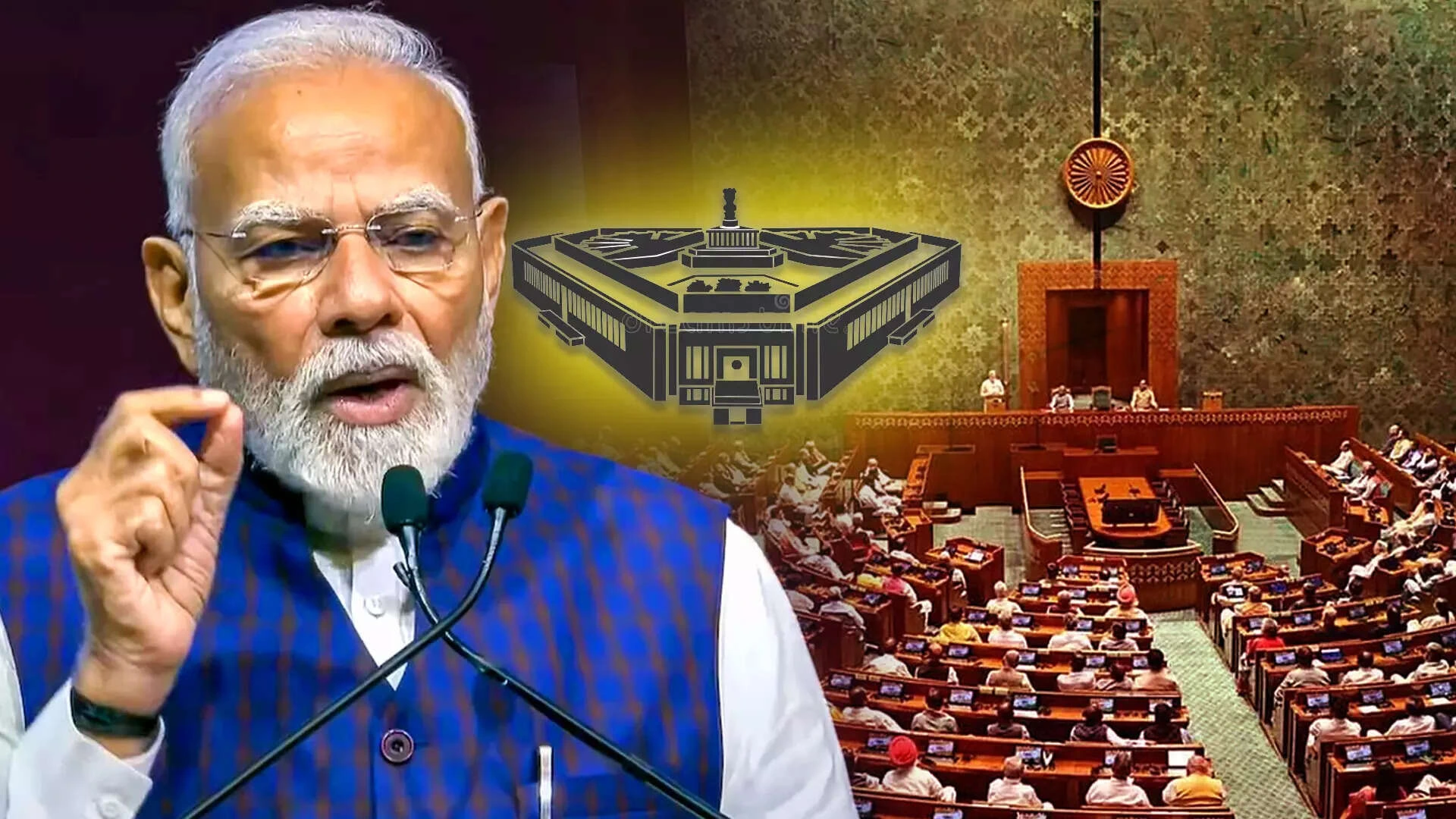
28-FEB-2026, 2:51 PM A high-voltage political showdown unfolded in the Parliament of India as opposition parties mounted a sharp attack on the government over a newly introduced bill. The debate quickly escalated into heated exchanges, repeated disruptions, and strong remarks from both sides of the aisle.
The controversial legislation has sparked intense political reactions, reflecting deeper divisions between the ruling alliance and opposition benches.
What Sparked the Debate?
The new bill, introduced during the ongoing parliamentary session, aims to bring significant policy changes. While the government describes it as a reform-driven measure designed to modernize governance and streamline administration, opposition parties argue that it requires wider consultation and deeper scrutiny.
Opposition leaders questioned:
The urgency behind the bill
The scope of executive powers under the proposal
The potential impact on federal principles
The lack of detailed public consultation
These concerns led to loud protests and adjournments during proceedings.
Government Defends the Bill
The ruling party strongly defended the proposed legislation, stating that it is in the national interest and aligns with long-term development goals. Ministers emphasized that the bill followed due parliamentary procedure and was introduced after internal deliberations.
Government representatives argued that reform-oriented legislation often faces resistance but remains necessary for growth and institutional efficiency.
They also pointed out that amendments and suggestions can be discussed during the legislative process.
Opposition’s Core Arguments
Opposition parties maintained that the bill contains provisions that could potentially centralize authority or dilute institutional autonomy.
Their key demands include:
Referral to Standing Committee: Opposition leaders are urging the government to send the bill to a parliamentary committee for detailed clause-by-clause examination.
Extended Debate Time: They insist that the House should allocate sufficient time for comprehensive discussion.
Transparency Measures: Critics argue that more public consultation is needed before final approval.
According to opposition members, such major legislative changes must not be rushed.
Heated Exchanges and Disruptions
The debate witnessed slogan-shouting, verbal confrontations, and frequent interruptions. On multiple occasions, proceedings had to be adjourned to restore order.
Political analysts note that heightened polarization has made parliamentary consensus increasingly difficult in recent years.
Despite disruptions, both sides used the platform to articulate their narratives.
Political Context
The confrontation comes at a politically sensitive time, with several state elections approaching. Political observers suggest that the debate over the bill could influence campaign narratives.
The ruling alliance, led by Narendra Modi, has positioned itself as reform-focused and decisive. Meanwhile, opposition parties are projecting themselves as protectors of constitutional balance and democratic processes.
The clash reflects broader ideological differences rather than just technical objections to the bill.
Role of Parliamentary Committees
Parliamentary standing committees play a vital role in India’s legislative system. They allow experts, stakeholders, and lawmakers to examine bills in detail and suggest improvements.
Opposition leaders argue that referring the bill to a committee would:
Enhance transparency
Encourage bipartisan cooperation
Improve the quality of legislation
The government, however, may weigh the political cost of delay against the demand for deeper review.
Public and Expert Reactions
Outside Parliament, legal scholars, policy analysts, and civil society groups have begun evaluating the proposed legislation.
Some experts believe the bill could improve administrative efficiency, while others caution that safeguards must be clearly defined.
Social media discussions have amplified the debate, with supporters and critics presenting contrasting interpretations.
Broader Implications
Legislative confrontations often carry implications beyond the immediate bill. They influence:
Public trust in institutions
Political alliances
Investor sentiment
Policy continuity
A prolonged deadlock could affect legislative productivity during the session.
Can a Middle Ground Be Found?
Historically, major bills have undergone revisions following political negotiations. Backchannel discussions between party leaders sometimes lead to compromises that ease tensions.
Possible outcomes include:
Acceptance of amendments
Referral to committee with a fixed timeline
Passage with majority support amid protests
The coming days will reveal whether consensus or confrontation dominates.
Democratic Process in Action
While disruptions can hamper proceedings, intense debates are also part of a vibrant democracy. Parliament serves as a forum for accountability, where laws are scrutinized and challenged.
The strength of democratic institutions lies in the ability to accommodate differing views through structured dialogue.
Conclusion
The heated debate over the new bill highlights the dynamic and often contentious nature of India’s parliamentary democracy. The government remains firm on its reform agenda, while the opposition continues to demand greater scrutiny and consultation.
As discussions progress in the Parliament of India, the focus will be on whether dialogue can replace disruption and whether bipartisan cooperation can shape the final outcome.
In the end, legislative decisions carry long-term consequences, making transparent debate and informed consensus essential pillars of democratic governance.