
Introduction
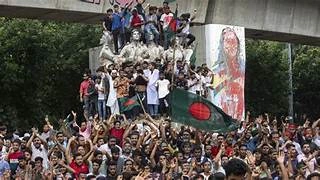
Political shifts in Bangladesh are drawing close attention in New Delhi. With the growing influence of Jamaat and the possibility of a Bangladesh Nationalist Party (BNP)-led government, questions are emerging about the future of India–Bangladesh relations.
Could Jamaat’s rise reshape diplomatic equations? And what strategic pressures might India face if BNP returns to power?
Understanding the Political Shift
Bangladesh’s political landscape has traditionally revolved around two major forces:
-
The ruling Awami League
-
The opposition Bangladesh Nationalist Party (BNP)
Historically, India has enjoyed relatively stable ties under Awami League leadership. However, a stronger BNP influence — especially with Jamaat-backed support — may introduce new variables into the bilateral relationship.
Why India Is Watching Closely
India and Bangladesh share:
-
A 4,000+ km border
-
Strong trade relations
-
Security cooperation
-
Water-sharing agreements
-
Counter-terrorism coordination
Any political realignment in Dhaka could affect:
-
Border security policies
-
Regional connectivity projects
-
Trade and transit agreements
-
Strategic cooperation in the Bay of Bengal
Potential Strategic Pressures
1️⃣ Security Concerns
India has previously raised concerns over extremist elements in the region. A shift in political alliances could complicate security coordination.
2️⃣ Geopolitical Balancing
Bangladesh plays a key role in the Indo-Pacific region. A change in leadership might influence Dhaka’s approach toward China, the US, and India.
3️⃣ Economic Agreements
Infrastructure and connectivity projects linking India’s Northeast to Bangladesh may face renegotiation or slower execution depending on political priorities.
Economic Interdependence Remains Strong
Despite political shifts, both countries benefit from:
-
Growing bilateral trade
-
Energy cooperation
-
Cross-border infrastructure
-
Cultural and people-to-people ties
Economic pragmatism often acts as a stabilizing factor, even when political narratives change.
Diplomatic Outlook
India is likely to adopt a cautious yet engagement-focused approach, maintaining open diplomatic channels regardless of electoral outcomes. Strategic partnerships in South Asia are increasingly shaped by long-term economic interests rather than short-term political shifts.
Conclusion
Jamaat’s rise and a potential BNP-led government could introduce new strategic pressures in India–Bangladesh ties. However, deep economic and geographic interdependence suggests that cooperation will continue, albeit with possible recalibrations.
The coming months will reveal whether political changes in Dhaka lead to diplomatic friction or a carefully managed transition in bilateral relations.


One thought on “Will Jamaat’s Rise Recast India–Bangladesh Ties? Under BNP, New Strategic Pressures May Emerge”