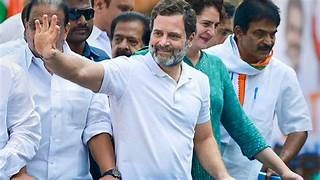
21-feb-2026, 11:51 AM In a development with significant political resonance, Congress leader and Leader of the Opposition in the Lok Sabha, Rahul Gandhi, appeared before a magistrate’s court in Bhiwandi, Maharashtra, on February 21, 2026, in connection with a long-running defamation case filed against him by a local activist of the Rashtriya Swayamsevak Sangh (RSS). The case stemmed from comments Gandhi made during the 2014 Lok Sabha elections and has resurfaced in the political spotlight as legal proceedings continue.
Background: The Origins of the Case
The defamation case dates back to a rally in Sonale village near Bhiwandi during the 2014 general election campaign. At that event, Rahul Gandhi allegedly stated that the RSS was responsible for the assassination of Mahatma Gandhi—a highly sensitive and controversial assertion. The remarks prompted Rajesh Kunte, an RSS activist, to file a complaint under Section 500 of the Indian Penal Code (IPC) alleging that Gandhi’s comment defamed the organisation and harmed its reputation.
Since then, the case has seen numerous procedural developments, including earlier hearings, adjournments, and legal arguments by both sides. It has periodically resurfaced, reflecting underlying political tensions between the Congress party and organisations aligned with the broader Hindutva movement.
Latest Developments: Court Appearance in 2026
On February 21, 2026, Rahul Gandhi appeared personally before the Bhiwandi Additional Sessions Court as instructed by the magistrate. His appearance was not on fresh charges but rather to complete procedural formalities — specifically to furnish a fresh surety (guarantor) due to the death of his earlier guarantor, former Union Minister Shivraj Patil Chakurkar. The magistrate required Gandhi’s presence to finalize this requirement in the ongoing trial proceedings.
Gandhi was reportedly advised by his counsel, Advocate Narayan Iyer, that the current stage of the trial involves procedural submissions rather than substantive witness examination, with much of the complainant’s testimony already recorded.
Political Context and Reaction
Gandhi’s court appearance is unfolding within a fraught political climate. As he travelled from Mumbai to Bhiwandi, footage and reports from various news outlets indicated that workers from the Bharatiya Janata Party were displaying black flags in protest — a symbolic gesture of dissent and political opposition. Police forces were deployed on heightened alert to ensure security and prevent disruptions around the court premises.
This response underscores how legal proceedings against high-profile political figures often intersect with public political expression, particularly in a setting where polarization and ideological competition remain pronounced.
Legal Significance of the Case
From a legal standpoint, the Bhiwandi RSS defamation case is noteworthy for several reasons:
Longevity and Complexity:
Originating from a 2014 remark, the proceedings have stretched over more than a decade, highlighting how defamation cases in India—especially those involving political speech—can entail prolonged legal engagement.Procedural Requirements:
The latest court appearance was largely procedural—focused on administration, sureties, and court formalities rather than new allegations—yet it reinforces the judiciary’s insistence on compliance within established criminal procedures.Defamation Law in India:
The case continues under Section 500 of the IPC, which deals with criminal defamation. Critics and legal experts have debated the relevance and impact of criminal defamation provisions in politically charged contexts like this, especially when public figures are involved.
In earlier phases of the legal battle, Gandhi had even approached higher courts on related legal questions, including seeking the quashing of the case—demonstrating the interplay between lower court directives and broader judicial review.
Political Implications and Public Discourse
The renewed attention on this case carries clear political implications:
Congress’ Position:
For Gandhi and the Congress party, the court appearance and legal defense against a decade-old complaint may be framed to some supporters as standing firm on free speech and resisting politically motivated legal pressure.Opposition Messaging:
Political adversaries, particularly the BJP and its allied organisations, have used the case to question Gandhi’s rhetoric and positions, reinforcing their broader narrative around responsibility in public discourse.Media and Public Debate:
Media coverage across national and regional outlets has highlighted both the legal process and the political reactions, contributing to broader public debate on whether defamation law should be reformed or reinterpreted in contemporary political contexts.
Looking Ahead
While the February 21 proceedings addressed formalities, the broader trajectory of the case remains unresolved. Future hearings may delve deeper into legal arguments, witness testimony, and potential appeals, depending on how both parties choose to advance their positions.
For observers of Indian politics, this development serves as a reminder of how legal mechanisms can intersect with political history, speech, and rivalry. Regardless of the outcome, the Bhiwandi defamation case will continue to attract scrutiny for its legal intricacies and political symbolism.
Conclusion
Rahul Gandhi’s appearance before the Bhiwandi court in the RSS defamation case highlights the continuing journey of a politically sensitive legal matter that started more than a decade ago. While the immediate proceedings were procedural, the broader implications—legal, political, and symbolic—capture the complex landscape of public discourse, accountability, and political contestation in India.
This court appearance is both a legal obligation and a touchpoint for political narratives as India moves closer to future elections and intensifies public debate.
Source: ABP NEWS