
Your daily dose of news, covering the latest updates in politics, business, sports, entertainment, and more from India and around the world.
Your daily dose of news, covering the latest updates in politics, business, sports, entertainment, and more from India and around the world.
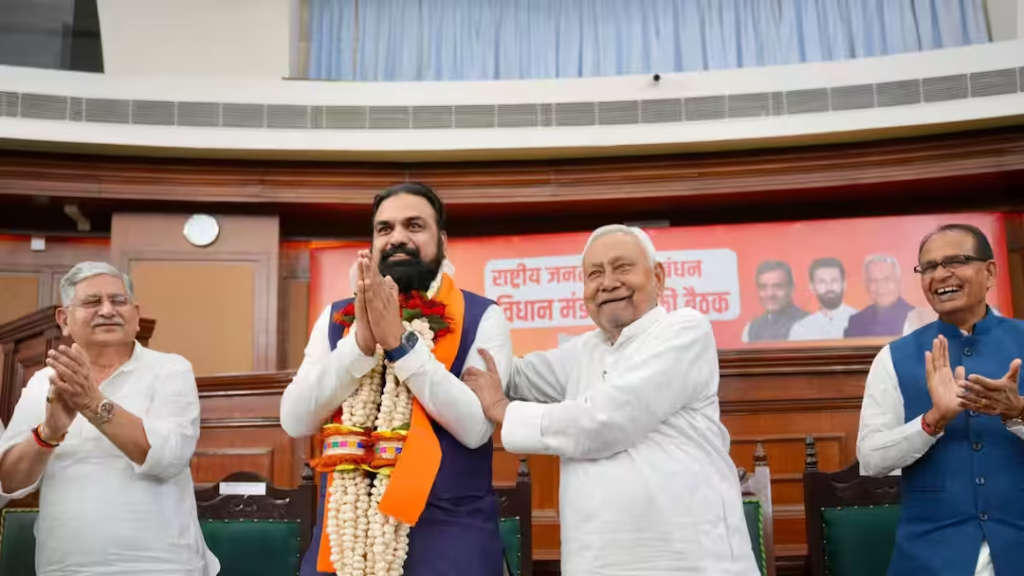
Bihar politics witnessed a significant development after veteran leader Nitish Kumar stepped down from the Chief Minister’s post, paving the way for a new leadership chapter in the state. Following his resignation, senior BJP leader Samrat Choudhary moved swiftly to stake claim to form the government, marking what could be one of the most important political transitions in Bihar in recent years.
The development has generated widespread discussion across political circles, as it signals a major shift in the balance of power within the National Democratic Alliance (NDA). Political observers believe the transition could influence governance, alliance dynamics, and future electoral strategies in Bihar.
With the focus now shifting toward government formation and administrative priorities, the state is entering a new political phase that could shape its direction in the coming years.
After a series of meetings involving alliance leaders and party representatives, Samrat Choudhary emerged as the consensus choice for leadership.
His selection reflects the growing influence of the BJP in Bihar and highlights the party’s efforts to strengthen its position in one of India’s most politically significant states.
Known for his active involvement in state politics, Choudhary has built a reputation as an experienced leader with strong organizational support.
Key Factors Behind His Selection
His appointment is being viewed as a strategic move aimed at ensuring continuity while introducing a fresh leadership approach.
Nitish Kumar has been one of the most influential political figures in Bihar for nearly two decades.
His tenure witnessed major developments in infrastructure, governance, education, and public welfare initiatives. Over the years, he played a central role in shaping Bihar’s political landscape and remained one of the state’s most recognizable leaders.
Nitish Kumar’s Political Legacy
His resignation marks the conclusion of an important chapter in Bihar’s political history.
Even after stepping down, analysts believe Nitish Kumar may continue to remain an influential figure in state politics through advisory and strategic roles.
The latest development is being described as historic because it places the BJP at the forefront of governance in Bihar in a way not seen before.
For years, coalition politics in the state revolved around strong regional leaders and alliance equations. The current transition signals a changing political landscape.
Why The Shift Is Significant
Political experts believe the change could redefine political strategies ahead of upcoming state and national elections.
Following the leadership announcement, attention quickly shifted toward government formation.
The process involves consultations with alliance partners, allocation of responsibilities, and the creation of a cabinet capable of managing key administrative functions.
Immediate Priorities
The coming weeks are expected to be crucial as the new administration begins outlining its policy priorities.
Coalition politics has long played a significant role in Bihar.
Even with a leadership transition, maintaining cooperation among alliance partners remains essential for political stability and effective governance.
Areas Requiring Coordination
Political observers note that successful coordination within the alliance will be key to ensuring smooth governance.
With a new government taking shape, citizens across Bihar have high expectations regarding development and governance.
Residents are looking for continued progress in infrastructure, employment opportunities, education, healthcare, and public services.
Key Issues Likely To Receive Attention
Addressing these priorities could play an important role in shaping public perception of the new administration.
Bihar has made progress in several areas over the past decade, but challenges remain.
Economic development is expected to remain one of the central themes of the new government’s agenda.
Potential Areas Of Focus
Experts believe attracting investment and generating employment opportunities will be among the administration’s major goals.
The leadership transition is not only important for Bihar but may also have implications for national politics.
Bihar remains one of India’s most politically influential states, and developments there are often closely watched by parties across the country.
Broader Political Impact
Analysts suggest that the transition could become an important case study in coalition politics and leadership change.
Every new administration faces expectations as well as challenges.
The incoming leadership will need to balance governance responsibilities, alliance management, and public expectations simultaneously.
Key Challenges
How these challenges are addressed will determine the government’s long-term success.
The emergence of Samrat Choudhary as the leader tasked with forming the government marks a significant moment in Bihar’s political journey. Following Nitish Kumar’s resignation, the state now enters a new phase characterized by fresh leadership, evolving political equations, and renewed public expectations.
While the transition represents a major political shift, the focus now turns toward governance, development, and policy execution. Citizens, political observers, and stakeholders will closely watch how the new administration addresses key challenges and builds on the state’s progress.
As Bihar begins this new chapter, the decisions taken in the coming months are likely to influence not only the state’s future but also broader political discussions across the country.
Source: ANI

Your trusted source for news, updates, and insights from India and around the world.
Copyright © 2020–2026 NEWSHOTS. All Rights Reserved.