
Your daily dose of news, covering the latest updates in politics, business, sports, entertainment, and more from India and around the world.
Your daily dose of news, covering the latest updates in politics, business, sports, entertainment, and more from India and around the world.
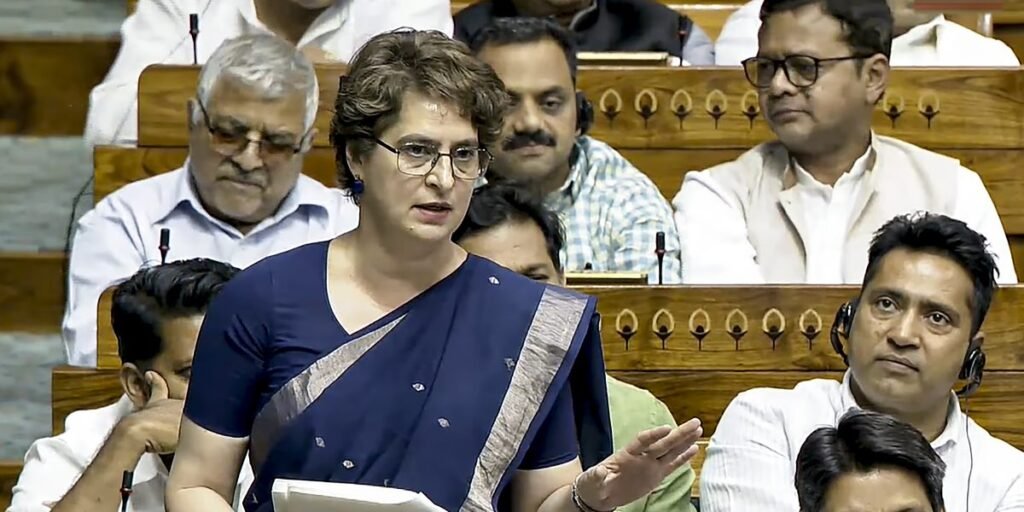
A major political debate has emerged over the Women’s Reservation Bill, with the government and opposition parties engaging in a sharp confrontation over its implementation and related electoral reforms. What began as a discussion on increasing women’s representation in legislatures has evolved into a broader debate involving electoral boundaries, parliamentary representation, and the future structure of India’s democratic system.
The issue has generated widespread attention across political circles, with leaders from various parties expressing differing views on how reforms should be implemented. While there is broad agreement on the importance of increasing women’s participation in politics, disagreements over the proposed framework have created significant divisions.
The debate has become one of the most closely watched political developments, highlighting the challenges involved in achieving consensus on major constitutional and electoral reforms.
The controversy centers around proposals related to women’s representation in legislative bodies and the broader discussion surrounding electoral reforms.
Supporters of the proposal argue that increasing women’s participation in decision-making institutions is necessary for strengthening democratic representation. However, concerns emerged when discussions around reservation became linked to issues such as constituency restructuring and future electoral adjustments.
As a result, political parties that otherwise support greater representation for women have expressed different opinions regarding the timing and implementation of the reforms.
The disagreement has transformed the issue into a major political flashpoint both inside and outside Parliament.
The government has described the proposal as an important step toward improving representation and strengthening democratic participation.
According to government leaders, increasing opportunities for women in legislative institutions has been a long-standing objective that deserves broad political support.
Key Arguments Presented By The Government
Government representatives have argued that reforms should be viewed as part of a broader effort to modernize India’s democratic framework.
They maintain that such measures are intended to improve participation and strengthen governance over the long term.
While many opposition parties support the principle of women’s reservation, several leaders have questioned aspects of the proposed implementation process.
Opposition representatives argue that important constitutional reforms should be developed through wider consultation and consensus-building.
Concerns Raised By Opposition Leaders
Several leaders have emphasized that their objections relate to implementation mechanisms rather than the objective of increasing women’s representation.
This distinction has become an important part of the political debate.
One of the most discussed aspects of the debate involves electoral representation and constituency distribution.
Political parties from different regions have expressed varying views on how representation should evolve in the future.
The discussion has extended beyond women’s reservation and entered a broader conversation about balancing population-based representation with regional interests.
Factors Driving The Debate
Political observers note that these issues have historically generated significant debate because they directly affect representation within democratic institutions.
Despite the sharp political disagreements, most parties continue to acknowledge the importance of increasing women’s participation in politics.
Experts have frequently pointed out that higher representation can contribute to broader perspectives in policymaking and governance.
Potential Benefits Of Greater Representation
The widespread support for these objectives demonstrates that the debate is largely centered on implementation rather than the principle itself.
The discussion surrounding women’s reservation is not new.
For decades, political leaders, activists, and policy experts have debated ways to improve representation within legislative institutions.
Over the years, several proposals have been introduced, modified, and discussed across different political forums.
Why The Issue Has Persisted
As a result, progress has often depended on negotiations among multiple stakeholders.
The current debate represents another chapter in this long-running national discussion.
The issue has generated attention beyond political circles.
Civil society groups, academics, legal experts, and citizens have shared their views regarding the importance of representation and democratic reform.
Many observers believe the discussion presents an opportunity to revisit broader questions about political participation and institutional inclusiveness.
Topics Being Discussed Publicly
Public engagement has expanded the conversation beyond parliamentary proceedings and brought greater attention to the underlying issues.
Political analysts often emphasize that public confidence is essential for the success of democratic institutions.
Major reforms frequently require careful planning, transparent communication, and broad stakeholder participation.
Elements That Strengthen Public Trust
Supporters of reform argue that these principles can help build confidence regardless of political differences.
Following the recent political confrontation, attention is likely to shift toward future discussions and possible revisions to the proposals.
Political parties may continue negotiations in an effort to find common ground on areas where agreement is possible.
Potential Developments Ahead
Observers expect the issue to remain part of the national political conversation for the foreseeable future.
The ongoing clash between the government and opposition over the Women’s Reservation Bill highlights the complex relationship between representation, electoral reform, and democratic governance.
While disagreements remain regarding the best path forward, the broader discussion has drawn attention to important questions about inclusiveness and participation in public institutions.
The coming months may determine whether political leaders can bridge their differences and move toward a framework that balances competing concerns while advancing the goal of greater representation.
Regardless of the immediate outcome, the debate has already reinforced the importance of dialogue, consensus-building, and democratic engagement in shaping the future of India’s political landscape.
Source: Indian Express

Your trusted source for news, updates, and insights from India and around the world.
Copyright © 2020–2026 NEWSHOTS. All Rights Reserved.