
Your daily dose of news, covering the latest updates in politics, business, sports, entertainment, and more from India and around the world.
Your daily dose of news, covering the latest updates in politics, business, sports, entertainment, and more from India and around the world.
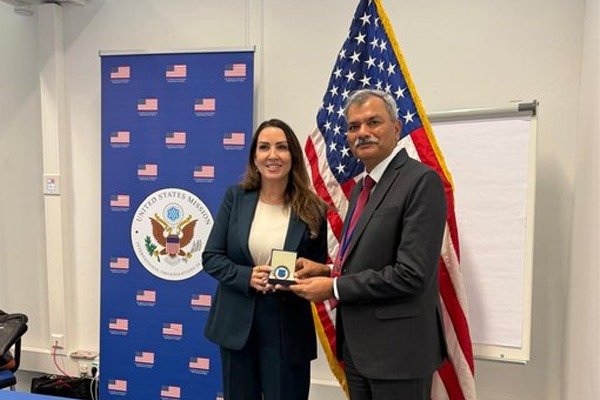
India and the United States have taken another important step toward strengthening their strategic partnership through renewed discussions on counter-narcotics cooperation. Senior officials from both countries recently held talks focused on tackling drug trafficking networks, synthetic narcotics, cross-border smuggling, and emerging challenges posed by organized criminal groups operating across international borders.
The discussions reflect a growing recognition that drug trafficking is no longer a problem confined to individual nations. Modern narcotics networks operate globally, using advanced technology, encrypted communication systems, and complex supply chains to move illegal substances across countries and continents.
As both nations continue to face challenges related to narcotics trafficking, the latest talks underline the importance of intelligence sharing, joint operations, and technological collaboration in addressing one of the world’s most persistent security threats.
Drug trafficking has evolved significantly over the past decade. Criminal organizations now use sophisticated methods to manufacture, transport, and distribute illegal substances across multiple countries.
Governments worldwide are increasingly concerned about:
Officials from India and the United States believe that international cooperation is essential because drug trafficking networks often operate across multiple jurisdictions, making unilateral action less effective.
The latest discussions focused on building stronger partnerships that allow agencies in both countries to respond more quickly to emerging threats.
Source: ANI
One of the most important outcomes of the discussions was the emphasis on enhanced intelligence sharing.
Representatives from both nations highlighted the importance of swift information exchange in uncovering criminal networks at an early stage and disrupting their operations before they can grow further.
Key Areas Of Intelligence Cooperation
Experts highlight that strong intelligence-sharing cooperation often plays a crucial role in the success of international law enforcement efforts.
Unlike traditional Pharmaceuticals that rely heavily on agricultural production, synthetic substances can often be manufactured in laboratories using chemical compounds.
Why Synthetic Pharmaceuticals Are A Challenge
The United States continues to face challenges associated with synthetic opioids, while India has witnessed growing concerns related to the production and movement of synthetic substances through regional trafficking routes.
Officials believe that coordinated efforts are essential to identify production sources and curb the growth of illegal distribution networks.
Another key topic discussed during the meetings was the possibility of strengthening cooperation between enforcement agencies through coordinated operations.
Drug trafficking organizations often operate across borders, requiring agencies from multiple countries to work together.
Areas Of Operational Cooperation
Experts believe that stronger operational coordination can significantly improve the effectiveness of anti-narcotics efforts.
Collaborative operations allow authorities to address broader organized crime networks instead of concentrating solely on isolated trafficking cases.
Both India and the United States face challenges related to cross-border narcotics trafficking.
India’s strategic location places it in close proximity to key trafficking routes linked to major global drug-producing regions.
Meanwhile, the United States continues to combat large-scale drug inflows through international supply chains and criminal distribution networks.
Officials agreed that enhancing border security measures and upgrading surveillance systems continue to be key priorities.
Modern criminal organizations increasingly rely on technology to support illegal activities.
As a result, law enforcement agencies are investing in advanced digital tools to identify and disrupt trafficking operations.
Technology Areas Discussed
Technology has become a critical component of modern anti-narcotics strategies because traffickers frequently adapt their methods to avoid traditional enforcement mechanisms.
Officials emphasized the importance of staying ahead of emerging technological threats.
Beyond enforcement operations, both countries discussed expanding training and capacity-building programs.
These initiatives are designed to help investigators, analysts, and enforcement personnel develop the skills necessary to address increasingly sophisticated criminal activities.
Focus Areas For Training
Such programs help agencies strengthen operational capabilities and improve long-term effectiveness.
Experts note that investment in training often produces lasting benefits by enhancing institutional expertise.
Combating narcotics effectively requires a combination of robust enforcement measures and well-established legal frameworks.
Officials discussed ways to improve cooperation in areas related to legal procedures and policy implementation.
Key Topics Included
Policy coordination helps ensure that criminal networks cannot take advantage of differences between legal systems.
Both nations emphasized the importance of maintaining strong legal frameworks to support enforcement activities.
The significance of the discussions extends beyond bilateral relations.
As two major global partners, India and the United States play important roles in international efforts to combat drug trafficking.
Broader Benefits Include
Experts believe that successful collaboration between major countries can contribute to broader international security objectives.
The fight against narcotics trafficking increasingly requires multinational approaches due to the global nature of criminal organizations.
Despite progress in cooperation, several challenges continue to affect global anti-narcotics efforts.
Ongoing Challenges
Officials acknowledged that addressing these challenges will require continuous innovation and long-term commitment.
The evolving nature of drug trafficking means enforcement strategies must adapt regularly to remain effective.
Following the latest discussions, both countries are expected to continue implementing measures aimed at strengthening counter-narcotics cooperation.
Future priorities may include:
Officials from both nations have emphasized that sustained cooperation remains essential for addressing evolving narcotics threats.
As trafficking networks continue to adapt their methods, India and the United States are expected to deepen their partnership in pursuit of stronger enforcement, improved security, and long-term disruption of international drug supply chains.

Your trusted source for news, updates, and insights from India and around the world.
Copyright © 2020–2026 NEWSHOTS. All Rights Reserved.