
Your daily dose of news, covering the latest updates in politics, business, sports, entertainment, and more from India and around the world.
Your daily dose of news, covering the latest updates in politics, business, sports, entertainment, and more from India and around the world.
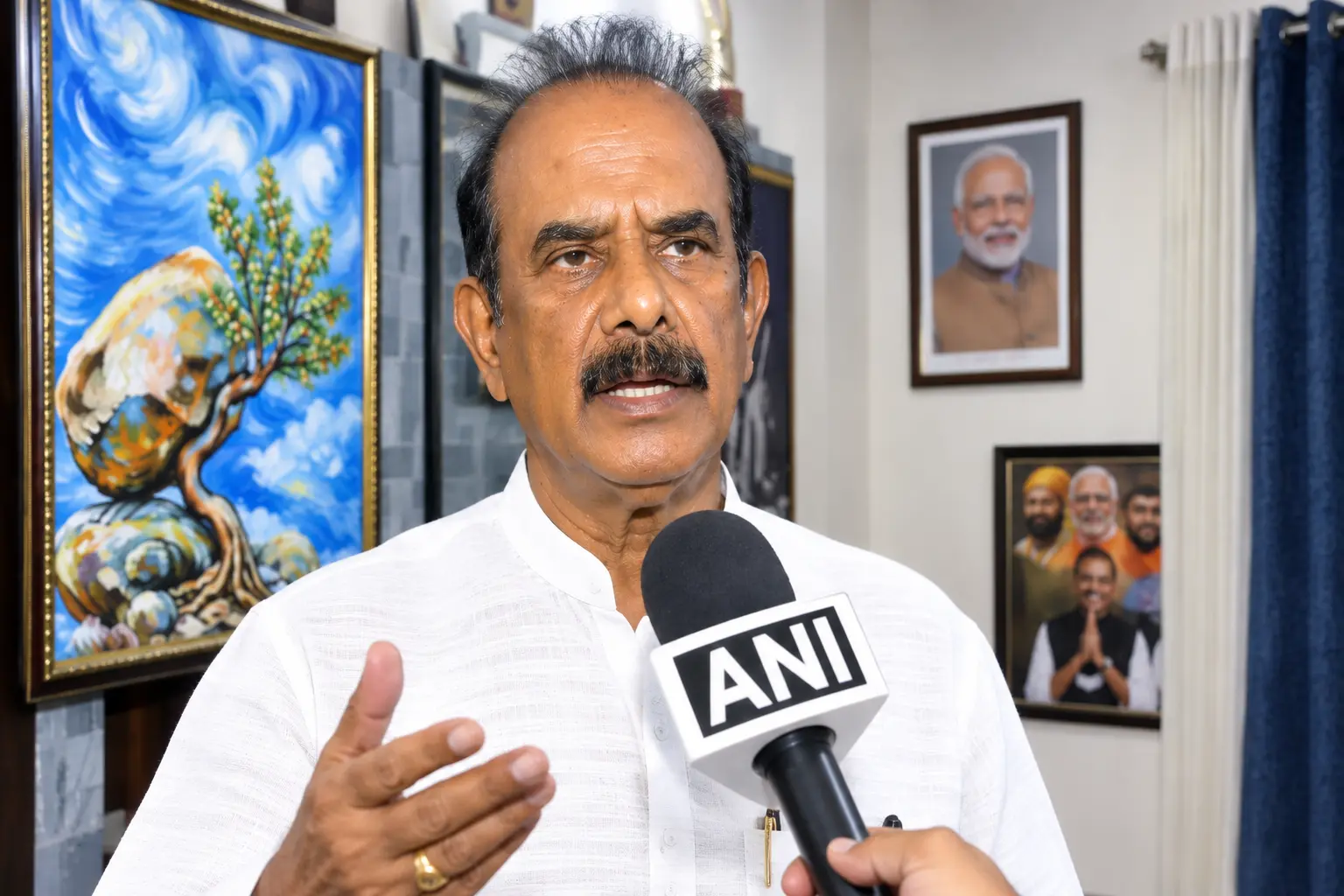
BJP leader Boora Narsiah Goud has backed the proposed Delimitation Bill 2026, arguing that the exercise could benefit South Indian states by increasing their representation in the Lok Sabha.
Speaking on the issue, Goud said South India should not view delimitation as a measure that would politically disadvantage the region. Instead, he argued that the proposed expansion of parliamentary seats could provide more representation to states across the country.
The issue has become a major political topic as the government seeks to reorganise parliamentary constituencies and potentially increase the strength of the Lok Sabha.
Delimitation refers to the process of redrawing the boundaries of parliamentary and assembly constituencies and determining the allocation of seats based on population and constitutional provisions.
The Delimitation Bill 2026 was introduced as part of a broader legislative framework connected with the proposed expansion of the Lok Sabha and implementation of women’s reservation. Initial government proposals contemplated raising the House’s strength substantially from the existing 543 elected seats.
The proposed changes have generated considerable debate because seat allocation can influence the political representation of individual states.6
The delimitation debate has particularly focused on southern states because these states have historically achieved lower population growth rates compared with several northern states.
Critics have expressed concern that allocating seats primarily according to population could change the relative political weight of different regions.
The government, however, has argued that the proposed expansion would not reduce the absolute number of seats held by southern states. In Parliament, Union Home Minister Amit Shah said the southern states’ combined Lok Sabha representation could rise from 129 seats to 195 under the government’s 50% increase model.
Boora Narsiah Goud has supported the proposal and maintained that South India could benefit from a larger Lok Sabha.
His argument focuses on the increase in the actual number of parliamentary seats rather than only comparing the percentage share of seats held by different regions.
According to this view, an expansion of the House could give southern states additional MPs while allowing the parliamentary system to accommodate changes in population and representation.
His comments come amid a wider political discussion over how future delimitation should balance population, representation, federal interests, and the concerns of different states.
The Union government has maintained that South Indian states would not suffer a reduction in their absolute parliamentary representation.
According to government figures presented during the earlier parliamentary debate, Karnataka’s seats could rise from 28 to 42, Andhra Pradesh’s from 25 to 38, Telangana’s from 17 to 26, Tamil Nadu’s from 39 to 59, and Kerala’s from 20 to 30 under the proposed 816-seat model.
The government has therefore argued that the expansion could provide additional representation while keeping the southern region’s overall share broadly similar under its proposed model.
The delimitation debate has also triggered strong concerns among opposition parties and several southern political voices.
One major concern is that simply increasing the number of seats does not necessarily prevent a region’s relative influence from changing. States that successfully controlled population growth fear that they could receive fewer additional seats compared with states that experienced faster population growth.
Another concern relates to federal balance. Political parties in southern states have argued that the contribution of states to population control and economic development should also be considered while determining future parliamentary representation.
These disagreements have made delimitation one of the most closely watched constitutional and political issues in India.
Any major change in parliamentary constituencies could have long-term implications for India’s political system.
A larger Lok Sabha could allow representation of more constituencies and potentially reduce the population represented by individual MPs. At the same time, changes in the distribution of seats could influence the balance between states and regions.
The exercise could also affect political parties because changes in constituency boundaries and seat numbers may alter electoral strategies, regional priorities, and future parliamentary calculations.
The proposed delimitation framework was also connected with the implementation of one-third reservation for women in Parliament and state legislatures.
The constitutional changes proposed alongside the delimitation legislation were intended to create the framework required for implementing the women’s reservation provisions after delimitation.
This means the debate is not limited to the number of Lok Sabha seats. The process also raises questions about women’s political representation and the selection of constituencies reserved for women.
The future of delimitation depends on the constitutional and legislative framework governing the exercise, the relevant census process, and decisions taken by Parliament and the competent authorities.
The issue is expected to remain politically significant because any future redistribution of parliamentary seats could influence India’s federal structure and electoral politics.
For South Indian states, the key question remains whether a larger Lok Sabha can provide additional representation without reducing their relative political influence.
The delimitation exercise could have a lasting impact on political representation across South India. Supporters of the proposal argue that increasing the overall number of Lok Sabha seats could provide additional representation while addressing the concerns associated with population growth. Southern states will closely examine how the final seat allocation affects their share of Parliament. The debate also highlights the importance of maintaining a balance between population-based representation and the contributions made by states toward development, education, healthcare, and population stabilisation. As discussions continue, political parties and citizens are likely to closely follow the government’s approach and the eventual constitutional framework governing the exercise.
The debate over the Delimitation Bill 2026 has brought questions of parliamentary representation and India’s federal balance into sharp focus. BJP leader Boora Narsiah Goud said the proposed changes could benefit South India by increasing its parliamentary representation.
The government has similarly maintained that southern states could gain seats in absolute terms. However, concerns over relative representation, population-based seat allocation, and regional political influence continue to drive debate. The eventual outcome will be important for India’s electoral system and the future balance of parliamentary representation.
Source: ANI

Your trusted source for news, updates, and insights from India and around the world.
Copyright © 2020–2026 NEWSHOTS. All Rights Reserved.