
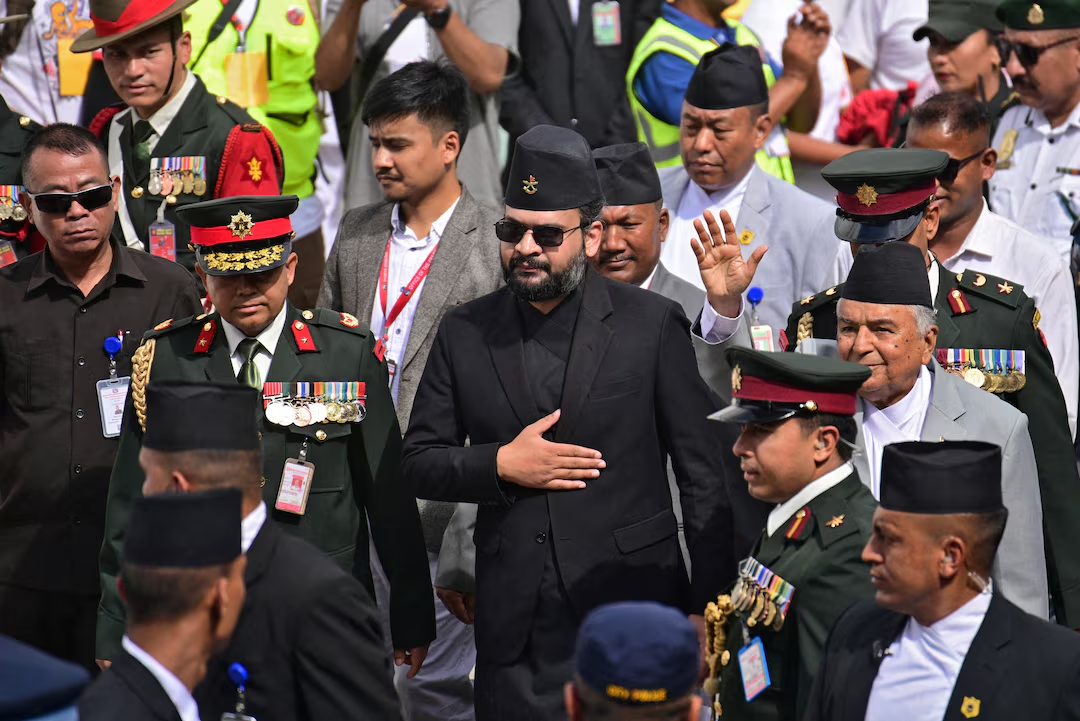
7-MAR-2026, 11:11 AM Nepal is witnessing a potential political shift as Balendra Shah’s Rastriya Swatantra Party heads toward a landslide victory in the national elections. Preliminary results indicate strong voter support, signalling a major shake-up in the country’s political landscape.
This historic outcome reflects the growing influence of independent and reform-focused parties in Nepal, where traditional political parties have dominated for decades. Shah’s party, with its focus on transparency, anti-corruption measures, and development initiatives, resonates strongly with young voters and urban populations.
Who Is Balendra Shah?
Balendra Shah, popularly known as “Balen,” is the current mayor of Kathmandu and a former rapper turned politician. He first gained attention for his independent and youth-driven approach to politics, promising reforms and a transparent governance model.
Shah’s popularity has soared due to his grassroots initiatives, effective social media engagement, and focus on urban development projects in Kathmandu. His Rastriya Swatantra Party leverages this reputation, appealing to voters frustrated with long-standing political inefficiencies.
The Rise of Rastriya Swatantra Party
The Rastriya Swatantra Party (RSP) has grown rapidly since its inception, attracting a diverse mix of young voters, professionals, and urban residents. Unlike traditional parties, the RSP emphasizes:
Good governance and anti-corruption policies
Youth engagement in politics and decision-making
Transparent development projects for cities and infrastructure
The party’s messaging on social justice, accountability, and economic opportunities has resonated strongly, especially in Nepal’s urban centres where voters are increasingly seeking alternatives to long-dominant political parties.
Election Results: What the Numbers Show
While final results are yet to be officially confirmed, exit polls and early counting indicate that the RSP is leading by a significant margin in multiple constituencies. Analysts suggest that Shah’s charismatic leadership and the party’s reform-focused agenda have been key factors in this projected landslide.
This level of success could allow the RSP to form a strong government, potentially influencing policy decisions on economic development, foreign relations, and social reforms.
Key Factors Behind the Victory
Several factors have contributed to the projected landslide victory:
Youth and Urban Voter Support: Shah’s party has tapped into the aspirations of younger voters seeking change and accountability.
Anti-Corruption Platform: Promises to fight corruption resonate with citizens tired of bureaucratic inefficiencies.
Media and Social Outreach: Strong use of social media platforms has helped Shah connect directly with voters, bypassing traditional party structures.
Development-Focused Agenda: Focus on infrastructure, urban planning, and transparency appeals to city residents demanding effective governance.
These factors collectively explain the widespread support for the Rastriya Swatantra Party.
Implications for Nepal’s Political Landscape
A victory of this magnitude could reshape Nepal’s politics in several ways:
Decline of Traditional Parties: Dominant parties like the Nepali Congress and CPN-UML may lose influence if independent parties continue to gain ground.
New Policy Directions: Shah’s focus on urban development, youth engagement, and anti-corruption measures could redefine governance priorities.
Strengthened Urban Representation: Cities may gain more voice in national policymaking, reflecting the needs of urban voters.
Political analysts believe that if the projected victory holds, Nepal could enter a new era of reform-driven governance.
Reactions from Citizens and Media
Nepali citizens have expressed optimism about the possible election outcome. Young voters, in particular, see Shah and his party as a vehicle for change, representing a departure from decades of political stagnation.
Media outlets, both domestic and international, have highlighted the significance of this election. The projected landslide is being described as a historic moment for independent and reform-oriented political movements in Nepal.
Challenges Ahead for Balendra Shah
While the victory is significant, Shah and the RSP face numerous challenges:
Delivering on Promises: Meeting voter expectations for reforms and development will be critical.
Managing Diverse Stakeholders: Balancing urban and rural interests may be challenging for a predominantly urban-focused party.
Sustaining Popularity: Continued engagement with citizens and effective governance will determine the long-term success of the party.
Shah’s ability to navigate these challenges will define the effectiveness and legacy of his party’s historic win.
International Perspective
Nepal’s election outcome has caught the attention of neighbouring countries, including India and China. Both nations have historically maintained strategic interests in Nepal’s political stability and development.
Shah’s rise could influence bilateral relations, trade negotiations, and regional collaboration, especially in areas like infrastructure and urban development.
What the Election Could Mean for Young Voters
The strong response to the Rastriya Swatantra Party highlights the growing importance of young voters in Nepal’s political system. Many younger citizens are seeking greater transparency, employment opportunities, better public services, and stronger accountability from elected representatives.
Shah’s political image and direct communication style have helped the party connect with this section of the electorate. His background outside traditional politics has also contributed to his appeal among voters looking for a different style of leadership.
The election could encourage more young people to participate actively in politics and public decision-making. It may also push established political parties to pay greater attention to issues such as employment, education, digital services, infrastructure, and opportunities for younger generations.
Governance Expectations After the Election
A major challenge for the RSP will be turning public enthusiasm into practical governance. Voters are likely to closely monitor whether the party can deliver on its promises of transparency, development, and accountability.
The new political environment could also increase pressure on elected representatives to communicate more openly with citizens and demonstrate measurable progress. If the RSP succeeds in converting electoral support into effective governance, its performance could influence future political movements and encourage other parties to adopt stronger reform and accountability measures.
For Nepal, the result could therefore have significance beyond a single election, particularly in shaping how younger citizens engage with politics and evaluate future governments.
Conclusion
Balendra Shah’s Rastriya Swatantra Party appears poised for a historic landslide victory in Nepal’s elections. With strong youth support, a reform-driven agenda, and a focus on transparent governance, Shah has captured the imagination of voters seeking change.
The coming months will be crucial as the party transitions from electoral success to governance, implementing policies and fulfilling promises. For Nepal, this election could mark a turning point in its political history, potentially setting the stage for a more accountable and development-focused government.
SOURCE: ABP NEWS



One thought on “Balendra Shah’s Party Set to Make History in Nepal Elections”