
Your daily dose of news, covering the latest updates in politics, business, sports, entertainment, and more from India and around the world.
Your daily dose of news, covering the latest updates in politics, business, sports, entertainment, and more from India and around the world.
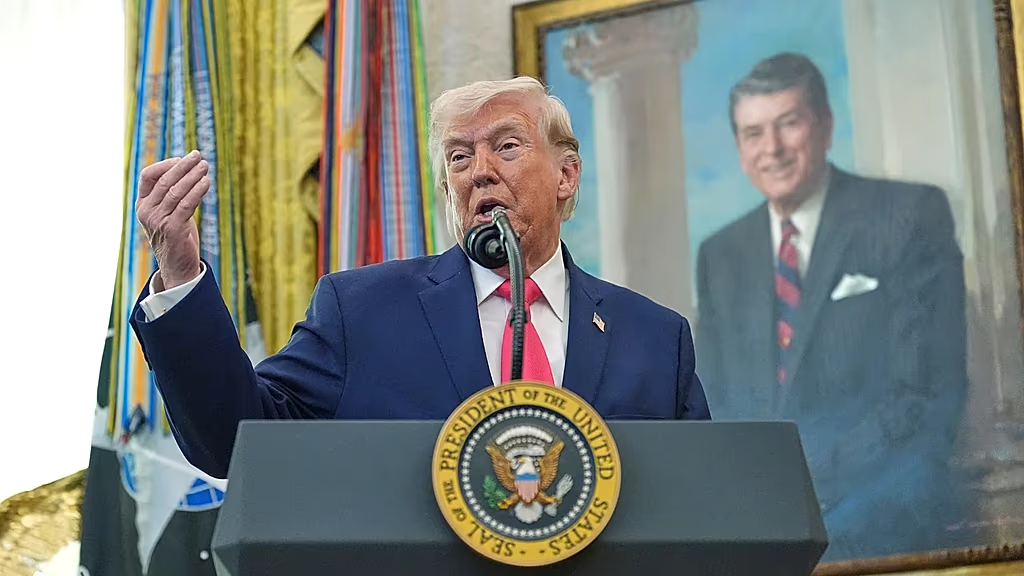
Global attention has once again turned toward the relationship between the United States and Iran after fresh remarks from U.S. President Donald Trump regarding ongoing diplomatic efforts between the two countries. According to recent reports, Trump has indicated that negotiations with Iran are entering a critical phase and warned that military action could resume if talks fail to produce meaningful progress within the coming days.
The comments come at a time when tensions in the Middle East remain a major concern for governments, businesses, and international organizations. While diplomatic channels remain open, uncertainty surrounding the negotiations has prompted renewed discussion about regional stability, energy markets, and the future of U.S.-Iran relations.
Observers around the world are closely monitoring developments, as any major shift in the situation could have consequences extending far beyond the Middle East.
Recent diplomatic efforts have focused on reducing tensions and creating a framework for future engagement between the two countries.
According to reports, discussions have intensified as both sides seek to protect their strategic interests while avoiding further escalation.
Trump’s latest remarks suggest that the United States wants negotiations to move forward quickly and produce tangible results.
Key Issues Under Discussion
While officials have not publicly disclosed all aspects of the discussions, analysts believe these issues remain central to ongoing negotiations.
Relations between Washington and Tehran have experienced periods of tension for decades.
Any development involving the two countries often attracts global attention because of their influence on regional politics, international trade, and energy markets.
The latest diplomatic efforts are being viewed as particularly important because they come during a period of heightened geopolitical uncertainty.
Reasons Global Observers Are Paying Attention
As a result, developments in the negotiations are being closely followed by governments, investors, and policy experts.
The Middle East remains one of the world’s most strategically important regions.
Its significance extends beyond politics due to its role in global energy supplies and international shipping routes.
Any increase in tensions can affect global markets, particularly oil prices and investor confidence.
Key Strategic Factors
Because of these factors, diplomatic developments involving Iran often generate international concern.
One of the biggest concerns surrounding the situation is its potential impact on energy markets.
Oil prices have historically reacted to geopolitical developments in the region, especially when uncertainty affects supply routes.
Market participants often monitor diplomatic discussions closely because changes in regional stability can influence energy costs worldwide.
Why Energy Markets Are Watching
Even minor developments in negotiations can influence expectations about future supply conditions.
One of the biggest concerns surrounding the situation is its potential impact on energy markets.
Oil prices have historically reacted to geopolitical developments in the region, especially when uncertainty affects supply routes.
Market participants often monitor diplomatic discussions closely because changes in regional stability can influence energy costs worldwide.
Why Energy Markets Are Watching
Even minor developments in negotiations can influence expectations about future supply conditions.
Despite strong rhetoric from both sides at various points, diplomatic engagement remains ongoing.
International observers have repeatedly emphasized the importance of dialogue in reducing tensions and preventing further escalation.
Many countries continue to support efforts aimed at maintaining stability and encouraging constructive negotiations.
Goals Of Current Diplomatic Efforts
Diplomatic channels often remain active even during periods of disagreement, providing opportunities for continued engagement.
Governments around the world have responded cautiously to recent developments.
Many countries have expressed support for peaceful dialogue and emphasized the importance of avoiding actions that could increase tensions.
International organizations and policy experts have similarly called for restraint and continued negotiations.
Common Themes In Global Responses
The broad international consensus remains focused on avoiding further instability.
Investors are paying close attention to developments because geopolitical uncertainty often influences financial markets.
Stock markets, commodity prices, and currency movements can react quickly to headlines involving major international events.
Market Areas Most Affected
Financial analysts note that markets generally prefer stability and predictability, making diplomatic progress an important factor for investors.
Achieving a breakthrough in complex international negotiations is rarely straightforward.
Both sides face domestic, political, and strategic considerations that influence their negotiating positions.
Key Challenges
Experts suggest that successful diplomacy often requires patience, flexibility, and continued engagement from all parties involved.
Attention is now focused on upcoming diplomatic discussions and official statements from both sides.
Observers will be looking for signs of progress, clarification of negotiating positions, and indications of whether talks are moving toward a potential agreement.
Developments To Watch
The next phase of discussions could play an important role in determining the direction of future relations between the two countries.
The current diplomatic efforts represent an important moment in the broader relationship between the United States and Iran. While differences remain, negotiations continue to provide an opportunity for dialogue and engagement.
The outcome of these discussions could influence not only bilateral relations but also broader issues involving regional security, economic stability, and international cooperation.
As governments, markets, and citizens around the world watch developments unfold, the emphasis remains on diplomacy, communication, and efforts to maintain stability in a region that continues to hold significant importance for the global community.
Source: Reuters

Your trusted source for news, updates, and insights from India and around the world.
Copyright © 2020–2026 NEWSHOTS. All Rights Reserved.