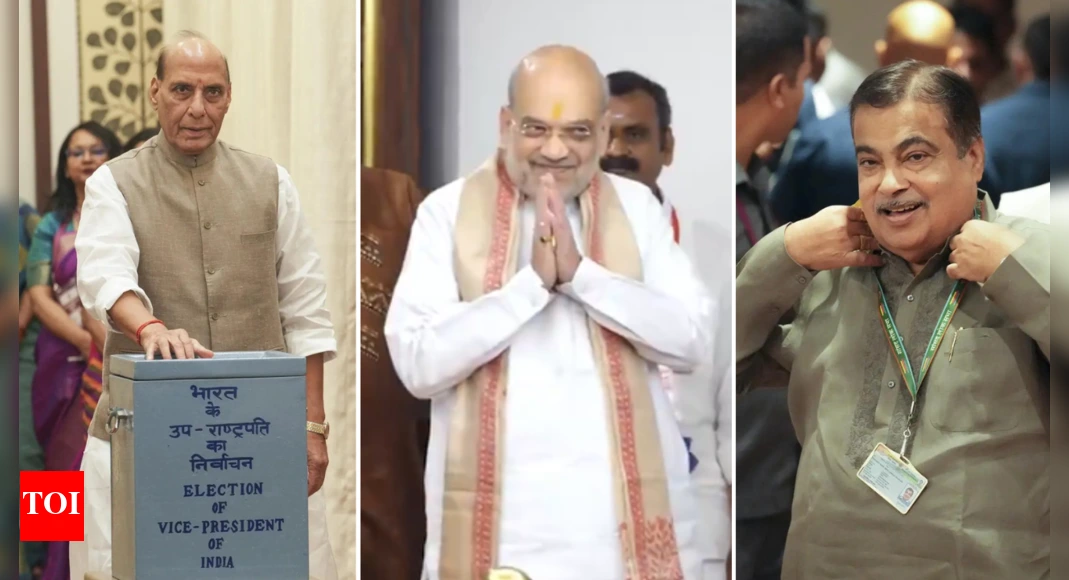
09-SEP-2025, 01:00PM In a significant moment for Indian democracy, senior leaders including Amit Shah, Rahul Gandhi, and Sonia Gandhi exercised their right to vote in the Vice Presidential elections. The election, a crucial process to choose the second-highest constitutional authority in the country, witnessed participation from leaders across the political spectrum. As the voting unfolded in Parliament, all eyes were on the contest, which reflects the dynamic political balance of power in India. The active participation of leaders like Amit Shah not only underlined the importance of the election but also demonstrated the spirit of parliamentary democracy.
Amit Shah : Role in the Vice Presidential Polls
Amit Shah: A Key Political Strategist
Union Home Minister Amit Shah arrived at the Parliament early in the day to cast his vote, making a strong political statement. Known as one of the BJP’s most strategic minds, his presence underscored the ruling party’s commitment to ensuring a decisive outcome in the election. Political analysts believe that Amit Shah’s role goes beyond casting a vote, as he has been instrumental in strategizing parliamentary numbers to secure victory for the NDA-backed candidate.
Amit Shah: Symbol of Party Unity
For the BJP, the participation of Amit Shah symbolized unity and discipline. His involvement reflects his pivotal position in the decision-making process of the ruling alliance. Party leaders highlighted that Shah’s presence motivated MPs to maintain solidarity during the electoral process.
Amit Shah: Rahul Gandhi and Sonia Gandhi: Opposition Presence
Amit Shah: Rahul Gandhi’s Vote
On the other side of the political aisle, Congress leader Rahul Gandhi cast his vote, representing the Opposition bloc. His role in the vice presidential elections highlights the Congress party’s attempt to build a united front against the ruling party.
Amit Shah: Sonia Gandhi’s Symbolic Contribution
Congress Parliamentary Party Chairperson Sonia Gandhi also took part in the voting, underscoring the importance the Congress attaches to this election. Despite her limited political activity in recent months, her presence in Parliament was seen as symbolic of the Congress’ commitment to opposing the NDA nominee.
Amit Shah: The Significance of the Vice Presidential Election
Importance in Parliamentary Democracy
The Vice President of India holds a dual role—serving as the second-highest constitutional authority in the country and as the Chairperson of the Rajya Sabha. In this capacity, the Vice President ensures the smooth functioning of the upper house, making the election a key event in parliamentary democracy.
Reflection of Political Equations
This year’s vice presidential election is more than just a constitutional exercise—it also reflects the current political equations between the ruling NDA and the opposition alliance. Leaders like Amit Shah, Rahul Gandhi, and Sonia Gandhi casting their votes add weight to the process and draw national attention.
Amit Shah’s Influence on the Electoral Landscape
Strengthening BJP’s Parliamentary Strategy
Over the years, Amit Shah has played a crucial role in strengthening BJP’s parliamentary presence. His strategies, from building alliances to managing floor coordination, have ensured the party’s success in various parliamentary battles. The vice presidential election is yet another example of Shah’s tactical planning.
Symbol of Political Authority
The image of Amit Shah casting his vote is symbolic of his political stature. As Home Minister and one of the most influential figures in the Modi government, his presence reinforced the seriousness with which the ruling alliance views the election.
The Broader Political Context
NDA vs. Opposition Contest
The vice-presidential election also reflects the broader battle between the NDA and the opposition. While the NDA, led by the BJP, enjoys a numerical advantage, the Opposition has been trying to consolidate its strength. Leaders like Rahul Gandhi and Sonia Gandhi were present to project Opposition unity in this contest.
A Test of Strength
Though the outcome of the election may appear predictable due to parliamentary numbers, the contest serves as a test of political strength. For the NDA, Amit Shah’s strategies are vital to ensuring seamless execution, while for the Opposition, participation by stalwarts like Sonia Gandhi adds moral weight.
Amit Shah and the Symbolism of Leadership
Connecting With Party Cadre
By taking part in the voting process, Amit Shah sent a strong message to the BJP’s rank and file. His presence reaffirmed the importance of discipline, participation, and unity within the party.
Embodiment of Political Stability
Political commentators note that Amit Shah embodies stability and continuity in the BJP’s governance model. His active participation in constitutional exercises like the vice-presidential elections shows the government’s commitment to procedural democracy.
Media and Public Reactions
Wide Media Coverage
Media outlets across India gave extensive coverage to the vice presidential polls, particularly focusing on visuals of leaders like Amit Shah, Rahul Gandhi, and Sonia Gandhi casting their votes. News anchors highlighted how their participation represented both sides of India’s political spectrum.
Public Engagement
On social media, images of Amit Shah voting trended widely, with supporters praising his role in shaping the BJP’s political future. Opposition supporters, meanwhile, lauded Sonia Gandhi’s and Rahul Gandhi’s presence as a reminder of the Congress’ enduring role in Indian politics.
Looking Ahead: Implications of the Vice Presidential Polls
Impact on Rajya Sabha
The new vice president will have a direct impact on the functioning of the Rajya Sabha, where debates often turn contentious. Leaders like Amit Shah understand the significance of having a vice president who can ensure order and fairness in the Upper House.
Broader Political Takeaways
The participation of senior leaders in the voting process indicates that the election is not merely procedural but also symbolic of the democratic spirit. It demonstrates the seriousness with which Indian leaders treat constitutional offices.
Conclusion
The vice presidential election, marked by the participation of senior leaders such as Amit, Rahul Gandhi, and Sonia Gandhi, stands as a testimony to the vibrancy of Indian democracy. While Amit Shah played his characteristic role as both strategist and participant, Rahul Gandhi and Sonia Gandhi represented the Opposition’s resolve. Beyond the outcome, the process showcased the essence of parliamentary governance—unity in diversity, spirited contestation, and respect for constitutional norms.
As Amit Shah and other leaders took part in shaping the future of the Rajya Sabha’s leadership, the vice-presidential polls reminded the nation of the delicate balance between political rivalry and democratic responsibility.
Source: ANI