
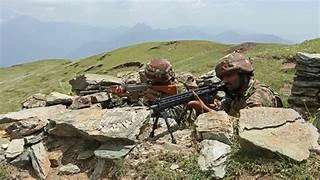
23-feb-2026, 12: 17 PM, Three terrorists were killed in an encounter with security forces in Jammu and Kashmir’s Kishtwar district during Operation Trashi-I, officials said.
The operation took place in the Passerkut area of the Chatroo belt, where security forces had been conducting search and cordon operations following intelligence inputs about the presence of terrorists in the forested and mountainous region.
The operation involved the Army, Jammu and Kashmir Police, and the Central Reserve Police Force (CRPF). Two AK-47 rifles and other warlike stores were recovered from the encounter site, according to the Army.
The encounter took place on February 22, while further details about the operation and the identities of the deceased terrorists emerged in subsequent reporting.
Three Terrorists Killed in Kishtwar
The security operation was launched after intelligence inputs indicated the presence of terrorists in the Chatroo forest belt.
According to the Army’s White Knight Corps, troops from the Counter-Insurgency Force Delta, working with Jammu and Kashmir Police and the CRPF, re-established contact with the terrorists at around 11 am on February 22.
The forces engaged the terrorists in difficult terrain and eventually neutralized three of them.
The Army said weapons and other warlike material were recovered from the area.
The operation continued after the initial exchange of fire as security personnel searched the area and recovered the remains and weapon of the third terrorist.
Operation Trashi-I
The encounter was carried out under Operation Trashi-I, a wider security operation focused on locating and neutralizing terrorists operating in the forested areas of Kishtwar.
The region’s difficult terrain has made counter-terror operations particularly challenging.
According to reports, security forces had been conducting searches in the Chatroo belt for an extended period before the February 22 encounter.
The Army said intelligence from the Jammu and Kashmir Police, the Intelligence Bureau, and its own sources contributed to the operation.
The operation involved coordination between different security agencies operating in the area.
Jaish-e-Mohammad Link
Officials and subsequent reports identified the three deceased as members of Jaish-e-Mohammad (JeM), a Pakistan-based terrorist organization.
One of those killed was identified in preliminary assessments as Saifullah, described by security agencies as a JeM commander.
According to reporting, Saifullah carried a bounty of ₹5 lakh and had remained a wanted figure in Jammu and Kashmir.
However, when reporting details about the identities and backgrounds of the deceased, it is important to use the wording “security agencies said” or “preliminary assessments indicated” where identification had not yet been formally confirmed.
Who Was Saifullah?
Saifullah was reportedly among the most wanted terrorists operating in the Kishtwar region.
Security agencies had been searching for him during earlier operations in the area.
Reports said he had allegedly remained active in the region for several years and was suspected of involvement in attacks on security forces.
India Today reported that he carried a bounty of ₹5 lakh and was considered a top Jaish commander in Jammu and Kashmir.
The identification was significant because security forces had previously been searching for him during operations in the Chatroo belt.
Security Forces Recovered Weapons
Two AK-47 rifles and other ammunition and warlike stores were recovered from the encounter site, according to the Army.
The recovery formed part of the security forces’ assessment of the operation and provided evidence of the weapons carried by the terrorists.
The area was subsequently cordoned off, and search operations continued to ensure that no other terrorists remained nearby.
The continuation of searches is a standard part of such operations, particularly in difficult forest terrain where additional hiding places may exist.
Difficult Terrain Made Operation Challenging
The Chatroo region of Kishtwar consists of mountainous and heavily forested terrain.
Security forces have been conducting operations in the area for several weeks, with difficult weather and terrain adding to the challenges.
Business Standard reported that the Army described the operation as the culmination of a prolonged joint effort and said technology, including drones and satellite imagery, had been used to support operations.
The use of surveillance technology can help security forces track movement and identify possible hiding locations in remote areas.
Army Praises Security Forces
Following the operation, senior Army officials praised the personnel involved.
Northern Army Commander Lieutenant General Pratik Sharma commended the troops for what the Army described as a swift and precise operation.
The Army said the operation demonstrated coordination between its personnel, the Jammu and Kashmir Police, and other security agencies.
The operation was also described as part of continuing efforts to prevent terrorist networks from operating in Jammu and Kashmir.
Earlier Operations in Kishtwar
The latest encounter came after several earlier security operations in the Kishtwar region.
The Chatroo forest belt had witnessed multiple encounters during the preceding weeks.
India Today reported that search operations had continued in the snow-covered forest belt for around 15 days before the latest encounter.
Earlier operations had also resulted in the killing of terrorists and continued searches for other members of suspected militant groups.
The repeated operations demonstrate the continued security focus on the higher reaches of Kishtwar.
Why Kishtwar Remains a Security Focus
Kishtwar’s mountainous geography makes it strategically important for security operations.
Dense forests and difficult-to-access areas can provide hiding places and make surveillance more challenging.
Security agencies have therefore continued conducting cordon-and-search operations in areas where intelligence inputs suggest the presence of armed groups.
The latest operation demonstrates the continued focus on preventing terrorist groups from establishing or maintaining networks in the region.
What Happens Next?
Although three terrorists were killed in the encounter, security forces continued search operations in the surrounding area.
The purpose was to determine whether any additional members of the group were still present.
Officials also continued working to establish the identities and affiliations of the deceased terrorists.
Further investigation could provide additional information about their movements, links and activities in the region.
For now, security agencies are expected to maintain surveillance and search operations in the forest belt.
Conclusion
Three terrorists were killed during a joint security operation in Kishtwar’s Chatroo belt on February 22.
The encounter was conducted under Operation Trashi-I by the Army, Jammu and Kashmir Police, and the CRPF following intelligence inputs about terrorist activity in the region.
Security forces recovered two AK-47 rifles and other war-like stores from the encounter site. One of the deceased was identified in preliminary assessments as Saifullah, described by security agencies as a Jaish-e-Mohammad commander.
The operation came after weeks of search and counter-terror activity in the difficult terrain of Kishtwar.
Security forces continued searching the surrounding area after the encounter to check for any additional threats.
The latest operation highlights the continued security focus on the forested and mountainous areas of Jammu and Kashmir, where forces are working to prevent terrorist groups from maintaining networks and safe locations.
Sources: Army/White Knight Corps statements as reported by PTI, News On AIR, India Today, and Business Standard.