
Your daily dose of news, covering the latest updates in politics, business, sports, entertainment, and more from India and around the world.
Your daily dose of news, covering the latest updates in politics, business, sports, entertainment, and more from India and around the world.
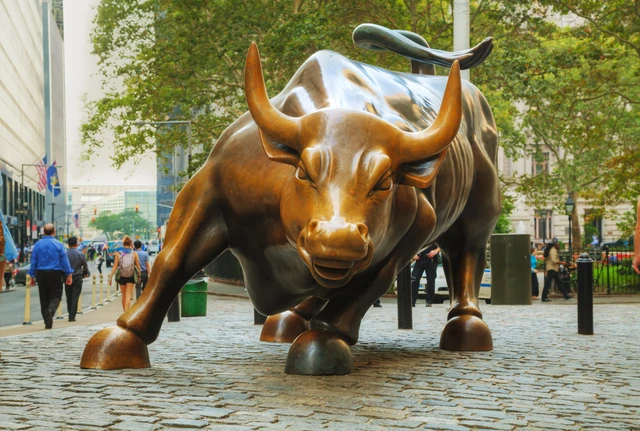
Global financial markets witnessed a strong wave of optimism after reports indicated that commercial shipping through the Strait of Hormuz could continue without major disruption, easing concerns about energy supplies and geopolitical instability. The positive development helped fuel a broad rally on Wall Street, pushing major US stock indices, including the S&P 500 and Nasdaq Composite, to fresh record highs.
Investors welcomed signs of reduced tension in a region that plays a critical role in global energy markets. Combined with easing oil prices and renewed confidence in economic growth, the development contributed to one of the strongest market performances in recent weeks.
The rally reflects how closely financial markets monitor geopolitical events, particularly those involving major trade routes and global energy supplies.
Financial markets generally perform better when uncertainty declines and investors gain confidence in economic stability.
Recent concerns surrounding shipping routes, energy supplies, and regional tensions had increased market volatility. Investors worried that disruptions could trigger higher fuel costs, increased inflation, and slower economic growth.
However, signs that commercial shipping routes remain operational helped reduce those concerns.
Key Reasons Behind The Rally
As uncertainty eased, investors returned to equities, helping major stock indices extend their gains.
The Strait of Hormuz is considered one of the world’s most strategically important waterways.
Located between the Persian Gulf and the Gulf of Oman, it serves as a key route for transporting oil and energy products to global markets.
Why The Strait Matters
Because of its importance, developments involving the Strait of Hormuz often influence financial markets, commodity prices, and investor sentiment.
Any uncertainty surrounding the waterway typically attracts close attention from governments, businesses, and investors around the world.
One of the biggest drivers behind the market rally was the decline in oil prices.
As concerns about supply disruptions eased, crude oil prices moved lower, providing relief to investors and businesses.
Impact Of Lower Oil Prices
Many sectors of the economy benefit when energy costs decline, particularly industries that rely heavily on transportation and logistics.
Investors viewed the fall in oil prices as a positive sign for both businesses and consumers.
Technology companies played a major role in pushing the Nasdaq Composite to fresh highs.
The sector has remained one of the strongest performers in recent years, supported by innovation, digital transformation, and growing interest in artificial intelligence.
Factors Supporting Technology Shares
Technology companies continue to attract significant investment because of their potential to drive future economic expansion.
As a result, tech stocks remain a major influence on broader market performance.
Market sentiment can change quickly when geopolitical risks begin to ease.
In recent weeks, many investors had adopted a cautious approach because of concerns about potential disruptions in energy markets and global trade.
The latest developments encouraged a shift toward optimism.
Signs Of Improving Sentiment
Analysts noted that investors appeared more comfortable taking on risk as concerns about immediate disruptions declined.
The market rally was broad-based, with gains extending across several industries.
However, certain sectors benefited more directly from lower energy prices and improving sentiment.
Strong Performers
Technology
Continued investor interest supported gains in major technology companies.
Travel And Tourism
Lower fuel costs improve profitability for airlines and travel-related businesses.
Consumer-Focused Companies
Reduced energy expenses can increase disposable income and consumer spending.
Transportation
Lower operating costs often improve margins for transportation companies.
The combination of these factors contributed to widespread market strength.
Global Markets Also Responded
The positive sentiment was not limited to Wall Street.
Stock markets in several regions responded favorably as investors reacted to improving conditions in global energy markets.
Countries that rely heavily on imported energy often benefit when oil prices decline, making developments in energy markets particularly important for global economic activity.
Despite the strong rally, analysts continue to warn that risks have not completely disappeared.
Geopolitical situations can evolve quickly, and markets remain sensitive to new developments.
Key Risks To Watch
Investors are therefore continuing to monitor developments closely while balancing optimism with caution.
Many experts believe that maintaining stable energy supplies remains essential for sustaining current market momentum.
Lower energy costs can influence more than just financial markets.
Businesses and consumers often benefit when fuel prices decline because transportation and production costs become more manageable.
Broader Economic Benefits
These factors contribute to a more favorable environment for both businesses and investors.
As a result, developments affecting energy markets often have far-reaching consequences beyond stock prices alone.
Market participants are now focusing on several key factors that could influence future performance.
Important Areas To Monitor
These factors will help determine whether the current rally can maintain momentum in the coming weeks.
For now, however, investors appear encouraged by signs of improved stability and reduced concerns surrounding global energy supplies.
The latest gains by the S&P 500 and Nasdaq demonstrate how quickly financial markets can respond when uncertainty begins to ease. While challenges remain, the combination of lower oil prices, stable shipping routes, and renewed investor confidence has created a more optimistic outlook for global markets and helped drive Wall Street to new record highs.
Market volatility often creates uncertainty for retail investors, but experts advise against making emotional decisions based on short-term market movements. Instead of reacting to daily fluctuations, investors should focus on their long-term financial goals and investment strategy.
Experts suggest maintaining a balanced portfolio, resisting the urge to sell during downturns, and using market pullbacks to accumulate quality stocks.Disciplined investing remains one of the most effective ways to navigate periods of uncertainty and volatility.
Investors should also regularly review their asset allocation and ensure that their investment decisions align with their risk tolerance and financial objectives.
Market experts maintain that Indian stocks continue to be supported by solid fundamentals, even amid short-term volatility.
According to market experts:
Many experts recommend avoiding aggressive trading positions until market conditions become more stable.
They also suggest monitoring earnings reports and economic indicators closely, as these factors may provide additional clues regarding future market direction.
Investors will closely monitor developments related to US-Iran relations, global crude oil prices, and corporate earnings announcements.
Any signs of diplomatic progress could improve sentiment and support a market recovery. On the other hand, further geopolitical escalation may increase volatility and trigger additional caution among investors.
Upcoming earnings reports from major companies, foreign investment trends, and global economic indicators will also play a key role in shaping market sentiment over the coming weeks.
While short-term market movements remain uncertain, India’s economic fundamentals, corporate earnings growth, and continued investor participation continue to provide support for the broader market. As a result, analysts believe long-term investors should remain focused on quality businesses rather than reacting to temporary market fluctuations.
The current market environment may remain challenging, but experienced investors understand that periods of volatility are a normal part of investing. Staying disciplined, focusing on quality assets, and maintaining a long-term perspective may prove beneficial as markets navigate this phase of uncertainty.
Source: Associated Press (AP)

Your trusted source for news, updates, and insights from India and around the world.
Copyright © 2020–2026 NEWSHOTS. All Rights Reserved.