
Daily dose of news Newshots will keep you entertained with daily news and gossips of the film world, sports news and news.
Daily dose of news Newshots will keep you entertained with daily news and gossips of the film world, sports news and news.
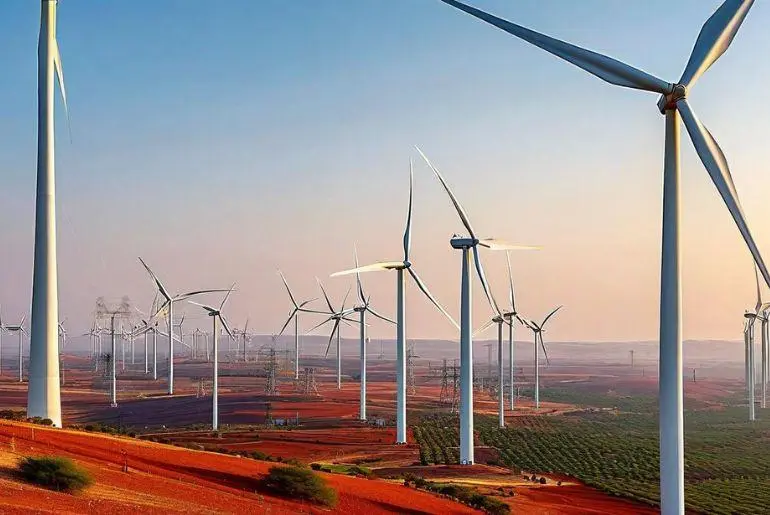
Adani Green Energy Limited (AGEL) has become the first renewable energy company in India to surpass 20 gigawatts (GW) of operational renewable energy capacity, marking a significant milestone for the country’s clean energy sector. The achievement reflects the company’s rapid expansion through greenfield renewable energy projects and reinforces India’s growing focus on sustainable power generation.
The milestone comes less than a decade after AGEL commissioned its first renewable energy project. Over the years, the company has steadily expanded its portfolio by investing in large-scale solar, wind, and hybrid energy projects across the country. Today, its operational capacity places it among the world’s leading renewable energy developers.
Crossing the 20 GW mark is not only an important corporate achievement but also a significant milestone for India’s clean energy transition. Renewable energy has become a central part of the country’s strategy to reduce carbon emissions, strengthen energy security, and meet rising electricity demand.
According to the company, AGEL now generates more than 52 billion units of clean electricity annually, representing nearly 3% of India’s electricity consumption. The electricity generated each year is sufficient to power more than nine million households, highlighting the growing contribution of renewable energy to the national power system.
Unlike companies that primarily expand through acquisitions, Adani Green Energy has built most of its capacity through greenfield development. This means the projects were planned, developed, and commissioned from the ground up, requiring large investments in land, infrastructure, transmission connectivity, and technology.
The company’s renewable portfolio includes utility-scale solar parks, wind farms, hybrid renewable energy projects, and battery energy storage systems designed to improve the reliability of renewable power generation.
This development strategy has enabled AGEL to rapidly increase operational capacity while supporting India’s long-term renewable energy goals.
AGEL reported adding more than 5 GW of renewable capacity during FY26, one of the largest annual renewable capacity additions achieved by any company outside China. This rapid expansion reflects increasing investment in renewable infrastructure as demand for clean electricity continues to rise.
The company has also expanded its operational mix across solar, wind, and hybrid energy projects while strengthening battery storage capabilities to support round-the-clock renewable power.
Industry observers view the achievement as another indicator of India’s accelerating transition toward low-carbon energy sources.
India has set ambitious renewable energy targets as part of its long-term strategy to strengthen energy security and reduce carbon emissions. India is investing heavily in solar, wind, and hybrid power projects to meet its growing electricity demand.
The expansion of companies such as Adani Green Energy reflects the increasing pace of renewable energy development across the country. Industry experts believe that higher investments in clean energy infrastructure will help improve energy availability while supporting sustainable economic growth.
One of the key factors behind AGEL’s growth has been its focus on greenfield development. Instead of relying mainly on acquisitions, the company has built new renewable energy projects from the ground up, allowing it to expand its operational capacity across multiple states.
Its renewable portfolio now includes utility-scale solar parks, wind farms, hybrid energy projects, and battery energy storage initiatives. This diversified approach allows the company to improve grid reliability while delivering cleaner electricity to consumers.
Renewable energy growth is no longer limited to solar panels and wind turbines. Battery energy storage systems are becoming an essential part of modern power infrastructure because they help supply electricity even when sunlight or wind availability changes.
Companies across the sector are investing in advanced technologies that improve energy storage, grid management, and operational efficiency. These developments are expected to support India’s transition towards a more reliable and sustainable electricity network over the coming years.
India continues to attract significant investment in renewable energy as demand for clean electricity rises across industries and households. Government initiatives, technological innovation, and private-sector investment are expected to accelerate capacity additions during the coming years.
Industry analysts believe renewable energy will remain one of the country’s fastest-growing sectors, creating employment opportunities while supporting India’s climate commitments. As more companies invest in large-scale renewable projects, the sector is likely to play an even bigger role in the nation’s economic development.
India’s renewable energy sector is expected to witness significant growth over the next decade as both the government and private companies continue investing in sustainable power generation. Rising electricity demand, rapid urbanisation, and industrial expansion have increased the need for reliable and environmentally friendly energy sources.
Renewable energy projects are becoming increasingly important in reducing dependence on conventional fossil fuels while supporting India’s long-term climate commitments. India will meet a significant share of its future power needs through solar parks, wind farms, hybrid energy projects, and battery storage facilities.
The sector is also benefiting from continuous technological advancements. Improved solar panel efficiency, larger wind turbines, and smarter energy management systems are helping renewable projects generate electricity more efficiently than ever before. At the same time, investments in battery storage technology are improving the ability to supply power even when weather conditions are less favourable.
Experts believe that continued collaboration between government agencies, private companies, and technology providers will further accelerate renewable energy development. Increased investment in transmission infrastructure and smart grids will also help integrate more renewable electricity into the national power network.
For companies like Adani Green Energy, future expansion will not only focus on increasing operational capacity but also on improving efficiency, innovation, and long-term sustainability. As India moves towards a cleaner energy future, milestones such as crossing 20 GW of operational renewable capacity demonstrate the growing importance of renewable energy in supporting economic development while protecting the environment for future generations.
The Adani Green Energy 20 GW milestone represents an important achievement for both the company and India’s renewable energy sector. Becoming the first renewable energy company in the country to cross 20 GW of operational capacity demonstrates the rapid pace of clean energy development and highlights the growing role of renewable power in meeting future electricity demand.
India will strengthen its position among the world’s leading clean energy markets as it continues expanding renewable energy projects. Continued investment in solar, wind, hybrid energy, and battery storage technologies will be essential for supporting sustainable growth, improving energy security, and achieving long-term environmental goals. The milestone also reflects the increasing importance of innovation and infrastructure development in shaping India’s energy future.
Source: ANI
Your trusted source for news, updates, and insights from India and around the world.
Copyright © 2020–2026 NEWSHOTS. All Rights Reserved.