
Your daily dose of news, covering the latest updates in politics, business, sports, entertainment, and more from India and around the world.
Your daily dose of news, covering the latest updates in politics, business, sports, entertainment, and more from India and around the world.
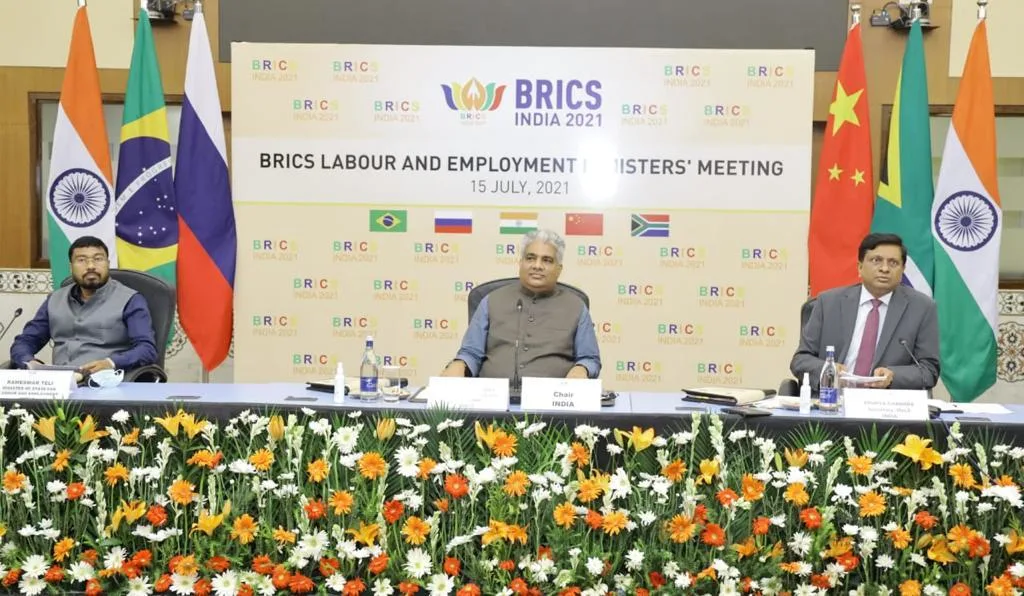
The BRICS Labour Ministers Meeting officially commenced in Hyderabad under India’s BRICS Chairship 2026, bringing together labour ministers, senior government officials, and policy experts from member nations. The high-level gathering focuses on strengthening cooperation in employment, workforce development, social security, and skills training while addressing the changing demands of the global labour market.
Union Labour and Employment Minister Mansukh Mandaviya chaired the meeting alongside Minister of State Shobha Karandlaje and representatives from BRICS countries. The discussions are expected to contribute to stronger collaboration among member nations in creating inclusive and sustainable employment opportunities.
As the world continues adapting to technological transformation and changing economic conditions, labour policies have become increasingly important. The Hyderabad meeting provides an opportunity for participating countries to exchange experiences, identify common challenges, and develop practical solutions that benefit workers across different sectors.
India has outlined four major priorities for this year’s BRICS Labour Ministers Meeting. These include expanding social security coverage, promoting workforce participation, improving employment opportunities through skill development, and using digital technology to strengthen labour market systems.
The meeting also focuses on supporting women in the workforce. It aims to increase the inclusion of workers from the informal sector. Officials will discuss ways to expand social protection. They will also explore better support for gig workers, platform workers, and other emerging categories of employment. These sectors have grown rapidly in recent years.
Another important topic is workforce skilling. As industries increasingly adopt automation, artificial intelligence, and digital technologies, governments recognise the need to prepare workers with updated skills that match future employment requirements.
The BRICS grouping represents some of the world’s largest emerging economies, making labor cooperation increasingly significant. By sharing successful policy initiatives and employment strategies, member countries can learn from one another while improving workforce productivity and economic growth.
Delegates are also discussing how technology can simplify labour administration, improve access to employment services, and strengthen social security delivery through digital platforms. Such collaboration is expected to benefit millions of workers across BRICS nations.
A major objective of the BRICS Labour Ministers Meeting is ensuring that economic development benefits every section of society. Delegates are exploring policies that encourage higher workforce participation while creating equal opportunities for women, young professionals, rural workers, and people employed in informal sectors.
Inclusive labour policies remain essential for sustainable economic growth. Expanding access to education, vocational training, and employment support can help workers adapt to rapidly changing labour markets while improving long-term productivity.
Digital transformation has become a central theme of labour policy discussions worldwide. During the Hyderabad meeting, officials are examining how digital tools can improve employment services, enhance workforce planning, and strengthen skill mapping.
Artificial intelligence, automation, and digital platforms continue transforming industries across manufacturing, healthcare, finance, logistics, and services. Governments therefore face the challenge of preparing workers for new opportunities while protecting employment rights.
The meeting also highlights the importance of continuous learning. Lifelong skill development is increasingly viewed as essential for helping employees remain competitive in evolving industries.
Officials believe stronger cooperation among BRICS nations can improve labour standards while encouraging innovation in employment policies. Participating countries share research, successful initiatives, and workforce strategies. These efforts help build stronger labour ecosystems and support sustainable economic growth.
Discussions are also expected to encourage greater collaboration between governments, educational institutions, businesses, and industry organisations. Such partnerships can help create training programmes that better match the needs of modern employers.
During the BRICS Labour Ministers Meeting, India highlighted the need to prepare its workforce for the future. The government emphasized continuous skill development and stronger labour market reforms. Industries are rapidly adopting digital technologies. Governments are responding by equipping workers with practical skills. These efforts improve employability and support long-term economic growth.
Officials discussed expanding vocational education, promoting industry-academia partnerships, and encouraging innovation in training programmes. These initiatives aim to bridge the gap between available talent and evolving industry requirements, ensuring that workers remain competitive in rapidly changing job markets.
Another major area of discussion was strengthening social security systems for workers engaged in the gig economy and platform-based employment. With millions of people now working through digital platforms, policymakers emphasised the need to develop inclusive frameworks that provide access to healthcare, insurance, pensions, and other essential benefits.
Participants also exchanged views on improving labour mobility, encouraging entrepreneurship, and supporting small and medium-sized enterprises, which continue to generate significant employment across BRICS nations. By sharing successful policy experiences, member countries hope to create stronger labour ecosystems capable of responding to future economic challenges.
The Hyderabad meeting highlights the shared commitment of BRICS nations to promote sustainable employment. The member countries also aim to improve workforce resilience and ensure that economic growth benefits workers across all sectors. Experts believe these recommendations will strengthen labour cooperation and support long-term development across the BRICS partnership.
The BRICS Labour Ministers Meeting also helps member nations strengthen long-term partnerships in workforce planning and job creation. Experts believe regular discussions encourage countries to share best practices in labour governance, workplace safety, digital employment services, and skill certification. Such collaboration can help create more resilient labour markets capable of adapting to technological advancements and global economic changes. Employment trends continue to evolve across BRICS nations. Governments, industries, and educational institutions must work together to build a skilled and productive workforce. Their collaboration will also help prepare workers for future opportunities across all BRICS member countries.
The BRICS Labour Ministers Meeting reflects India’s commitment to promoting inclusive growth, workforce development, and stronger international cooperation. The meeting focuses on social security, skilling, digital innovation, and job creation. It aims to address major labour challenges facing emerging economies.
BRICS nations will use the Hyderabad recommendations to strengthen future cooperation. They also aim to create better employment opportunities and improve social protection systems for millions of workers. As global labour markets evolve, countries will continue sharing knowledge and coordinating policies to support sustainable economic development.
Source: ANI

Your trusted source for news, updates, and insights from India and around the world.
Copyright © 2020–2026 NEWSHOTS. All Rights Reserved.