
Your daily dose of news, covering the latest updates in politics, business, sports, entertainment, and more from India and around the world.
Your daily dose of news, covering the latest updates in politics, business, sports, entertainment, and more from India and around the world.
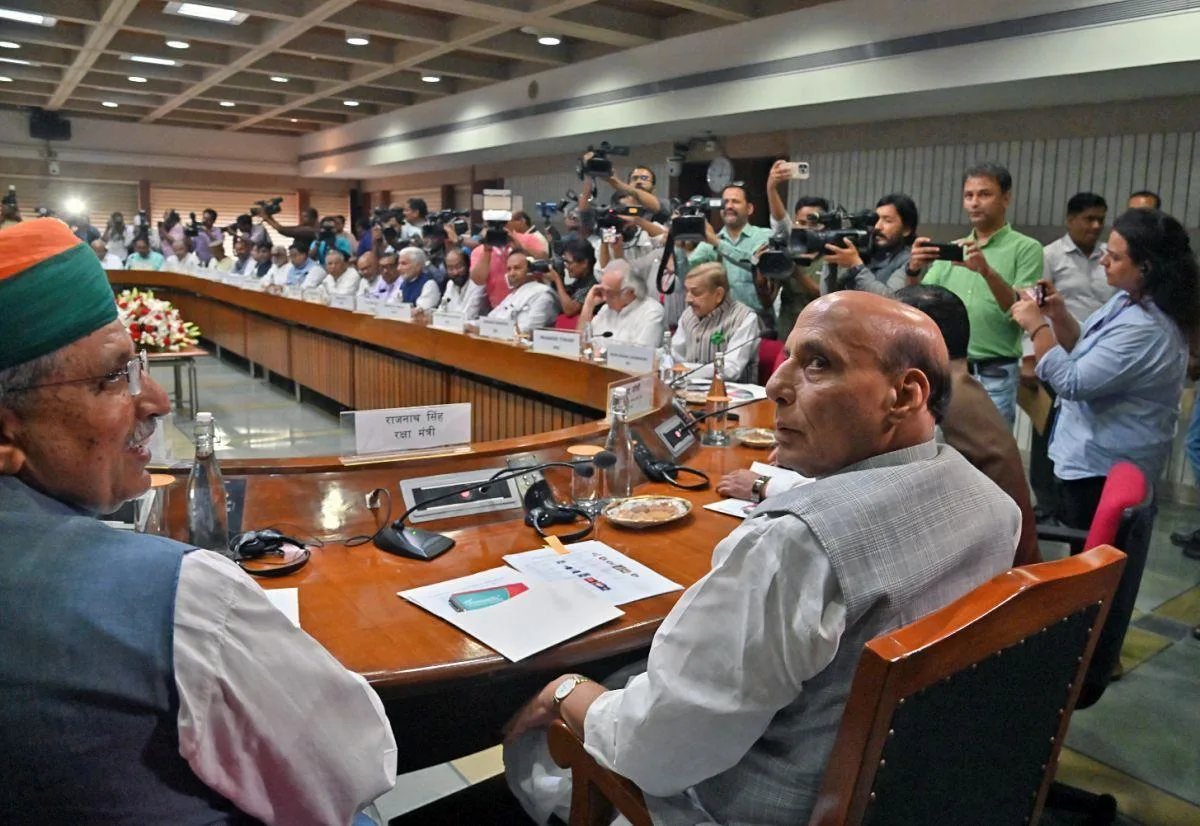
The Parliament Monsoon Session is set to begin on July 20, with political activity intensifying in New Delhi ahead of the important legislative period. Defence Minister Rajnath Singh will lead a high-level NDA strategy meeting to finalise the government’s legislative agenda and plan for the upcoming Parliament session.
The meeting will bring together ministers and senior NDA leaders to review legislative priorities, coordinate parliamentary strategy, and discuss key bills likely to be introduced during the session. The government aims to ensure smooth functioning of Parliament while advancing its legislative programme.
According to official information, the Parliament Monsoon Session will continue until August 13. Defence Minister Rajnath Singh will lead a high-level NDA strategy meeting to finalise the government’s legislative agenda and plan for the upcoming Parliament session.
Ahead of every parliamentary session, the ruling alliance holds internal discussions to prepare for debates and coordinate its strategy. Rajnath Singh will lead the strategy meeting to help ministers align their positions on proposed legislation and review issues that could arise during parliamentary proceedings.
The government is also expected to hold an all-party meeting before the session begins. Such meetings provide an opportunity for political parties to discuss the agenda, raise procedural concerns, and promote cooperation for the smooth conduct of parliamentary business.
Officials believe constructive dialogue between political parties remains essential for ensuring productive debates and timely passage of important legislation.
The upcoming Parliament Monsoon Session is likely to witness discussions on several important policy matters affecting the country. Members of Parliament are expected to raise issues related to economic growth, inflation, infrastructure development, national security, healthcare, education, and welfare programmes.
The opposition will also present its views on key national issues and seek detailed discussions on matters of public importance. Parliamentary debates provide an important platform for elected representatives to examine government policies and present the concerns of citizens.
Political observers believe the session may include several significant legislative proposals that could shape future policy decisions across multiple sectors.
Parliament serves as India’s highest legislative institution, where elected representatives debate laws, review government policies, and hold the executive accountable. Every parliamentary session provides an opportunity for detailed discussion on issues affecting governance and national development.
Rajnath Singh will chair the NDA strategy meeting to prepare the ruling alliance for the Parliament Monsoon Session. The meetings enable alliance partners to coordinate more effectively while helping ministers prepare for legislative business and parliamentary proceedings.
Senior leaders will discuss the government’s policy agenda, upcoming debates, and strategies to address issues raised by the opposition. Effective coordination often contributes to smoother parliamentary functioning and more structured discussions.
Just as the government finalises its legislative priorities, opposition parties also prepare extensively before every parliamentary session. Political parties identify major public issues, formulate discussion points, and coordinate strategies for debates inside both Houses of Parliament.
Parliamentary democracy depends on meaningful participation from both the ruling alliance and the opposition. Healthy debate allows lawmakers to examine legislation thoroughly while ensuring accountability and transparency in governance.
Citizens, industry groups, economists, and policy experts closely follow every parliamentary session because decisions taken in Parliament influence multiple sectors of the economy and public administration. Legislative debates often shape policies affecting taxation, infrastructure, healthcare, education, defence, digital governance, agriculture, and employment.
Observers expect members of Parliament to engage in detailed discussions while maintaining the dignity and effectiveness of parliamentary proceedings.
The Parliament Monsoon Session is one of the most significant legislative periods in India’s parliamentary calendar, providing elected representatives with an opportunity to debate national issues and review the government’s policies. During the session, Members of Parliament discuss proposed legislation, raise matters of public importance, and examine the functioning of various ministries through questions and debates.
Parliamentary discussions also allow lawmakers to present concerns raised by citizens from different regions of the country. Through structured debates and committee recommendations, Parliament plays an important role in shaping policies that affect economic growth, social welfare, education, healthcare, infrastructure, agriculture, and national security.
The ruling alliance and the opposition will actively participate in the Monsoon Session. While the government will focus on advancing its legislative agenda, opposition parties are likely to seek detailed discussions on several important public issues. Such exchanges form an essential part of India’s democratic process and contribute to informed decision-making.
Political experts believe that meaningful parliamentary discussions strengthen democratic institutions by encouraging transparency, accountability, and policy evaluation. Parliament carefully scrutinises every bill before passing it into law, allowing lawmakers to consider multiple viewpoints throughout the legislative process.
Constructive debates also allow ministers to clarify government policies while providing opposition members with an opportunity to question administrative decisions and suggest improvements. This process helps ensure that legislation reflects broader public interests and constitutional principles.
Citizens, businesses, and policy analysts closely monitor the Parliament Monsoon Session because decisions taken during the session can influence economic reforms, investment policies, employment generation, social welfare programmes, and governance initiatives. As Parliament prepares to convene, expectations remain high that lawmakers will engage in productive discussions focused on national development and public welfare while ensuring the smooth functioning of both Houses.
The Parliament Monsoon Session will be an important legislative period as the government prepares to introduce key proposals and respond to issues raised by the opposition. Rajnath Singh’s strategy meeting reflects the NDA’s efforts to ensure effective coordination before Parliament convenes.
As lawmakers gather for the session, attention will remain focused on legislative priorities, national policy discussions, and parliamentary debates that could influence governance in the months ahead. Productive discussions, constructive cooperation, and informed decision-making will remain essential for addressing important national challenges while strengthening India’s democratic institutions.
Source: ANI

Your trusted source for news, updates, and insights from India and around the world.
Copyright © 2020–2026 NEWSHOTS. All Rights Reserved.