
Your daily dose of news, covering the latest updates in politics, business, sports, entertainment, and more from India and around the world.
Your daily dose of news, covering the latest updates in politics, business, sports, entertainment, and more from India and around the world.
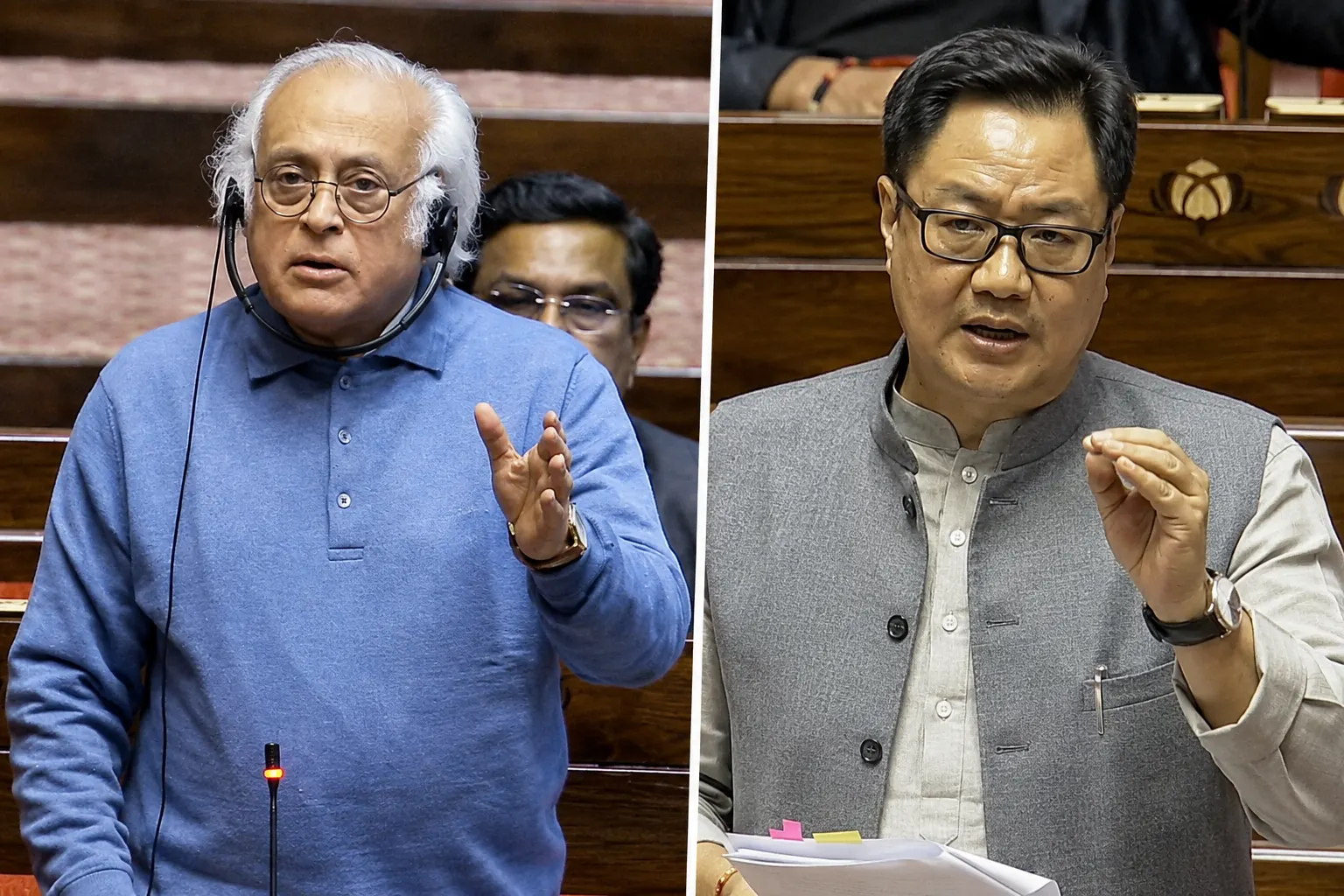
A fresh political confrontation unfolded in Parliament after Congress leader Jairam Ramesh accused Union Parliamentary Affairs Minister Kiren Rijiju of spreading misinformation regarding proceedings in the Rajya Sabha. The Congress leader alleged that Bharatiya Janata Party (BJP) Members of Parliament prevented Leader of the Opposition Mallikarjun Kharge from speaking despite receiving permission from the Chair.
The remarks have intensified the ongoing political tensions between the ruling BJP and the Opposition, with both sides presenting conflicting versions of what happened inside the Upper House.
Addressing reporters after the parliamentary proceedings, Jairam Ramesh claimed that the Chair had already permitted Mallikarjun Kharge to speak. However, according to the Congress leader, BJP MPs interrupted the proceedings and allegedly prevented Kharge from presenting his views.
Ramesh argued that the disruption undermined parliamentary traditions and affected the Opposition’s ability to participate in an important discussion. He further stated that democratic institutions function effectively only when every elected representative receives an opportunity to express their views without unnecessary interruptions.
The controversy escalated after Jairam Ramesh accused Kiren Rijiju of presenting an inaccurate version of events. Ramesh claimed that the minister’s remarks did not accurately represent the events that unfolded in the Rajya Sabha.
He alleged that attempts were made to shift attention away from the Opposition’s concerns by creating a different narrative. Ramesh maintained that the official parliamentary proceedings clearly indicated that Kharge had been permitted to speak before disruptions occurred.
The Congress leader urged the government to respect parliamentary conventions and avoid what he described as misinformation regarding legislative proceedings.
The latest disagreement adds to a series of confrontations witnessed during the current Parliament session. The ruling party and the Opposition have repeatedly clashed over procedural issues, debates, and the conduct of members inside both Houses.
Government representatives have maintained that parliamentary rules are followed according to established procedures, while Opposition leaders continue to accuse the government of limiting debate on significant national issues.
Political observers believe that such exchanges often reflect the broader political rivalry between the government and Opposition rather than isolated procedural disputes.
Parliament serves as India’s highest legislative institution, where elected representatives discuss policies, raise public concerns, and hold the government accountable. Healthy debate and orderly discussions remain essential for strengthening democratic governance.
Frequent disruptions, however, often reduce valuable discussion time and delay legislative business. Both government and Opposition leaders have repeatedly appealed for smoother functioning of Parliament while simultaneously blaming each other for interruptions.
The current dispute has once again highlighted the importance of maintaining decorum and ensuring equal opportunities for all members to participate in debates.
The incident quickly became a topic of discussion across political circles and social media. Supporters of both parties defended their respective positions, while several commentators called for greater transparency in parliamentary proceedings.
Congress leaders reiterated that Kharge deserved the opportunity to complete his remarks after receiving permission from the Chair. BJP leaders, on the other hand, defended the government’s position and rejected allegations made by the Opposition.
The exchange reflects the increasingly confrontational atmosphere that has characterized several recent sessions of Parliament.
As Parliament continues its session, political observers expect further debates over legislative procedures and parliamentary conduct. Whether the issue leads to additional discussions inside the House or remains part of the ongoing political exchange will depend on future developments.
Both the government and the Opposition have indicated that they will continue raising issues they consider important, ensuring that parliamentary debates remain closely watched throughout the session.
Proceedings in Parliament often attract significant public attention because they shape national policies and provide a platform for elected representatives to debate issues affecting millions of citizens. Every statement made inside the House carries political significance, especially when disagreements arise between the ruling party and the Opposition. The latest controversy involving Jairam Ramesh and Kiren Rijiju has once again highlighted how parliamentary events can quickly become a matter of national discussion.
Congress leaders argued that Mallikarjun Kharge should have been allowed to complete his address after receiving permission from the Chair. According to the Opposition, interruptions prevented meaningful debate and reduced opportunities for elected representatives to express their concerns. The party maintained that Parliament functions effectively only when every member receives a fair chance to participate in discussions without unnecessary disruptions.
The issue also sparked conversations beyond Parliament, with political analysts discussing the importance of preserving democratic traditions. Many observers believe that healthy debate strengthens governance by allowing different viewpoints to be presented before important decisions are taken. They also emphasize that orderly proceedings help citizens better understand legislative discussions and government policies.
The exchange between Jairam Ramesh and Kiren Rijiju reflects the broader political rivalry between the BJP and the Congress. In recent parliamentary sessions, both parties have frequently disagreed over legislative procedures, policy debates, and the conduct of members inside the House. These differences often result in sharp exchanges, with each side accusing the other of disrupting parliamentary business.
While the Congress has alleged that the Opposition’s voice was restricted during the proceedings, BJP leaders have defended their handling of parliamentary affairs and rejected the allegations made by the Opposition. Such political disagreements are common in democratic legislatures, where competing viewpoints often lead to intense debate over procedural matters.
Despite these differences, many constitutional experts continue to stress the importance of maintaining parliamentary decorum and ensuring respectful discussions among lawmakers. Constructive debate allows Parliament to perform its primary role of scrutinizing legislation, holding the government accountable, and addressing issues of national importance.
As the current Parliament session continues, lawmakers are likely to continue debating similar issues.Political parties are likely to raise key national issues while also defending their positions on procedural disputes. The latest controversy serves as another reminder that parliamentary proceedings remain closely watched by citizens, political observers, and media organizations across the country.
The Jairam Ramesh Accuses Rijiju controversy has added another chapter to the ongoing political disagreements in Parliament. As debates continue, the incident underscores the importance of transparency, parliamentary decorum, and constructive dialogue in India’s democratic institutions.
Source: ANI

Your trusted source for news, updates, and insights from India and around the world.
Copyright © 2020–2026 NEWSHOTS. All Rights Reserved.