
Your daily dose of news, covering the latest updates in politics, business, sports, entertainment, and more from India and around the world.
Your daily dose of news, covering the latest updates in politics, business, sports, entertainment, and more from India and around the world.
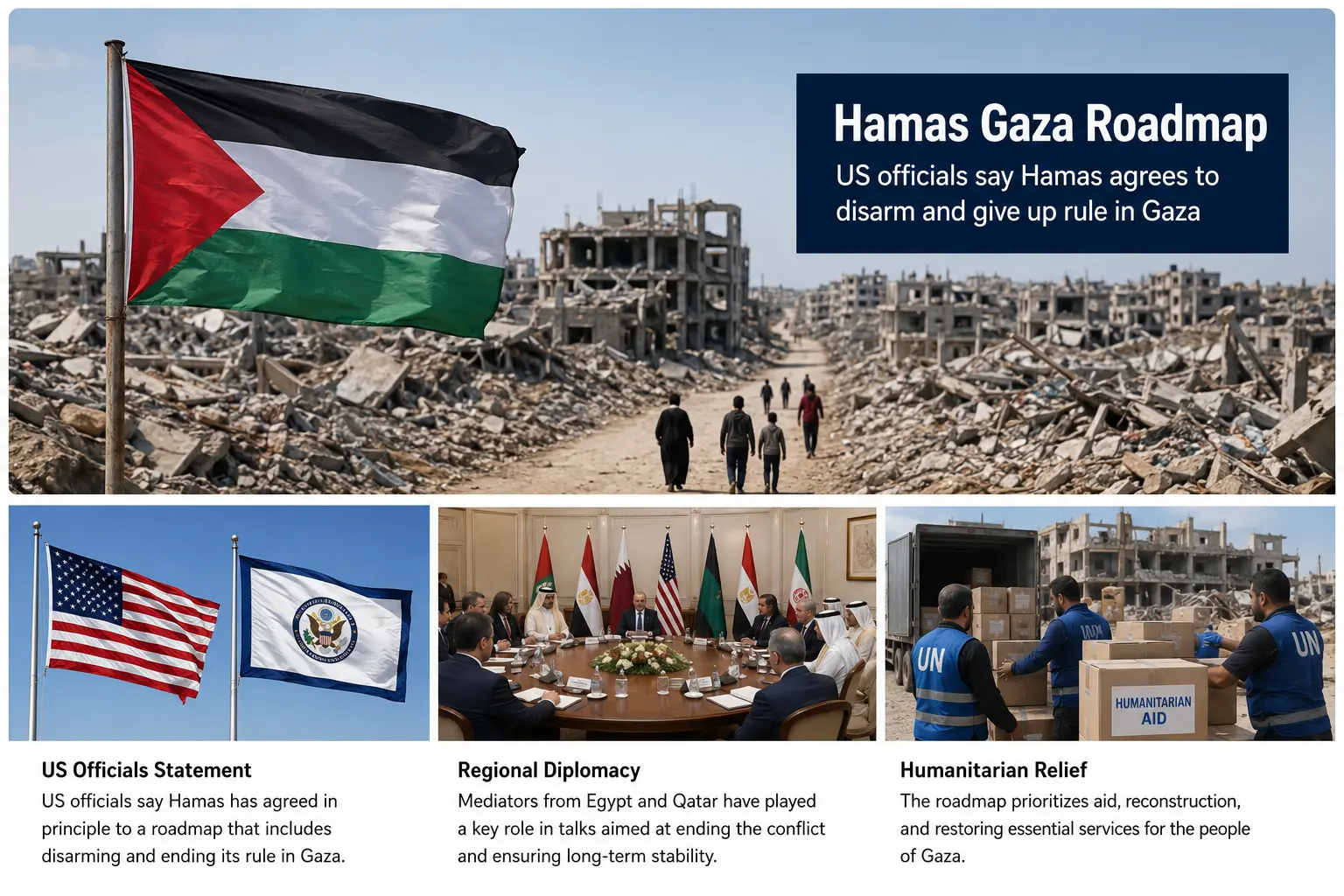
According to US officials, Hamas has agreed in principle to a detailed roadmap that includes disarming its military wing and relinquishing any governing role in Gaza. If implemented, the development could mark one of the most significant diplomatic breakthroughs since the conflict intensified, opening the possibility for a long-term political solution and reconstruction of the war-torn territory.
The proposed Hamas Gaza Roadmap reportedly outlines steps toward ending militant control, establishing a transitional administration, expanding humanitarian assistance, and rebuilding Gaza with international support.
US officials stated that Hamas has, for the first time, expressed willingness to consider a roadmap involving the surrender of its weapons and withdrawal from governing Gaza. The proposal was reportedly developed after extensive diplomatic discussions involving regional and international partners.
While officials described the development as encouraging, they emphasized that the roadmap remains subject to implementation and verification. Negotiations are expected to continue before any final agreement is reached.
The reported breakthrough follows months of diplomatic efforts aimed at ending hostilities and creating conditions for lasting peace in the region.
According to reports, the proposed roadmap contains several major components designed to stabilize Gaza after the conflict.
Some of the reported provisions include:
Officials say these measures could support political stability while helping address the humanitarian challenges faced by civilians.
The humanitarian situation in Gaza continues to be one of the most urgent concerns for the international community. Large areas have suffered extensive damage, leaving thousands of families in need of shelter, medical care, food, and clean water.
If implemented, the roadmap would prioritize increasing humanitarian aid deliveries while supporting reconstruction projects aimed at restoring hospitals, schools, roads, housing, and essential public services.
International organizations are expected to play an important role in coordinating relief efforts and ensuring assistance reaches affected communities.
Diplomatic engagement involving regional mediators has been central to efforts aimed at reducing tensions. Officials acknowledged that negotiations involving countries such as Egypt and Qatar have helped facilitate dialogue between the parties.
The United States has also remained actively involved in supporting diplomatic initiatives designed to secure a ceasefire and encourage long-term political solutions.
Experts note that successful implementation will require sustained cooperation among regional governments, international organizations, and all parties involved in the conflict.
Although the reported agreement represents a potentially significant step, many political and security challenges remain.
Verification of disarmament, establishment of transitional governance, security guarantees, and rebuilding public trust are expected to require extensive international oversight.
Analysts also point out that successful implementation depends on continued negotiations, mutual commitments, and broad international support.
Even if a framework has been agreed upon, translating diplomatic commitments into practical action will likely take considerable time.
Governments around the world are closely monitoring developments surrounding the reported roadmap. Many countries have consistently called for peaceful negotiations, civilian protection, and increased humanitarian access.
International observers believe any lasting agreement could contribute to greater regional stability while reducing the humanitarian impact of the conflict.
However, officials caution that concrete progress will depend on compliance by all parties and continued diplomatic engagement.
If successfully implemented, the roadmap could significantly reshape Gaza’s political and humanitarian landscape.
Ending armed conflict would allow reconstruction projects to move forward more rapidly, encourage international investment in rebuilding efforts, and improve living conditions for civilians.
Reopening public services, restoring infrastructure, and creating stable governance could support long-term economic recovery while helping displaced families return to their communities.
Many experts believe sustainable peace will ultimately depend on continued dialogue, political compromise, and international cooperation.
The reported Hamas Gaza Roadmap has drawn significant international attention, with governments and global organizations closely monitoring the progress of negotiations. Many world leaders have repeatedly stressed the need for a sustainable political solution that ensures security, protects civilians, and creates conditions for long-term peace in the region.
Diplomatic efforts are expected to continue in the coming weeks as mediators work with all parties to clarify the details of the proposed roadmap. International observers believe that any meaningful progress will depend on continued dialogue, confidence-building measures, and a commitment to implementing agreed provisions.
Several countries have also emphasized the importance of maintaining humanitarian access while supporting reconstruction initiatives aimed at restoring essential public services across Gaza.
While the reported agreement has generated cautious optimism, analysts note that successful implementation will be far more challenging than reaching an initial understanding. Issues such as security arrangements, verification mechanisms, governance reforms, and humanitarian coordination will require sustained international cooperation and careful planning.
Experts believe that rebuilding trust among the parties involved will be essential for ensuring that commitments made during negotiations translate into practical action on the ground. Independent monitoring, diplomatic engagement, and continued support from regional partners could play a significant role in maintaining momentum.
If implemented successfully, the Hamas Gaza Roadmap could create opportunities for improved regional stability, accelerated reconstruction, and better living conditions for civilians affected by the conflict. However, officials continue to emphasize that discussions are ongoing and that lasting peace will require cooperation from all stakeholders.
The coming months will reveal whether policymakers can transform the proposed roadmap from diplomatic discussions into meaningful action that reduces tensions and promotes long-term stability across Gaza and the wider Middle East.
The reported Hamas Gaza Roadmap represents a potentially important diplomatic development, with US officials claiming that Hamas has agreed to disarm and relinquish its governing role in Gaza under a proposed peace framework. Although officials have yet to finalize several key details, the proposal has renewed hopes of reducing violence, increasing humanitarian aid, and advancing long-term reconstruction efforts. The coming weeks will determine whether diplomatic efforts can achieve lasting peace on the ground.
Source: ANI

Your trusted source for news, updates, and insights from India and around the world.
Copyright © 2020–2026 NEWSHOTS. All Rights Reserved.