
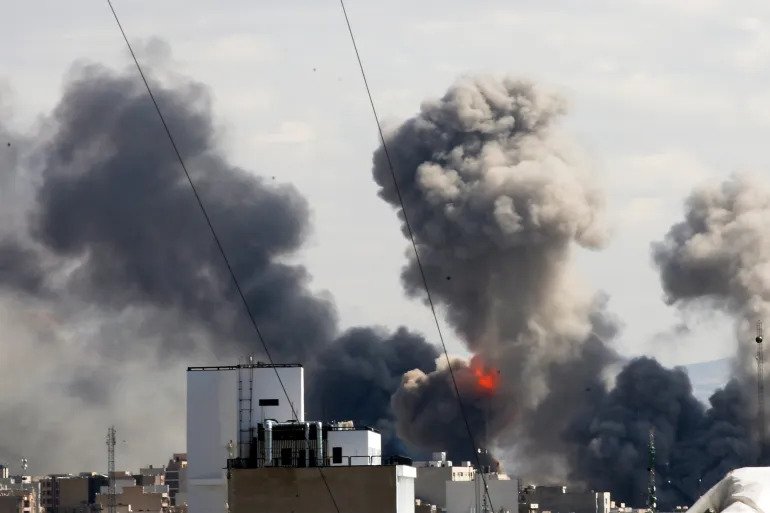
02-MAR-2026, 11:42 AM The Middle East has entered one of its most perilous phases in decades as coordinated military strikes by the United States and Israel reportedly killed Ali Khamenei, sending shockwaves through the region and the world. State media in Iran confirmed the death after the unprecedented attack, which has rapidly escalated tensions and prompted urgent diplomatic activity across global capitals.
What unfolded over the weekend marks a sharp intensification of hostilities in a region already strained by years of geopolitical fault lines.
The Attack and Its Confirmation
According to international sources and Iranian state media, a joint U.S.–Israeli strike targeted multiple strategic sites in Iran, including locations in Tehran connected to the country’s leadership. Officials in Tehran have since confirmed that Ayatollah Ali Khamenei, 86, died during the assaults, prompting 40 days of national mourning.
The scale of the military operation—reportedly involving precision strikes against Iranian leadership compounds, missile installations, and military command centres — underscores the seriousness of the confrontation. Earlier announcements by U.S. and Israeli officials had indicated Khamenei’s removal as a principal objective of the campaign.
Historic Role of the Leader and Iran’s Response
Khamenei had been the supreme leader of Iran since 1989, wielding near-absolute authority over military, political, judicial, and religious affairs. His leadership helped shape Iran’s trajectory through decades of conflict, nuclear standoffs, and widespread internal repression.
Following the announcement of his death, Iranian authorities affirmed ongoing strikes and mobilized defensive measures, signaling a determination to retaliate. Missile barrages and drone attacks have already been launched against military targets across the region as part of Iran’s immediate response.
Global and Regional Alarm
The reported death of Iran’s top leader has heightened tensions not only in the Middle East but across key geopolitical theatres. Global leaders are on alert, with calls for calm mixing with ominous warnings about the potential for further escalation.
Major capitals, including Washington, Moscow, Beijing, and European capitals, are closely monitoring the situation, aware that any misstep could broaden the conflict. Oil markets, already sensitive to instability, saw a spike in prices as fears of wider unrest gripped investors.
Middle Eastern countries hosting foreign troops or maintaining strategic alliances have reported heightened security measures. Embassies, airspace authorities, and diplomatic missions are evaluating contingency plans amid the uncertainty.
Tehran’s Leadership Transition
In the immediate aftermath, Iran’s Assembly of Experts is expected to move swiftly to select a successor. Reports suggest that Ayatollah Alireza Arafi has been named interim supreme leader, adding to the atmosphere of urgency and political flux.
The leadership vacuum in Tehran could lead to internal power struggles, with factions within the ruling elite—especially the Islamic Revolutionary Guard Corps (IRGC)—positioning themselves for influence in the post-Khamenei era.
Iran’s Call for Retaliation
Iranian President Masoud Pezeshkian has vowed retaliation, describing it as a “legitimate duty and right” following what Tehran views as an unprovoked act of aggression. His statements reflect a confrontational posture that could fuel future actions by Iranian forces across the region.
Security analysts warn that revenge operations might not be limited to direct military engagements but could involve proxy groups and asymmetric tactics in countries like Lebanon, Syria, Iraq, and Yemen where Iranian influence is pervasive.
Human Impact and Civilian Casualties
Beyond political dynamics, the attacks have inflicted high human costs. Independent estimates vary, but reports indicate scores of Iranians—including civilians—have been killed or injured. Disruptions to infrastructure and daily life have been reported widely, adding to the tragedy of the confrontation.
The social fabric in Iran is strained, with mourning and grief compounded by fear of further military action.
International Diplomatic Efforts
Amid rising tensions, global leaders are under pressure to prevent a broader conflict. Diplomatic efforts are underway to open backchannel communications, de-escalate rhetoric, and avoid unintended clashes, especially involving nuclear-armed states and regional alliances.
United Nations officials and foreign ministers from key countries have emphasized restraint, calling for immediate cessation of hostilities and return to diplomatic negotiations.
However, trust deficits and mutual distrust could make diplomatic progress exceedingly difficult.
Potential for Wider Escalation
The potential for escalation remains high. With missile exchanges already in progress and allied nations taking defensive postures, the region is at risk of a larger confrontation. Vital maritime routes such as the Strait of Hormuz, through which a significant portion of the world’s oil supply transits, have restrictions on shipping and increased naval deployments as tensions heighten.
Global markets are also responding — traditional safe havens like gold have seen an uptick as uncertainty looms large.
Public Sentiment and Global Reactions
Public reactions vary widely, with some populations expressing support for Iran’s resistance and others decrying the violence. Protests and solidarity demonstrations have occurred in several cities, while governments weigh political messages carefully to avoid inflaming the situation.
The global community remains polarised, with some states applauding the strike as a blow to an adversarial regime, and others condemning it as a violation of international law with dangerous implications for peace and stability.
Conclusion: A World on Edge
The reported killing of Iran’s supreme leader in joint U.S. and Israeli strikes represents a watershed moment in Middle Eastern geopolitics. What began as a targeted military operation has the potential to redefine alliances, fuel new conflicts, and reshape the regional balance of power.
With leadership transitions underway in Tehran, diplomatic channels under strain, and retaliatory actions already in motion, the coming days will be critical. The world watches closely—acutely aware that even minor miscalculations now could trigger broader war dynamics, affecting millions beyond the regional epicenter.
As global leaders remain on alert, the need for restraint, dialogue, and international cooperation has never been more urgent. Failure to mitigate this crisis could plunge the Middle East—and potentially the world—into sustained instability and conflict.
SOURCE: NBC

One thought on “U.S. and Israel Launch Major Strikes on Iran; Supreme Leader Killed — Middle East on Edge”