
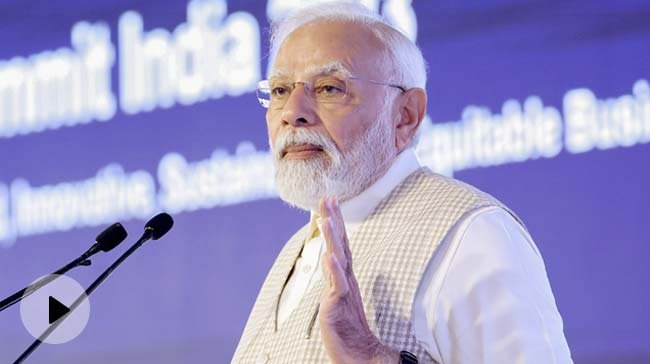
12-MAR-2026, 11:39 AM Prime Minister Narendra Modi has strongly criticised the ruling Dravida Munnetra Kazhagam government in Tamil Nadu, accusing it of promoting what he described as a “corruption model” of governance. The remarks have sparked a fresh political debate in the state, with leaders from both the ruling party and the opposition exchanging sharp statements.
The comments come at a time when political activity is intensifying in Tamil Nadu, with parties preparing for upcoming elections and attempting to strengthen their influence among voters.
Modi’s Remarks on Governance
During a political address, Prime Minister Narendra Modi criticised the policies and administration of the DMK government, alleging that corruption has become deeply rooted in the state’s governance.
According to Modi, development and transparency should be the priority of governments, and corruption undermines economic growth and public trust. He stated that political leaders must ensure accountability and efficient governance in order to serve citizens effectively.
His remarks were widely reported and quickly became a major talking point in national and state politics.
DMK Responds to Allegations
Leaders from the Dravida Munnetra Kazhagam strongly rejected the allegations made by the Prime Minister. Party representatives defended their administration, stating that the government has focused on welfare schemes, infrastructure development, and social programs aimed at improving the lives of citizens.
DMK leaders also accused the opposition of making politically motivated statements ahead of elections. They argued that the criticism was part of a broader political strategy to weaken the party’s influence in the state.
The exchange of statements between the ruling party and the opposition has intensified the political debate in Tamil Nadu.
Political Context in Tamil Nadu
Tamil Nadu has historically been dominated by regional political parties, particularly the DMK and its rival All India Anna Dravida Munnetra Kazhagam.
National parties such as the Bharatiya Janata Party have been attempting to expand their presence in the state by focusing on development issues, governance debates, and alliances with regional partners.
Statements from prominent national leaders often influence political narratives and campaign strategies in the state.
Corruption Allegations in Political Debate
Accusations of corruption are a common theme in Indian political debates. Political parties frequently raise such issues to question the governance record of their opponents and gain support from voters.
In this case, the Prime Minister’s criticism has once again brought the issue of transparency and accountability into the spotlight.
Political analysts note that such debates often intensify as elections approach, with parties attempting to shape public perception and highlight governance issues.
Impact on Upcoming Elections
The exchange of accusations between political parties may play a significant role in shaping the political narrative ahead of future elections in Tamil Nadu.
Political campaigns often revolve around key issues such as economic development, welfare policies, employment opportunities, and governance transparency.
Statements from national leaders can influence voter opinions, especially when they highlight broader issues such as corruption and administrative efficiency.
Reaction from Political Analysts
Political analysts believe the remarks are part of a larger political strategy aimed at strengthening the presence of national parties in Tamil Nadu.
By highlighting governance issues, leaders attempt to connect with voters who are concerned about development and transparency.
However, analysts also note that regional political dynamics in Tamil Nadu are complex, and voter preferences often depend on a combination of local issues, leadership appeal, and party alliances.
Public and Media Response
The remarks have generated widespread discussion across media platforms and social networks. Supporters of different political parties have expressed contrasting views on the issue.
While some supporters agree with the Prime Minister’s criticism and demand stronger action against corruption, others believe the accusations are politically motivated.
The debate highlights the role of political communication in shaping public opinion and influencing electoral narratives.
Focus on Development and Welfare
Alongside the allegations and political exchanges, development and welfare are expected to remain important issues in Tamil Nadu’s political discussions. Voters are likely to assess the performance of different parties based on their policies, public services, infrastructure projects, and welfare initiatives.
Political parties may also use their campaigns to highlight their achievements while questioning the records of their opponents. This could make governance and development key areas of public discussion as the political environment becomes more active.
Importance of Transparency
The debate has also renewed attention on the importance of transparency in public administration. Citizens expect governments to use public resources responsibly and ensure that welfare and development programs reach their intended beneficiaries.
Political parties may continue to demand greater accountability and clearer information about government decisions. At the same time, allegations made during political campaigns are likely to remain subjects of debate unless supported by official investigations or evidence.
Role of Voters
Ultimately, voters will play an important role in determining how these political debates influence the state’s electoral landscape. Voters may consider several factors, including leadership, local development, welfare policies, employment opportunities, and governance performance.
The competing narratives presented by political parties could influence campaign strategies and public discussions in different parts of Tamil Nadu.
Political Competition Ahead
The latest exchange between Prime Minister Narendra Modi and the DMK leadership indicates that political competition in Tamil Nadu is likely to remain intense. National and regional parties are expected to continue presenting contrasting views on governance and development.
As the political process moves forward, further statements, campaign activities, and responses from different parties could add to the ongoing debate over the state’s future direction.
The coming political developments could further influence voter priorities across Tamil Nadu.
Conclusion
Prime Minister Narendra Modi’s criticism of the DMK government over what he described as a “corruption model” has intensified the political debate in Tamil Nadu. The exchange of statements between the ruling party and opposition leaders reflects the competitive political environment in the state.
As political parties prepare for upcoming elections, issues such as governance, transparency, and development are likely to remain central topics of discussion. The evolving debate will continue to shape the political landscape in Tamil Nadu in the coming months.

3 thoughts on “PM Narendra Modi Criticises DMK Government Over ‘Corruption Model’”