
Your daily dose of news, covering the latest updates in politics, business, sports, entertainment, and more from India and around the world.
Your daily dose of news, covering the latest updates in politics, business, sports, entertainment, and more from India and around the world.
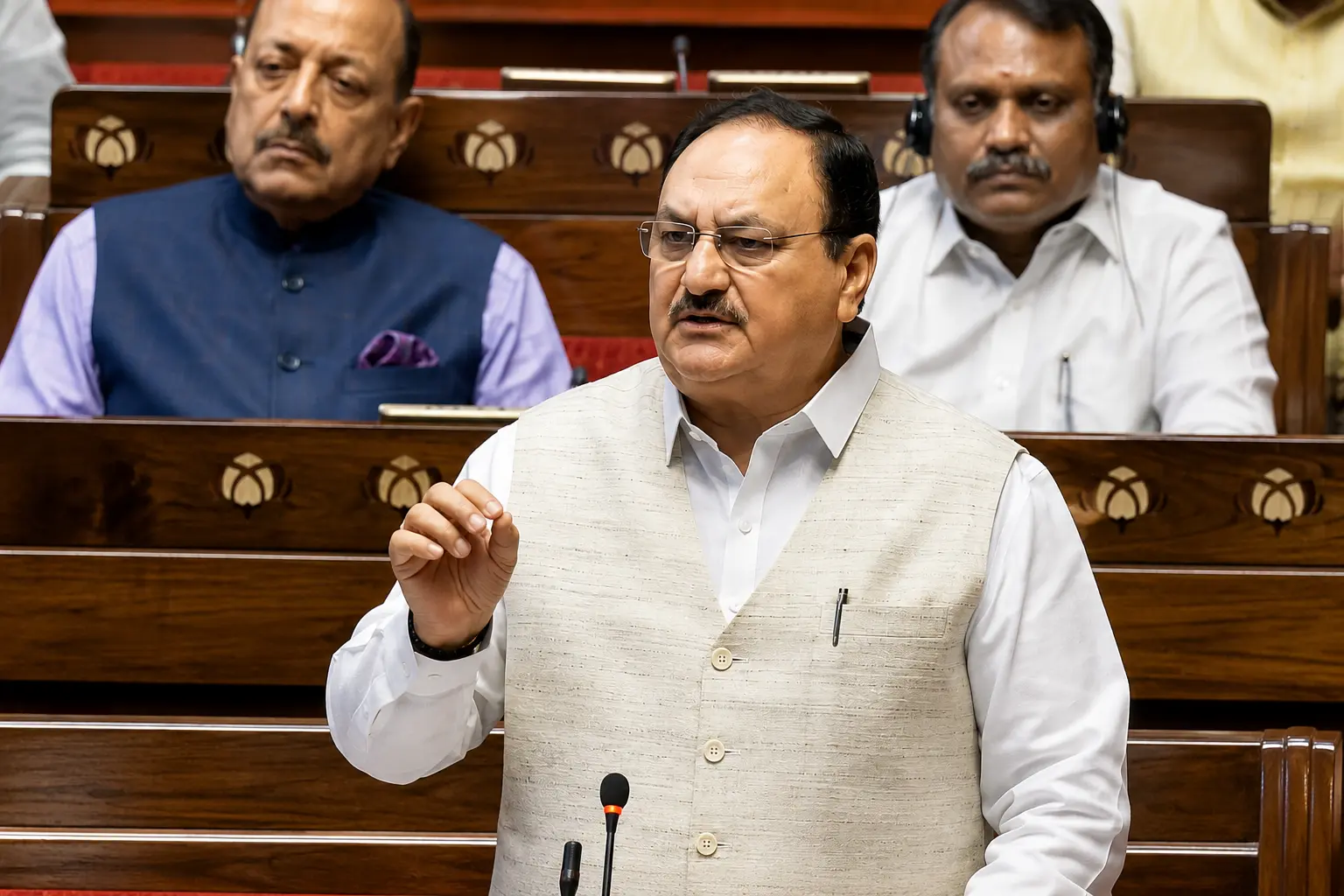
Union Minister and BJP National President JP Nadda criticized the Opposition for repeatedly disrupting Parliament proceedings, stating that the government remains fully prepared to discuss every issue raised during the ongoing Parliament session. Speaking in the Rajya Sabha, Nadda accused Opposition parties of creating unnecessary disruptions instead of participating in meaningful debates on matters of national importance.
The JP Nadda Parliament Session remarks came amid continued interruptions in both Houses, where frequent protests have affected legislative business and delayed discussions on several key issues.
Addressing members of the Rajya Sabha, JP Nadda asserted that the government has never hesitated to debate important national issues. He said ministers are prepared to answer questions and participate in detailed discussions on matters raised by Opposition parties.
According to Nadda, Parliament is the appropriate platform for constructive dialogue, policy discussions, and democratic debate. He emphasized that meaningful participation benefits both lawmakers and citizens by ensuring transparency and accountability in governance.
The government reiterated its willingness to cooperate with all political parties to facilitate smooth functioning of Parliament.
During his remarks, Nadda alleged that the Opposition has focused more on protests and disruptions than on substantive discussions inside the House. He claimed repeated interruptions have affected the normal functioning of Parliament and prevented several legislative matters from being debated.
The BJP leader argued that democratic institutions function effectively when elected representatives engage in informed debate rather than continuous protests.
He also urged Opposition members to utilize parliamentary procedures for raising concerns instead of disrupting proceedings.
Parliament serves as India’s highest legislative institution, where elected representatives discuss government policies, introduce legislation, and debate issues affecting the nation. Smooth functioning of both Houses allows lawmakers to examine bills, question ministers, and represent the interests of their constituents.
Political observers note that healthy parliamentary debates strengthen democratic institutions by encouraging accountability, transparency, and informed decision-making.
Constructive discussions also provide citizens with greater insight into government policies and legislative priorities.
The current Parliament session has witnessed several heated exchanges between the government and Opposition over a range of political and public policy issues. While both sides continue expressing differing viewpoints, parliamentary procedures provide opportunities for discussions through debates, question hour, and other legislative mechanisms.
Observers believe continued dialogue between political parties remains essential for ensuring that Parliament functions efficiently while addressing issues of national importance.
Both the government and Opposition are expected to continue presenting their positions as the session progresses.
Parliamentary democracy functions most effectively when all political parties participate actively in legislative business while respecting established parliamentary rules and procedures. Cooperation between the treasury benches and the Opposition helps ensure that important legislation receives adequate discussion and public scrutiny.
Experts believe robust debate combined with orderly proceedings strengthens democratic governance and enhances public confidence in legislative institutions.
The JP Nadda Parliament Session remarks have once again brought attention to the importance of Parliament as the primary platform for democratic discussions in India. Parliament enables elected representatives to debate government policies, review legislation, raise public concerns, and hold the executive accountable through structured parliamentary procedures.
Healthy debates in both the Lok Sabha and the Rajya Sabha allow different political viewpoints to be presented before the nation. Such discussions help improve policymaking by allowing lawmakers to examine proposals from multiple perspectives before legislation is passed.
Political analysts believe that uninterrupted parliamentary proceedings benefit citizens by ensuring that important national issues receive detailed discussion and appropriate legislative attention.
Democratic systems function effectively when political parties engage in meaningful discussions while respecting parliamentary rules and procedures. Governments present their policies and legislative agenda, while Opposition parties scrutinize proposals, raise concerns, and suggest alternative viewpoints.
Constructive participation from both sides allows Parliament to perform its constitutional responsibilities more effectively. Experts often note that debate and disagreement are natural components of a democracy, but discussions are most productive when conducted through established parliamentary mechanisms.
The government has maintained that it remains open to discussions on issues raised by Opposition parties during the ongoing session. JP Nadda urged Parliament to address national concerns through constructive dialogue rather than repeated disruptions.
Each Parliament session is responsible for considering new Bills, reviewing government policies, approving financial matters, and discussing important national and international developments. Smooth functioning of both Houses helps ensure that legislative business proceeds according to schedule.
Frequent disruptions can reduce the time available for debates, Question Hour, and committee discussions, potentially delaying consideration of important legislation. Parliamentary committees also play a significant role by examining Bills in detail and gathering expert opinions before recommendations are presented.
Observers believe cooperation between the ruling party and the Opposition remains essential for maintaining the effectiveness of India’s legislative institutions.
Differences between the government and the Opposition remain an important feature of parliamentary democracy. Political parties often disagree on policy decisions, governance issues, and legislative priorities while presenting their respective viewpoints before Parliament.
Such disagreements promote democratic accountability by encouraging public debate and allowing citizens to consider multiple perspectives. However, many constitutional experts believe sustained discussions inside Parliament provide the most effective avenue for resolving political differences and addressing public concerns.
The JP Nadda Parliament Session statement reflects the government’s position that meaningful dialogue should continue through parliamentary debate while allowing both sides to present their arguments within the framework of democratic institutions.
As the current session continues, lawmakers will debate several important legislative matters and policy proposals in Parliament. Citizens, political observers, and policymakers will continue monitoring proceedings as lawmakers debate issues affecting governance, economic development, national security, and public welfare. Continued participation from all political parties will remain important for ensuring Parliament fulfils its constitutional responsibilities while strengthening India’s democratic traditions.
JP Nadda emphasized that the government is ready to discuss every issue in Parliament and criticized the Opposition for repeatedly disrupting proceedings. Lawmakers will continue debating key legislative and policy issues throughout the session, demonstrating Parliament’s vital role in India’s democracy.
Source: ANI

Your trusted source for news, updates, and insights from India and around the world.
Copyright © 2020–2026 NEWSHOTS. All Rights Reserved.