
Your daily dose of news, covering the latest updates in politics, business, sports, entertainment, and more from India and around the world.
Your daily dose of news, covering the latest updates in politics, business, sports, entertainment, and more from India and around the world.
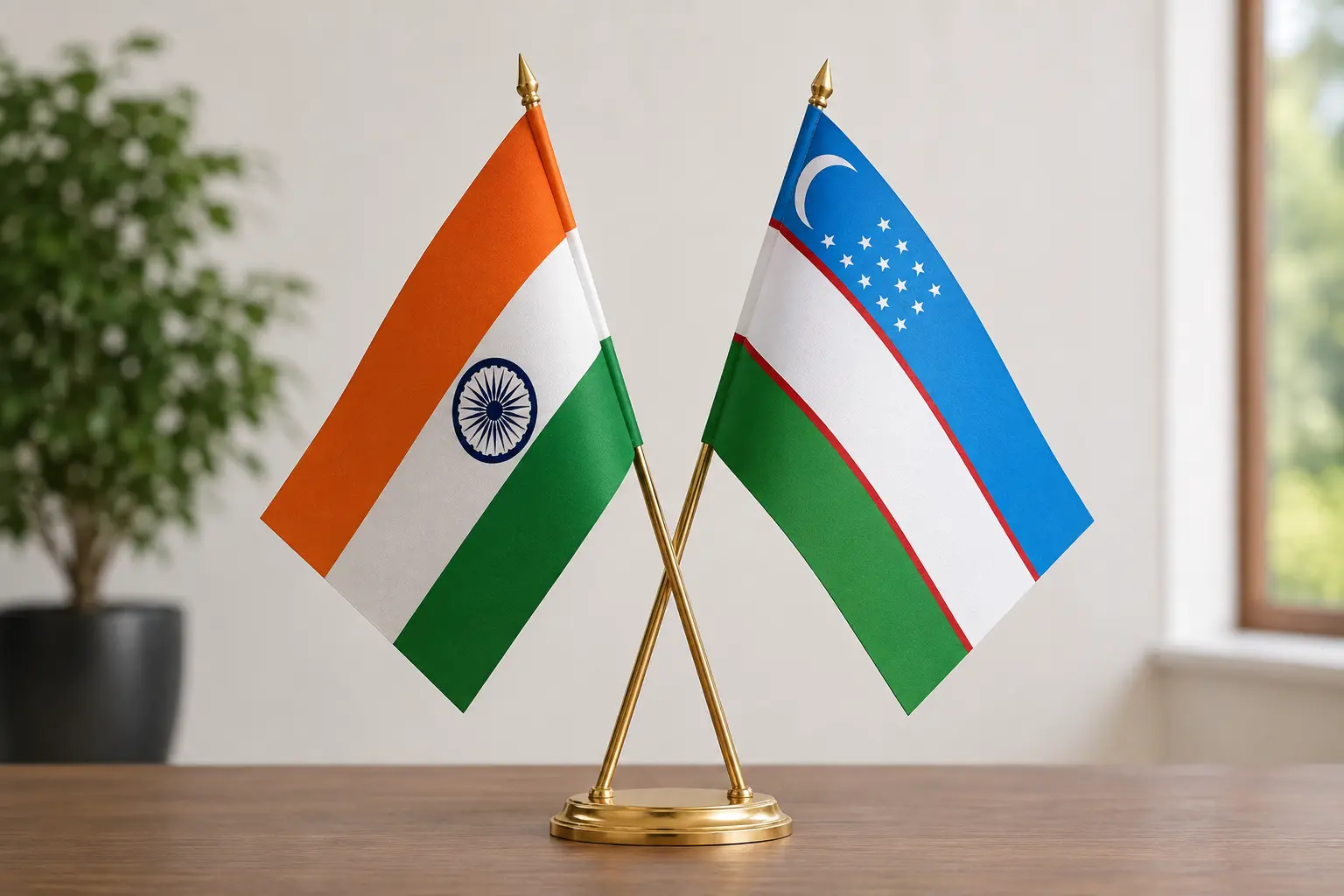
Uzbekistan’s Minister of Foreign Affairs Saidov Bakhtiyor Odilovich called on President Droupadi Murmu during his official visit to New Delhi, reaffirming the commitment of both nations to deepen their long-standing partnership. The high-level meeting focused on expanding cooperation across key sectors, including trade, investment, connectivity, education, energy, culture, and people-to-people exchanges.
The visit comes at a time when India and Uzbekistan are actively strengthening diplomatic and economic ties under their strategic partnership. Both countries have consistently worked together through bilateral dialogues and regional platforms, emphasizing peace, stability, and sustainable development in Central Asia and the broader region.
President Murmu welcomed the visiting Foreign Minister at Rashtrapati Bhavan and highlighted the importance of maintaining regular high-level engagements to further strengthen relations between the two friendly nations.
interest aimed at enhancing bilateral cooperation.
The leaders acknowledged the steady progress achieved in recent years and agreed that stronger diplomatic engagement would create new opportunities for collaboration. They emphasized the importance of maintaining regular exchanges between government officials, businesses, academic institutions, and cultural organizations.
The discussions reflected the shared vision of building a stronger strategic partnership capable of addressing regional and global challenges together.
Trade and investment remained one of the central themes of the meeting.
India and Uzbekistan have been exploring new avenues to increase bilateral trade while encouraging private sector participation across various industries. Both sides recognized the need to improve market access, simplify trade procedures, and promote business partnerships.
Officials believe stronger economic cooperation can benefit businesses in both countries while creating new employment opportunities and supporting long-term economic growth.
Investment in infrastructure, manufacturing, pharmaceuticals, information technology, agriculture, and renewable energy continues to be identified as promising areas for future collaboration.
India and Uzbekistan enjoy a strategic partnership based on mutual trust, respect, and shared interests.
Both countries have steadily expanded cooperation in defense, security, counter-terrorism, and regional connectivity over the past several years.
The leaders reiterated their commitment to maintaining peace and stability while supporting international efforts aimed at promoting sustainable development and regional prosperity.
The meeting also reaffirmed both governments’ intention to strengthen institutional cooperation through regular ministerial meetings and policy consultations.
Educational and cultural exchanges have become important pillars of India-Uzbekistan relations.
Thousands of students from Central Asia choose Indian educational institutions for higher studies, particularly in medicine, engineering, management, and technology.
Both countries continue promoting cultural programs, academic partnerships, language studies, tourism, and heritage exchanges to strengthen people-to-people connections.
These initiatives help build lasting relationships beyond government-level cooperation.
Connectivity continues to play a significant role in India’s engagement with Central Asian countries, including Uzbekistan.
Improved transport corridors, logistics networks, and trade routes are expected to facilitate faster movement of goods and services while supporting regional economic integration.
Both countries acknowledged the importance of strengthening connectivity initiatives that encourage commerce and enhance regional cooperation.
Greater connectivity is also expected to boost tourism and business interactions between the two nations.
Energy emerged as another important area of discussion during the meeting.
India has shown increasing interest in collaborating with Central Asian countries in areas such as renewable energy, conventional energy resources, and sustainable energy development.
Joint projects, knowledge sharing, and technological cooperation could help both countries achieve their long-term energy security objectives while supporting clean energy transitions.
Officials believe energy cooperation can become a key pillar of the expanding bilateral relationship.
India and Uzbekistan have consistently supported dialogue, peaceful cooperation, and regional stability.
The two countries continue working together through multilateral organizations and regional forums to address common challenges, including terrorism, climate change, economic development, and humanitarian issues.
Their shared commitment to international cooperation strengthens bilateral relations while contributing to broader regional peace and security.
Regular visits by senior leaders and ministers help maintain momentum in bilateral relations.
Such diplomatic engagements allow both countries to review ongoing cooperation, identify new opportunities, and resolve implementation challenges through direct dialogue.
Experts believe that continued high-level interactions will further strengthen trust and encourage deeper cooperation across multiple sectors.
The visit by Uzbekistan’s Foreign Minister demonstrates both governments’ commitment to expanding the partnership in a practical and meaningful manner.
The meeting between President Droupadi Murmu and Foreign Minister Saidov Bakhtiyor Odilovich reflects the positive trajectory of India-Uzbekistan relations.
As both countries continue expanding cooperation in trade, investment, education, connectivity, technology, and culture, bilateral ties are expected to become even stronger in the coming years.
With growing economic engagement and increasing diplomatic exchanges, India and Uzbekistan are well positioned to build a comprehensive partnership that benefits both nations and contributes to regional development.
India and Uzbekistan have steadily strengthened their relationship through regular diplomatic exchanges and expanding cooperation in several strategic sectors. Both countries continue to explore opportunities in trade, technology, healthcare, agriculture, pharmaceuticals, and digital innovation while encouraging greater business collaboration. Increased engagement between government institutions and private industries is expected to create new avenues for investment and economic growth. Cultural exchanges, tourism initiatives, and educational partnerships are also helping build stronger people-to-people ties. Officials from both nations remain optimistic that continued dialogue and high-level visits will further enhance bilateral cooperation, contributing to regional stability and supporting shared development goals in the years ahead.
The expanding partnership is expected to encourage innovation, strengthen regional connectivity, promote sustainable development, and create long-term opportunities for both nations, fostering stronger economic cooperation and lasting mutual trust.
The Uzbekistan FM India Visit marks another important step in strengthening diplomatic and strategic relations between India and Uzbekistan. Foreign Minister Saidov Bakhtiyor Odilovich’s meeting with President Droupadi Murmu highlighted the shared commitment to expanding cooperation across trade, investment, education, connectivity, energy, and cultural exchanges. As both nations continue enhancing bilateral engagement, the partnership is expected to contribute significantly to regional stability, economic growth, and long-term mutual prosperity.
Source: ANI

Your trusted source for news, updates, and insights from India and around the world.
Copyright © 2020–2026 NEWSHOTS. All Rights Reserved.