
Your daily dose of news, covering the latest updates in politics, business, sports, entertainment, and more from India and around the world.
Your daily dose of news, covering the latest updates in politics, business, sports, entertainment, and more from India and around the world.
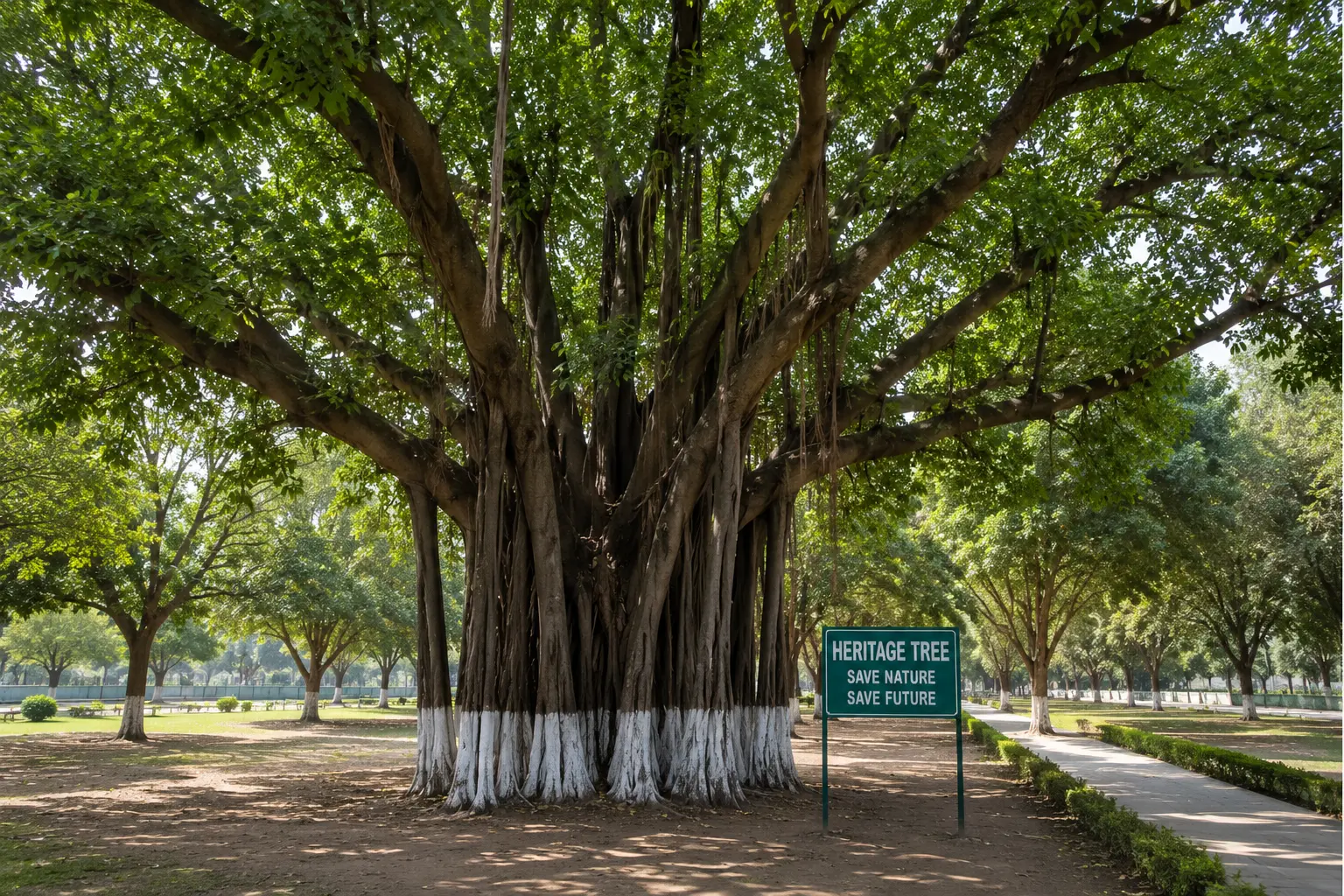
Chandigarh University has launched the Heritage Tree Conservation Project, a significant initiative aimed at identifying, digitally mapping, and preserving centuries-old heritage trees across Mohali. The project seeks to create a scientific database of ecologically, culturally, and historically important trees while promoting long-term conservation through modern technology and research.
The initiative comes at a time when rapid urbanisation and infrastructure development continue to threaten many old trees that have stood for generations. By documenting these valuable natural assets, the university hopes to support sustainable development while protecting the region’s environmental heritage.
The Heritage Tree Conservation Project is designed to develop a systematic process for identifying heritage trees based on their ecological value, historical importance, age, size, and cultural significance.
Researchers will conduct extensive field surveys across Mohali to collect detailed information about each tree. The data will include species identification, estimated age, trunk diameter, canopy size, GPS coordinates, health condition, and environmental importance.
This information will be compiled into a comprehensive digital database that can support future conservation efforts and scientific research.
One of the project’s primary objectives is to digitally map heritage trees using Geographic Information System (GIS) technology and other digital documentation tools.
The digital inventory will enable researchers and local authorities to monitor the condition of these trees over time while helping planners consider environmental factors during future development projects.
Officials believe digital mapping will improve conservation planning and make heritage tree information more accessible to researchers, policymakers, and environmental organizations.
The project is being led by researchers from Chandigarh University under the guidance of experienced faculty members working in collaboration across multiple disciplines.
The research team combines expertise in environmental science, computer science, and digital documentation to create an accurate and reliable conservation database.
Interdisciplinary collaboration is expected to strengthen the project’s scientific foundation while encouraging innovative approaches to biodiversity conservation.
Heritage trees play a vital role in maintaining ecological balance and preserving local history. Many of these trees have survived for centuries and continue to provide environmental, cultural, and social benefits.
Some of their key contributions include:
Protecting such trees ensures that future generations can continue to benefit from these valuable natural resources.
The project reflects the growing importance of balancing urban development with environmental conservation.
As cities continue to expand, preserving mature trees has become increasingly important for maintaining green spaces and ecological stability.
Researchers believe that scientific documentation can help policymakers make informed decisions regarding infrastructure projects while minimizing environmental impact.
The initiative also aligns with broader sustainability goals that encourage responsible management of natural resources.
Beyond scientific research, the Heritage Tree Conservation Project is expected to create awareness about environmental protection among students and local communities.
The project provides opportunities for students to participate in field surveys, digital mapping, biodiversity studies, and environmental documentation.
Educational institutions play an important role in promoting environmental responsibility, and such initiatives help encourage greater public participation in conservation efforts.
Community awareness campaigns may also inspire residents to recognize and protect heritage trees in their own neighborhoods.
Modern technology has become an essential tool in environmental conservation. Digital mapping, satellite imagery, GPS tracking, drone surveys, and data analytics allow researchers to monitor natural resources with greater accuracy.
By integrating technology into conservation efforts, Chandigarh University aims to build a reliable scientific resource that supports both research and policy development.
The use of digital records will also make it easier to update information as environmental conditions change over time.
Environmental experts believe that initiatives like the Heritage Tree Conservation Project could serve as a model for similar programmes across India.
Many cities possess historically significant trees that remain undocumented despite their ecological and cultural importance. Creating digital inventories can help authorities prioritize conservation efforts while supporting sustainable urban planning.
Universities and research institutions can play a key role in developing scientific methods for protecting natural heritage through research, innovation, and public engagement.
As the project progresses, researchers will continue identifying additional heritage trees across Mohali while expanding the digital database.
The findings may support future conservation policies, educational programmes, and environmental planning initiatives. Experts believe such scientific documentation will contribute significantly to preserving biodiversity and promoting sustainable development.
With increasing environmental awareness across the country, projects that combine research, technology, and conservation are expected to become even more important in the coming years.
The Heritage Tree Conservation Project is expected to create long-term benefits for researchers, policymakers, environmental organizations, and local communities. A scientifically documented digital database of heritage trees will help authorities monitor their health, identify conservation priorities, and implement timely protection measures whenever required. The initiative may also encourage similar conservation projects in other cities where historically and ecologically important trees remain undocumented.
Experts believe that preserving these natural landmarks not only protects biodiversity but also strengthens climate resilience by maintaining green cover and supporting local ecosystems. Through research, technology, and community participation, Chandigarh University hopes to inspire greater awareness about environmental conservation while contributing to sustainable urban development and responsible management of India’s natural heritage for future generations.The project will bring together academic institutions, government agencies, and conservation groups to advance knowledge sharing, research innovation, and public participation in preserving India’s ecological and cultural heritage. The programme will foster environmental responsibility by educating future generations and encouraging collaborative conservation efforts.
The Chandigarh University Heritage Tree Conservation Project represents an important step toward protecting centuries-old trees through scientific research and digital innovation. By documenting, mapping, and preserving these valuable natural assets, the initiative supports environmental sustainability while safeguarding an important part of Mohali’s ecological and cultural heritage. As urban development continues, projects like this demonstrate how technology and conservation can work together to create a greener and more sustainable future.
Source: ANI

Your trusted source for news, updates, and insights from India and around the world.
Copyright © 2020–2026 NEWSHOTS. All Rights Reserved.