
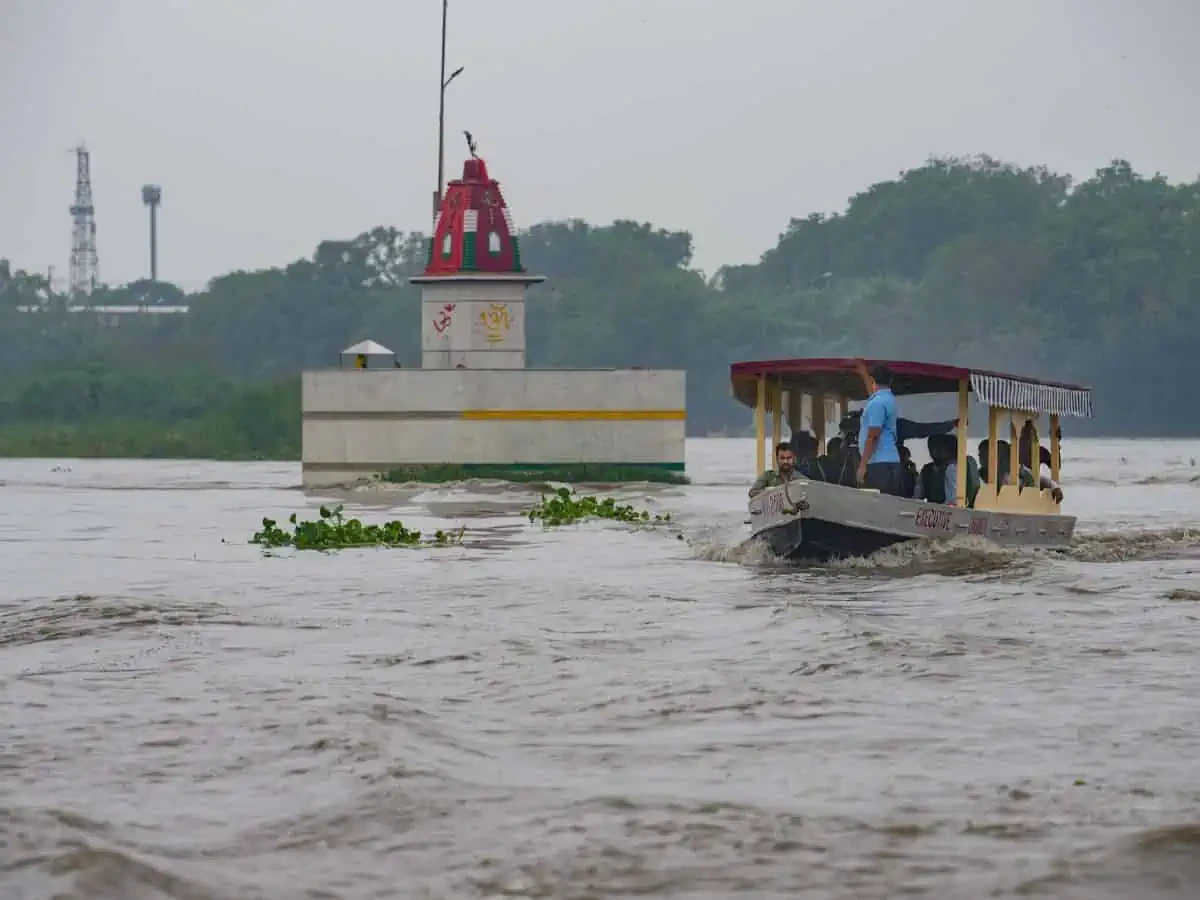
02-SEP-2025, 12:00 PM The capital city, Delhi, continues to face tense moments as the water level in the Yamuna River shows slight signs of receding but remains precariously above the danger mark. Authorities have issued continued advisories urging residents in low-lying areas to stay alert. Despite a minor decrease in the water level, the risk of flooding and further disruption remains, keeping the administration and citizens on edge.
Water Level: Current Situation in Delhi
Water Level in Yamuna River
According to official reports, the water level in the Yamuna has marginally reduced from its peak, but it is still flowing above the 205.33-meter danger mark. Experts caution that until the water level drops significantly, flood threats cannot be ruled out for areas close to the riverbanks.
Water Level: Areas Under Watch
Low-lying areas such as Yamuna Bazar, Nigambodh Ghat, and parts of East Delhi are under strict monitoring. Residents have been asked to move to relief camps set up by the Delhi government as a precaution against further rising water.
Water Level: Administrative Response
Water Level: Delhi Government’s Preparations
Authorities have deployed disaster management teams and boats in sensitive locations. With the water still above safe limits, round-the-clock surveillance has been put in place. Relief camps have been opened, ensuring food, shelter, and medical facilities for affected families.
Coordination with Neighbouring States
The Delhi government is also coordinating with Haryana and Uttar Pradesh to monitor the release of water from upstream barrages, as these releases directly impact the water of the Yamuna in the capital.
Impact on Daily Life
Traffic and Connectivity Issues
The rise in water level has forced the closure of several roads near riverbanks, leading to traffic diversions. Key routes, including stretches near ITO and Ring Road, have experienced congestion, adding to the woes of commuters.
Disruption to Local Businesses
Shopkeepers and vendors in low-lying areas near the Yamuna have faced severe setbacks. With the water still high, many have lost goods and face uncertainty about resuming their livelihood.
Historical Context of Yamuna Flooding
Previous Instances of High Water Level
This is not the first time Delhi has witnessed such a crisis. Over the years, high water in the Yamuna has caused repeated displacements and damage, especially during monsoon season. Comparisons are being drawn with the 2013 and 2019 floods when the river had also crossed dangerous thresholds.
Learning from Past Experiences
Experts believe that despite repeated floods, long-term measures to control the water level and prevent flooding have not been implemented adequately. Building stronger embankments and improving drainage systems are suggested solutions.
Voices from the Ground
Residents’ Concerns
Many residents living near the river expressed frustration. “Every year, when the water level rises, we are asked to vacate, but permanent solutions are never provided,” said a resident of Yamuna Khadar.
Relief Efforts Praised but Challenges Remain
While some acknowledged the timely relief camps set up by the government, they also pointed out overcrowding and lack of sufficient resources, highlighting that the situation remains tough until the water level recedes below danger levels.
Expert Opinions
Environmentalists on Yamuna’s Condition
Environmental experts emphasize that the Yamuna’s rising water level is not just a result of heavy rainfall upstream but also due to unchecked encroachments and reduced capacity of floodplains to absorb excess water.
Need for Sustainable Planning
Experts argue that a sustainable approach—restoring floodplains, regulating construction, and improving sewage systems—could help Delhi manage high water more effectively in the future.
Future Outlook
Monitoring the Water Level Closely
Authorities predict that if rainfall upstream decreases and no major water release occurs from Haryana’s Hathnikund Barrage, the water level in Yamuna may gradually fall below the danger mark within days.
Long-Term Measures Under Consideration
Delhi’s policymakers are considering long-term flood management strategies, including strengthening embankments and setting up advanced early warning systems to track changes in water levels more efficiently.
Flood Preparedness and Public Safety
Importance of Timely Alerts
As the water level in the Yamuna remains above the danger mark, timely communication has become essential for protecting residents in vulnerable locations. Authorities need to provide regular updates about river conditions, road closures, evacuation plans, and the availability of relief facilities. Clear information can help families make informed decisions and avoid unnecessary risks.
Residents living close to the river have also been advised to keep important documents, medicines, drinking water, food supplies, and essential belongings ready in case evacuation becomes necessary. People should avoid entering flooded roads or attempting to cross areas where the flow of water is strong.
Role of Emergency Services
Emergency response teams continue to remain prepared to assist people affected by flooding. Disaster management personnel, police teams, medical workers, and local volunteers can play an important role during such situations. Rescue boats and temporary shelters are particularly important for communities located in flood-prone areas.
Hospitals and medical centres in nearby areas also need to remain prepared for emergencies. Flooding can increase the risk of waterborne diseases, injuries, and sanitation-related problems, making access to healthcare especially important.
Protecting Essential Infrastructure
High water levels can affect more than residential areas. Roads, bridges, power infrastructure, drainage networks, public transport services, and other essential facilities may face operational challenges. Continuous monitoring can help authorities identify vulnerable infrastructure and take preventive action before conditions worsen.
Schools and offices located near affected areas may also need temporary changes in operations if transportation becomes difficult or local flooding increases. Such measures can reduce unnecessary movement and improve public safety.
Community Cooperation
Residents can contribute by following official advisories and cooperating with evacuation and relief efforts. Local communities can also help elderly people, children, and families requiring additional assistance during emergencies.
The current situation underlines the importance of combining immediate flood response with long-term planning. Better forecasting, improved drainage, protection of floodplains, and stronger coordination between agencies could help Delhi respond more effectively when the Yamuna rises in the future.
Conclusion
The situation in Delhi remains critical as the water in the Yamuna, though slightly receding, continues to stay above the danger mark. Thousands of residents in low-lying areas face uncertainty, with daily life and livelihoods disrupted. While immediate relief and evacuation efforts are ongoing, the crisis once again highlights the urgent need for sustainable planning to manage the recurring threats posed by high water levels in the Yamuna.
Unless long-term strategies are implemented, the city will remain vulnerable to similar crises in the coming years, making it imperative for both authorities and citizens to prepare for a future where floods may become an increasingly frequent challenge.
Source: ANI

One thought on “Delhi: Water level in Yamuna recedes, still flows above danger mark”