
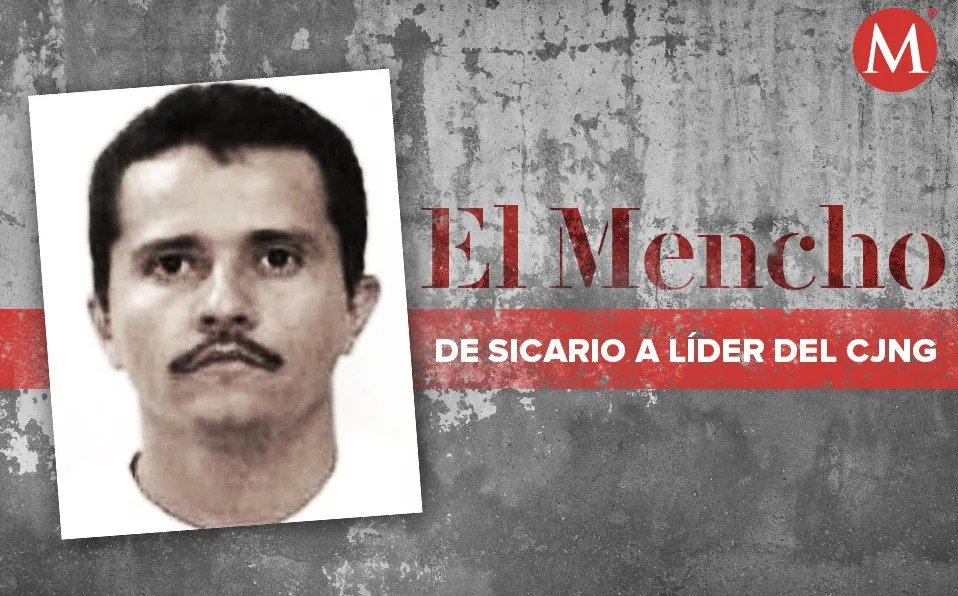
23-FEB-2026, 11:15 AM In a dramatic development that has sent shockwaves across Latin America, the Mexican Army has reportedly killed the notorious Jalisco Cartel leader known as “El Mencho” during a high-intensity security operation. The news, reported by Times Now Navbharat, marks what could be one of the most significant blows to organized crime in Mexico in recent years.
“El Mencho,” widely recognized as one of the most powerful and elusive drug lords in the world, had long been at the centre of Mexico’s escalating cartel violence. His reported death signals a critical chapter in Mexico’s ongoing war against drug trafficking networks that have shaped the country’s security landscape for decades.
Who Was “El Mencho”?
“El Mencho” was the alias of Nemesio Oseguera Cervantes, the alleged leader of the Jalisco New Generation Cartel (CJNG). Over the years, CJNG rose to become one of the most powerful and violent criminal organizations in Mexico.
Under his leadership, the cartel expanded its influence across multiple Mexican states and established international drug trafficking routes stretching into the United States, Europe, and Asia.
Authorities in Mexico and the United States had placed substantial rewards on his capture, describing him as a top priority target in global anti-narcotics efforts.
The Operation: A Coordinated Strike
According to reports, the Mexican Army launched a coordinated operation based on intelligence inputs tracking the movements of key cartel figures. The operation reportedly involved:
Specialized military units
Air surveillance support
Ground tactical forces
Coordination with federal law enforcement agencies
The confrontation is believed to have occurred in a region long considered a CJNG stronghold. While official confirmations and forensic details are awaited, preliminary reports suggest the operation was carefully planned to avoid civilian casualties.
Security experts note that such high-value operations require months of intelligence gathering and cross-agency coordination.
The Rise of CJNG
The Jalisco New Generation Cartel (CJNG) emerged as a dominant force after splintering from older cartel structures. Known for its militarised tactics, sophisticated weaponry, and aggressive territorial expansion, CJNG quickly gained notoriety.
The cartel was linked to:
Large-scale methamphetamine production
Cocaine and heroin trafficking
Arms smuggling
Money laundering networks
Violent confrontations with rival groups
Under El Mencho’s leadership, the organisation was described as one of the fastest-growing transnational criminal enterprises in the world.
Impact on Mexico’s Security Landscape
If confirmed, El Mencho’s death represents a symbolic victory for Mexican authorities. However, experts caution that cartel structures often survive leadership losses.
Historically, the elimination of top cartel leaders has sometimes resulted in:
Power vacuums
Internal factional disputes
Short-term spikes in violence
Fragmentation into smaller criminal groups
Mexico has experienced similar patterns in previous years following the capture or death of other cartel kingpins.
Therefore, while the operation may weaken CJNG’s centralised command, the long-term impact remains uncertain.
International Implications
Drug cartels operate beyond national borders. CJNG’s trafficking routes reportedly extended into North America and other global markets.
The United States had previously designated CJNG as a major criminal organisation, offering significant financial rewards for information leading to El Mencho’s capture.
His reported death could:
Disrupt supply chains temporarily
Trigger shifts in trafficking routes
Increase enforcement collaboration between countries
International anti-narcotics agencies are likely monitoring the situation closely.
Political Context in Mexico
Mexico’s fight against organized crime has been one of its most pressing challenges for decades. Successive administrations have adopted varying strategies—from militarised crackdowns to community-focused approaches.
Operations targeting high-profile cartel leaders often serve as demonstrations of state authority and capability.
However, critics argue that addressing root causes such as poverty, corruption, and institutional weaknesses is equally important in reducing long-term cartel influence.
Public Reaction and Media Coverage
News of El Mencho’s reported killing has sparked intense public debate.
On one hand, many view it as a major achievement in restoring law and order. On the other, concerns remain about potential retaliation or instability in cartel-dominated regions.
Social media platforms have seen widespread reactions, with citizens expressing cautious optimism while urging authorities to maintain security vigilance.
The Challenge of Sustained Enforcement
While eliminating cartel leaders is significant, organised crime networks often adapt rapidly.
Key challenges ahead include:
Preventing leadership succession within CJNG
Maintaining territorial control
Protecting civilians from retaliatory violence
Strengthening judicial follow-through
Security analysts emphasise that sustainable success requires institutional resilience, not just tactical victories.
A Turning Point or Temporary Disruption?
Mexico’s war against cartels has witnessed several high-profile arrests and killings in the past. Each was hailed as a breakthrough, yet organized crime networks persisted in evolving forms.
The reported killing of El Mencho could either:
Mark the beginning of CJNG’s structural decline, or
Trigger internal realignment leading to further instability
Much will depend on how swiftly authorities consolidate control and disrupt remaining operational networks.
Global Drug Trade Dynamics
Cartel networks operate within complex global demand-supply systems. Even as enforcement intensifies, international drug demand continues to drive illicit production and trafficking.
Experts suggest that combating organised crime requires:
Cross-border intelligence sharing
Financial tracking and asset seizures
Community-level prevention strategies
Rehabilitation-focused drug policies
The elimination of a single leader, while symbolically powerful, addresses only part of the broader ecosystem.
Conclusion
The reported killing of Nemesio Oseguera Cervantes, known as El Mencho, in a Mexican Army operation marks a dramatic moment in Mexico’s ongoing battle against organized crime. As the alleged head of the Jalisco New Generation Cartel, his influence shaped one of the most formidable criminal enterprises in recent history.
While the development signals a strong operational success for Mexican authorities, the broader implications remain complex. Cartel networks are resilient, adaptive, and deeply embedded in transnational systems.
For now, the focus remains on ensuring stability, preventing retaliation, and maintaining the momentum of enforcement efforts. Whether this moment becomes a decisive turning point or a temporary disruption will depend on sustained institutional action in the months ahead.
The world watches closely as Mexico navigates yet another chapter in its long struggle against organized crime.