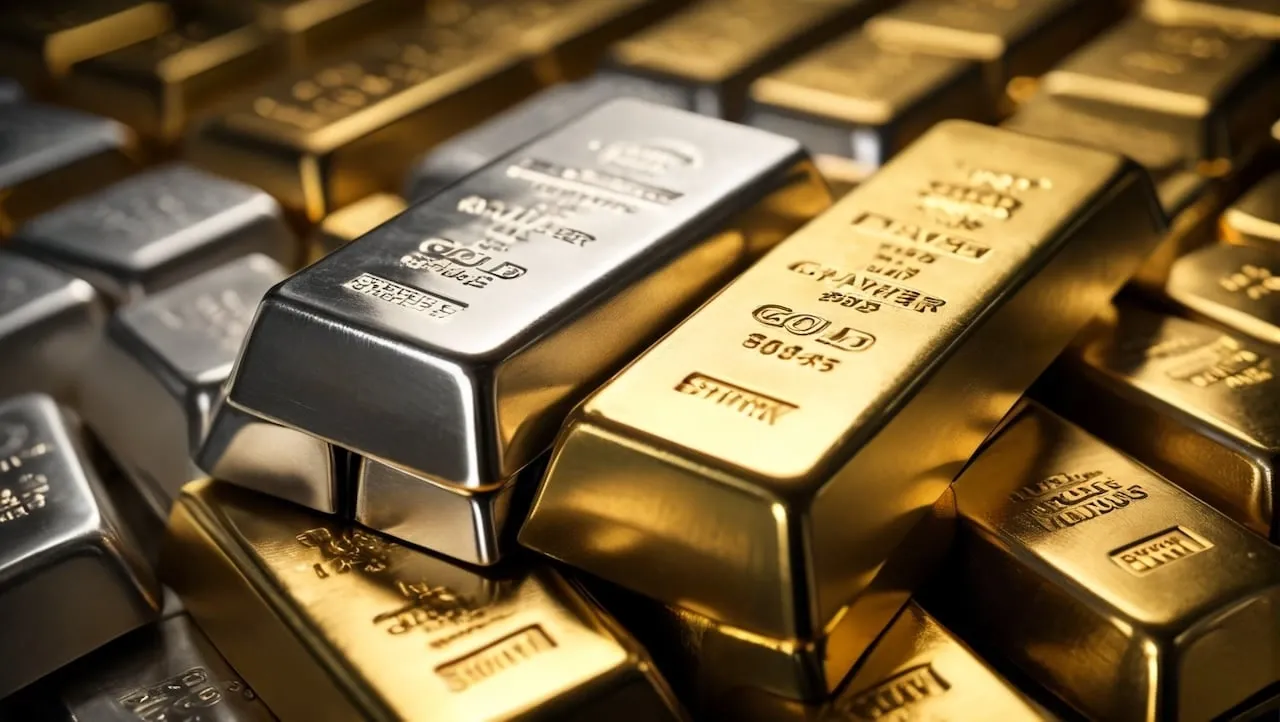
16-MAR-2026, 12:51 PM Global precious metal markets witnessed a noticeable decline as gold and silver prices fell due to the strengthening of the United States dollar and ongoing uncertainty in global financial markets. Investors closely monitor movements in precious metals because they are often considered safe-haven assets during economic instability.
However, when the value of the United States dollar rises, commodities such as gold and silver typically become more expensive for investors using other currencies. This often leads to reduced demand and lower prices in international markets.
The recent drop in gold and silver prices reflects how currency fluctuations and market sentiment can influence commodity markets around the world.
Impact of a Strong US Dollar
One of the primary reasons for the decline in precious metal prices is the strengthening of the United States dollar. When the dollar gains value against other global currencies, commodities priced in dollars become costlier for international buyers.
As a result, demand for metals such as gold and silver can decrease, leading to price corrections in global markets.
Currency movements are influenced by various factors, including interest rate expectations, economic data, and investor confidence in the US economy.
Market Uncertainty and Investor Behavior
Market uncertainty has also played a role in the recent movement of precious metal prices. Investors are currently assessing a range of global economic developments, including geopolitical tensions, inflation trends, and central bank policies.
Traditionally, assets like gold are seen as safe investments during times of economic instability. However, when financial markets show mixed signals, investors sometimes move their funds into other assets such as government bonds or stronger currencies.
This shift in investor behaviour can influence the short-term performance of commodities.
Influence of Global Financial Markets
Movements in precious metal prices are closely tied to developments in global financial markets. Factors such as stock market performance, interest rate changes, and economic growth forecasts can all impact demand for metals.
For example, when interest rates rise in major economies, investors may prefer interest-bearing assets instead of holding commodities that do not generate regular income.
This dynamic often affects metals like gold and silver.
Effects on Local Markets
Changes in international metal prices often influence domestic markets in many countries. Jewellery demand, industrial use of silver, and investment purchases are all affected by price movements.
In countries where gold plays an important role in cultural and investment traditions, fluctuations in global prices can significantly influence buying patterns.
Lower prices may encourage jewellery purchases and long-term investments, while higher prices may reduce demand temporarily.
Industrial Demand for Silver
Unlike gold, silver also has significant industrial applications. It is used in electronics, renewable energy technologies, and manufacturing processes.
This dual role as both an investment asset and an industrial metal means that Silver prices are influenced by economic growth and technological development as well as financial market conditions.
When global economic activity slows, industrial demand for silver may decline, contributing to price volatility.
Outlook for Precious Metals
Market analysts believe that precious metal prices will continue to respond to global economic developments. Factors such as inflation data, central bank policies, and geopolitical events will likely shape the future direction of the market.
While short-term fluctuations are common, many investors still view Gold as a long-term store of value and a hedge against inflation.
Similarly, silver remains important both for investment portfolios and industrial uses.
Gold as an Investment Asset
Gold continues to attract attention from investors because of its reputation as a store of value. During periods of uncertainty, some investors increase their exposure to gold as part of an effort to diversify their portfolios.
However, gold prices can move significantly in response to changes in currency values, interest rates, inflation expectations, and global investor sentiment. Short-term price declines do not necessarily indicate a permanent change in the long-term outlook for the metal.
Silver’s Growing Industrial Importance
Silver has a different market structure because a significant portion of its demand comes from industrial applications. The metal is used in various manufacturing processes and technologies, making its price sensitive to changes in industrial activity.
Growth in sectors such as electronics and renewable energy can support demand for silver over time. At the same time, weaker economic conditions may reduce industrial consumption and contribute to greater price fluctuations.
Role of Central Bank Policies
Central bank decisions remain an important factor for precious metal markets. Changes in interest rates can influence currency values and investor preferences, indirectly affecting demand for gold and silver.
Investors closely follow statements from major central banks because expectations about future monetary policy can lead to rapid changes in financial markets. A shift in expectations can therefore affect precious metal prices even before an official policy decision is announced.
Currency Movements and Precious Metals
The relationship between the US dollar and precious metals is particularly important for international markets. Since gold and silver are generally traded in dollars, movements in the currency can influence how expensive these commodities appear to buyers using other currencies.
A stronger dollar can place pressure on demand, while a weaker dollar may make precious metals relatively more affordable for international buyers. Currency trends can therefore contribute to short-term changes in global metal prices.
What Buyers Should Consider
Consumers and investors should consider several factors before making decisions based on changes in gold or silver prices. Price movements can be temporary, and purchasing decisions should not be based solely on a single day’s market performance.
Jewellery buyers may also need to consider making charges, taxes, purity, and other costs when evaluating the actual price they pay. Investors, meanwhile, may consider their financial objectives, investment horizon, and tolerance for market fluctuations.
Future Market Trends
The future direction of precious metals will depend on a combination of economic and financial developments. Inflation trends, currency movements, interest rate expectations, industrial demand, and geopolitical uncertainty could all influence market sentiment.
Investors will likely continue monitoring these indicators as they assess whether the recent decline represents a temporary correction or part of a broader market trend. Gold and silver are expected to remain closely watched assets in the global commodities market.
Conclusion
The recent decline in gold and silver prices highlights the complex relationship between currency movements, investor sentiment, and global economic conditions. The strengthening of the United States Dollar and uncertainty in financial markets have placed pressure on precious metal prices.
As global economic trends continue to evolve, investors and market analysts will closely watch developments in currency markets, interest rates, and geopolitical events that may influence the future of precious metals.