
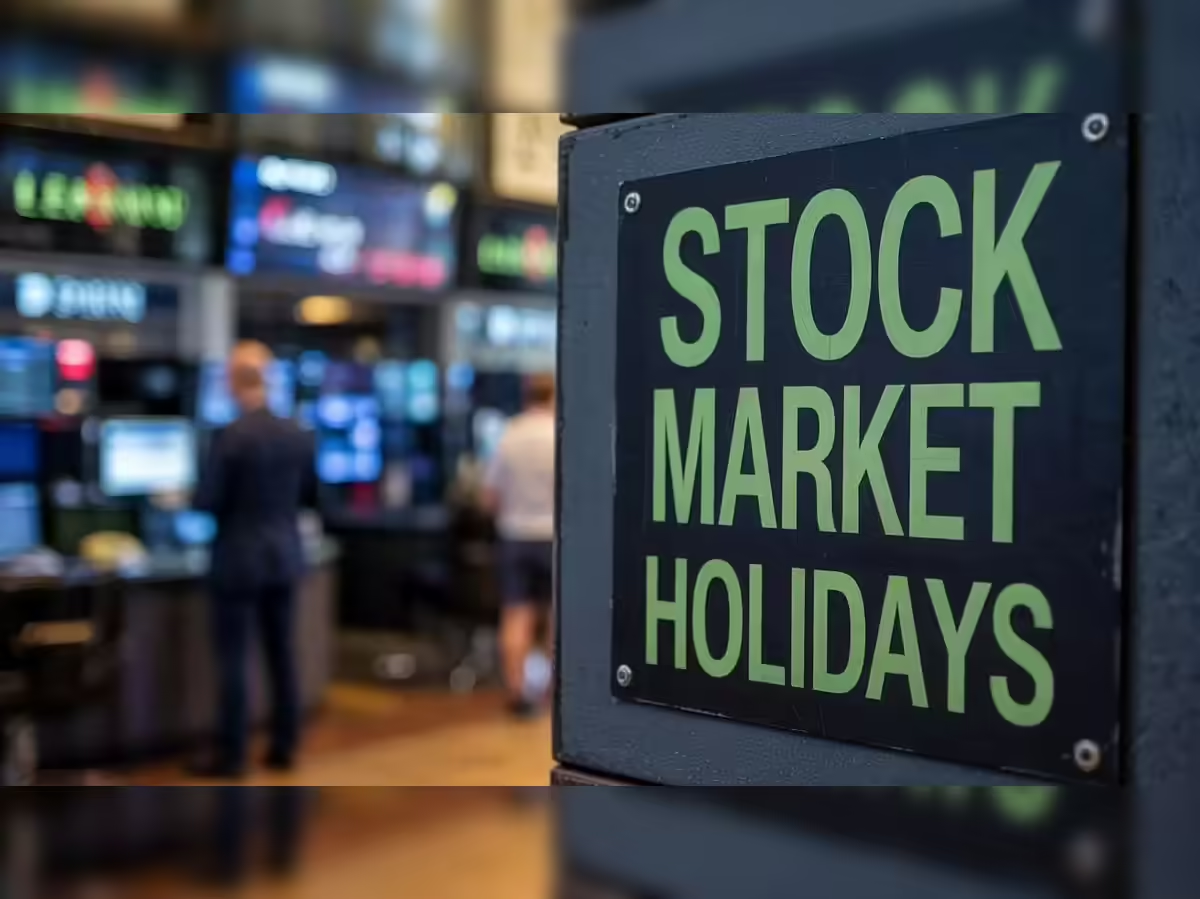
3-Apr-2026, 12:26 pm, Indian stock markets are closed for the Good Friday holiday, with the Bombay Stock Exchange (BSE) and National Stock Exchange (NSE) suspending regular trading. The holiday affects major domestic market segments and gives investors a break from exchange-based trading.
The closure is part of the scheduled market holiday calendar and applies to several trading segments. Investors will be able to resume regular transactions when the exchanges reopen for the next trading session.
Why Are BSE and NSE Closed?
Good Friday is observed as a public holiday in India and is included in the annual stock-market holiday calendar.
As a result, the BSE and NSE remain closed for regular trading. Investors cannot carry out normal equity-market transactions through the domestic exchanges during the holiday.
The closure applies to major segments of the market, including equity trading and equity derivatives.
What Happens to Stock Trading?
There is no regular trading session on the BSE or NSE during the holiday.
This means investors cannot place normal intraday trades or execute exchange-based buying and selling while the domestic markets are closed.
However, the closure of Indian exchanges does not mean that financial markets around the world stop operating. International markets continue to function according to their own trading calendars.
Developments in global markets during the Indian market holiday can therefore influence sentiment when domestic trading resumes.
When Will Trading Resume?
Trading on the BSE and NSE will resume after the Good Friday holiday and the regular weekend break.
The next trading session will allow investors to respond to developments that take place while the Indian exchanges are closed.
Market participants may therefore continue to follow global equity markets, crude oil prices, currency movements and major economic developments during the break.
Which Market Segments Are Affected?
The holiday affects more than ordinary equity trading.
Major domestic segments, including equity derivatives and Securities Lending and Borrowing, remain closed during the scheduled market holiday.
Currency-related trading segments are also affected according to the exchange holiday schedule.
Commodity derivatives are also suspended during the holiday session.
Investors should therefore check the relevant exchange calendar before planning transactions around market holidays.
What Does the Holiday Mean for Investors?
For most investors, the immediate impact is that regular trading is unavailable while the exchanges are closed.
Long-term investors do not necessarily experience a direct change to their holdings simply because the market is closed for a day. However, prices can change when trading resumes because investors react to developments that occurred during the break.
Global market movements, crude oil prices, currency fluctuations and geopolitical developments can all influence the opening direction of Indian equities.
Global Markets Can Still Move
The Indian market holiday does not stop international financial activity.
Stock exchanges in other countries may continue trading, while global commodity and currency markets can also experience movements.
For Indian investors, this means that developments outside India can accumulate during the domestic market closure.
When the BSE and NSE reopen, those developments may be reflected in stock prices and overall market sentiment.
Market Volatility Before the Holiday
The holiday follows a volatile trading period for Indian equities.
The previous trading session saw significant movement in the benchmark indices before they recovered from their early losses.
The Sensex and Nifty ended higher after experiencing sharp declines earlier in the session, with investors closely watching geopolitical developments, crude oil prices and currency movements.
This background is relevant because global developments during the holiday could influence investor sentiment when domestic trading resumes.
Why Market Holidays Matter
Market holidays are an important part of the exchange calendar.
They provide scheduled breaks during which regular trading activity is suspended. They also affect the timing of transactions, settlements and market reactions.
For traders, knowing the holiday schedule helps avoid confusion about why orders cannot be executed on a particular day.
For investors following international markets, holidays also provide an opportunity to understand how overseas developments could affect domestic markets when trading resumes.
What Investors Can Watch During the Break
Although domestic trading is suspended, investors can continue to follow major developments that may influence the market.
These include global stock-market movements, crude oil prices, currency markets, economic announcements and geopolitical developments.
The direction of these factors can influence the tone of the next Indian trading session.
Investors should distinguish between information available during the market holiday and actual trading activity on the BSE and NSE.
Other Market Holidays
Good Friday is one of the scheduled trading holidays in the Indian market calendar.
There are several other exchange holidays throughout the year for festivals and important national or religious occasions.
Investors who actively trade should check the official BSE and NSE holiday calendars when planning their trading activity.
What to Expect When Markets Reopen
When Indian exchanges reopen, investors will assess developments that occurred during the holiday.
The opening direction can be influenced by global markets, crude oil prices, currency movements and domestic factors.
The first trading session after a holiday can therefore see increased attention from market participants, particularly when significant international developments have occurred during the closure.
Market Reopening
When trading resumes, investors will assess global market movements and developments that occurred during the holiday break. Changes in crude oil prices, currency rates and international stock markets could influence domestic sentiment. Traders will also watch the opening levels of the Sensex and Nifty for indications of market direction. The first session after the holiday may therefore receive close attention from investors and market participants.
Conclusion
The BSE and NSE are closed for the Good Friday holiday, meaning regular trading in major domestic market segments is suspended.
Investors cannot conduct normal exchange-based equity trading while the markets remain closed. However, international markets and other financial markets can continue to move during the break.
When Indian markets reopen, investors will respond to developments in global markets, crude oil prices, currency movements and other economic or geopolitical factors.
The Good Friday closure is therefore a scheduled pause in domestic trading rather than a halt in global financial activity.
Source: NSE, BSE



One thought on “Good Friday Holiday: BSE, NSE Closed, What It Means for Investors”