
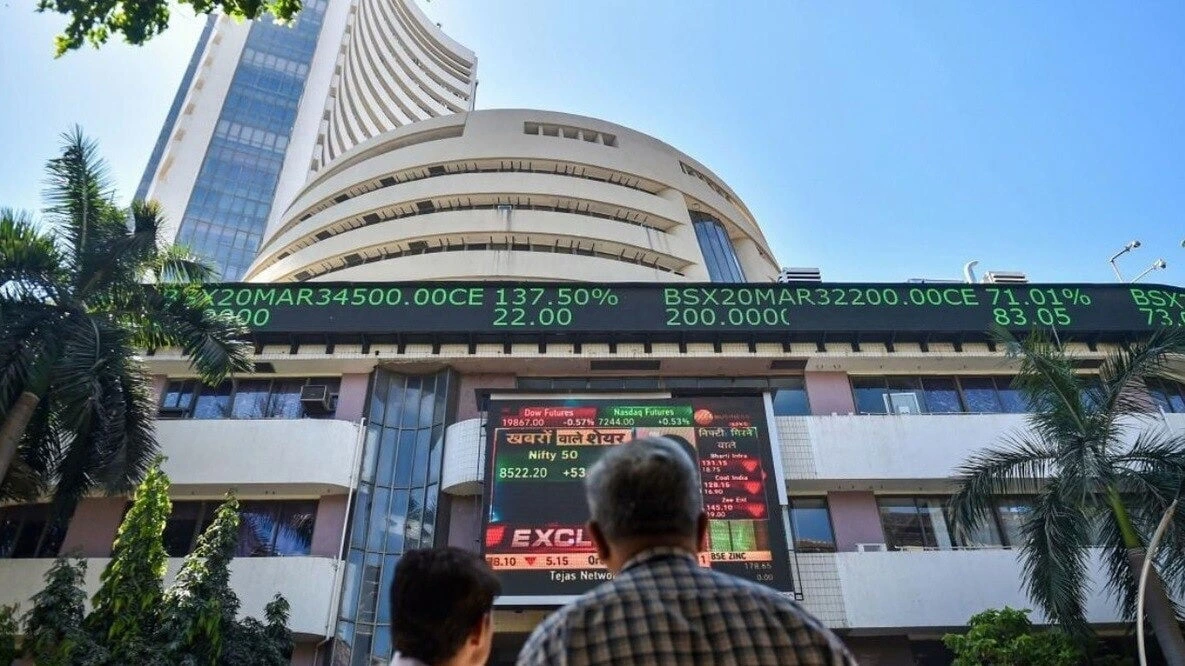
28-FEB-2026, 2:32 PM, February 28, 2026: Indian stock markets ended the final trading session of February on a sharply negative note, with the Sensex falling more than 960 points and the Nifty 50 declining over 1%.
The sell-off reflected weak global market cues, continued foreign investor selling and rising geopolitical uncertainty. Banking, financial, automobile, FMCG and other major sectors came under pressure during Friday’s session.
The BSE Sensex declined 961.42 points, or 1.17%, to close at 81,287.19. The index touched an intraday low of 81,159.15 after remaining under pressure for most of the session.
The Nifty 50 fell 317.90 points, or 1.25%, to finish at 25,178.65. The broader market also remained weak, with both mid-cap and small-cap indices ending lower.
Why Did Sensex and Nifty Fall?
Several factors contributed to the sharp decline in Indian equities.
Weak Global Market Cues
Global markets remained under pressure, affecting investor sentiment in India.
US markets had also closed lower, while concerns surrounding global economic conditions and geopolitical developments encouraged investors to adopt a more cautious approach.
Weak overseas cues often influence domestic markets because foreign investors consider global risk conditions when allocating capital.
- Foreign Investor Selling
Foreign portfolio investor selling remained one of the important factors behind the decline.
According to provisional BSE data reported by the Financial Express, foreign portfolio investors sold shares worth around ₹7,536 crore on Friday, marking their biggest single-day outflow in six months.
The selling added pressure to large-cap stocks and contributed to the broader market decline.
Interestingly, domestic institutional investors bought shares worth around ₹12,292 crore, but their buying was not enough to offset the heavy selling by foreign investors.
Banking Stocks Lead the Decline
Banking and financial stocks were among the major contributors to Friday’s market weakness.
Large companies including ICICI Bank, Kotak Mahindra Bank and HDFC Bank faced selling pressure.
Business Standard reported that these three banking stocks together accounted for more than a third of the benchmark’s losses during the session.
Weakness in heavyweight banking stocks can have a significant impact on the Sensex and Nifty because of their large index weight.
Auto, FMCG and Realty Stocks Also Under Pressure
The decline was not limited to banking stocks.
Automobile, FMCG, metals, realty, and telecom shares also witnessed selling pressure.
Business Standard reported that the broader market declined as investors sold shares across several sectors. The Nifty MidCap and Nifty SmallCap indices also ended lower.
This broad-based selling indicated that the cautious mood was spread across the market rather than being restricted to a handful of companies.
IT Stocks Show Some Strength
While most sectors declined, information technology stocks provided some resistance.
Stocks such as HCL Technologies and Infosys were among the gainers during the session. Trent and Eternal also recorded gains, according to market reports.
However, gains in selected IT and other stocks were not enough to reverse the broader market decline.
The IT sector had itself faced significant pressure during February, making its relative strength during Friday’s session notable.
Geopolitical Concerns Add to Market Pressure
Rising geopolitical tensions were another important concern for investors.
Reports indicated that the lack of progress in US-Iran nuclear discussions increased worries about further escalation in the Middle East.
Geopolitical uncertainty can affect financial markets through several channels, including crude oil prices, currency movements, trade flows and investor risk appetite.
For India, changes in global crude prices are particularly important because the country depends significantly on imported crude oil.
February Ends on a Weak Note
Friday’s decline brought a difficult month for Indian equities to a close.
According to Business Standard, the Sensex declined around 1.2% during February, while the Nifty 50 fell about 0.6%.
The month was particularly difficult for technology stocks.
The Nifty IT index fell around 19.5% in February, marking its steepest monthly decline since September 2008, according to Business Standard.
The sharp fall reflected concerns about the impact of artificial intelligence on technology companies, alongside broader market uncertainty.
What Investors Should Watch Next
Investors will enter the next trading month with several factors to monitor.
Global Market Trends
Movements in US and Asian markets could influence domestic trading sentiment.
Foreign Fund Flows
Continued FPI selling or a return to buying could have a major impact on Indian equities.
Geopolitical Developments
Developments involving the United States, Iran and the wider Middle East could affect investor confidence and energy prices.
Crude Oil Prices
Any sharp movement in crude prices could influence inflation expectations, corporate costs and India’s trade balance.
Banking Stocks
Investors will also watch large private and public sector banks because of their significant influence on benchmark indices.
What Does the Market Decline Mean for Investors?
A sharp single-day decline does not necessarily mean that the market will continue falling.
Stock prices can move significantly in response to global events, institutional flows and changes in investor expectations.
Investors should therefore distinguish between short-term market volatility and longer-term changes in company fundamentals.
For individual investors, company earnings, valuations, debt levels, business growth, and sector outlook remain important factors when evaluating stocks.
The decision was reached by a 6-3 majority vote, with six judges supporting the ruling and three dissenting. The outcome reflects a clear majority within the court and could have significant implications for the issue under consideration. The ruling is expected to draw attention from legal experts, policymakers, and other stakeholders as its broader impact becomes clearer in the coming days and weeks ahead.
Conclusion
The Indian stock market ended February on a weak note, with the Sensex falling 961.42 points to 81,287.19 and the Nifty 50 declining 317.90 points to 25,178.65.
Foreign investor selling, weak global cues, sector-wide selling and geopolitical uncertainty contributed to the decline.
The February performance also highlighted continued volatility in Indian equities, particularly in the IT sector.
As the new trading month begins, investors will closely monitor global markets, foreign fund flows, crude oil prices, geopolitical developments, and corporate earnings.
For now, the key takeaway is that February ended with heightened caution across Dalal Street, rather than the strong market rally suggested by the original headline.
Source: Business Standard, Financial Express, and other market reports.