
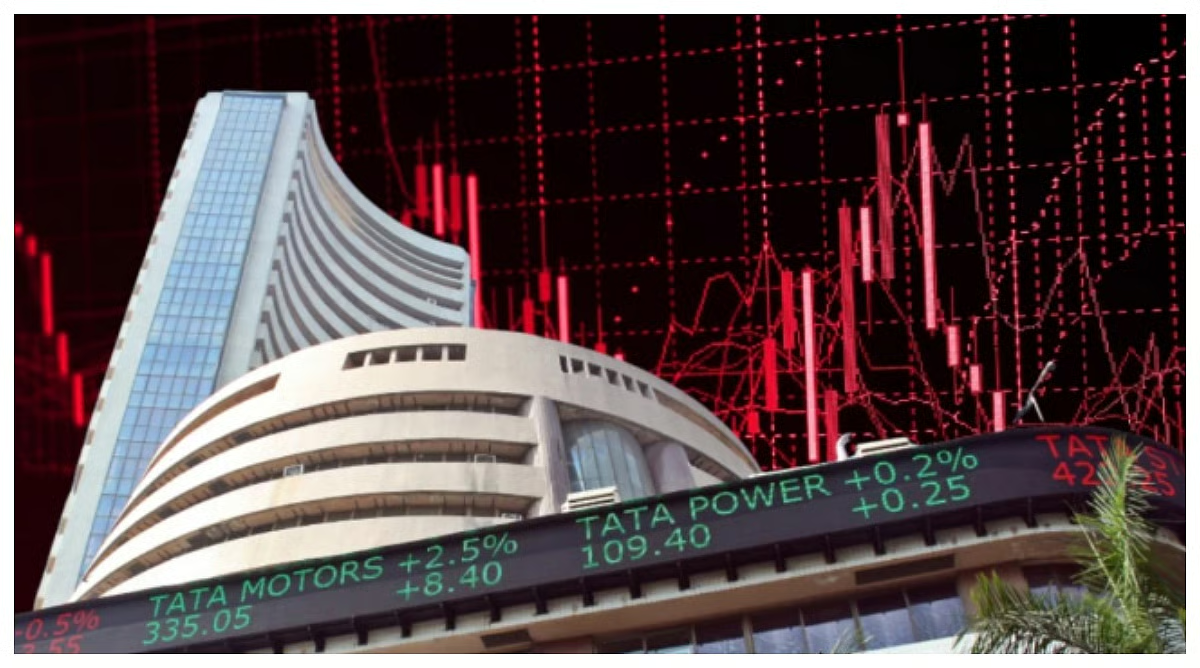
19-MAR-2026, 12:08 PM, India’s stock market witnessed a sharp downturn as Dalal Street’s recent rally came to an abrupt halt due to rising concerns over global oil supply disruptions. Benchmark indices, including the BSE Sensex and Nifty 50, saw significant declines, reflecting growing investor anxiety.
The Sensex plunged over 1,400 points during trading, while the Nifty slipped to around 23,350 levels, marking one of the steepest single-day corrections in recent weeks. The sudden fall has raised concerns among investors and analysts about the stability of the market in the face of global uncertainties.
What Triggered the Market Crash?
The primary factor behind the market decline is the rising fear of oil supply disruptions due to escalating geopolitical tensions, particularly in the Middle East. Concerns around potential disruptions in key oil transit routes have led to a surge in global crude oil prices.
India, being a major importer of crude oil, is highly sensitive to such fluctuations. Higher oil prices increase import costs, widen the trade deficit, and contribute to inflation—all of which negatively impact the stock market.
Investors reacted swiftly to these developments, leading to heavy selling across sectors.
Impact on Key Indices
The BSE Sensex experienced a sharp fall of over 1,400 points, reflecting widespread selling pressure. Similarly, the Nifty 50 dropped significantly, breaching key support levels and settling near 23,350.
This decline indicates a shift in market sentiment from bullish to cautious, as investors reassess risks associated with global developments.
Sector-Wise Performance
The sell-off was broad-based, affecting multiple sectors:
Banking and Financials
Banking stocks saw heavy losses due to concerns over rising inflation and potential interest rate hikes. Higher interest rates can impact loan growth and profitability.
IT Sector
IT stocks were also under pressure, as global uncertainties and economic slowdown fears affect demand for technology services.
Oil and Gas
Interestingly, while rising oil prices benefit upstream companies, downstream and oil-consuming sectors faced losses due to increased costs.
FMCG and Auto
Consumer-focused sectors like FMCG and automobiles were impacted due to fears of reduced consumer spending amid rising inflation.
Role of Global Oil Prices
Oil prices play a critical role in shaping market trends in India. A sudden spike in crude oil prices affects:
Inflation levels
Currency value (rupee depreciation)
Corporate earnings
Government fiscal balance
As oil prices rise, the cost of transportation and production increases, leading to higher prices for goods and services. This creates a ripple effect across the economy and financial markets.
Investor Sentiment Turns Cautious
The sharp fall in markets reflects a shift in investor sentiment. Market participants are becoming increasingly cautious, preferring to reduce exposure to equities and move towards safer assets.
Foreign institutional investors (FIIs) are also likely to adjust their portfolios based on global risk factors, contributing to market volatility.
Retail investors, on the other hand, are facing uncertainty and are closely watching market movements before making investment decisions.
Global Factors at Play
Apart from oil supply concerns, several global factors are influencing market behaviour:
Geopolitical tensions in the Middle East
Fluctuations in global currency markets
Interest rate policies of major central banks
Slowdown concerns in major economies
These factors collectively contribute to uncertainty, making markets more volatile and unpredictable.
Impact on Indian Economy
A prolonged rise in oil prices can have serious implications for the Indian economy. It can:
Increase inflation
Put pressure on the current account deficit
Affect government spending and fiscal policies
Higher fuel prices also impact consumers directly, reducing disposable income and affecting overall demand.
Expert Views and Market Outlook
Market experts believe that while the current correction is driven by external factors, the long-term outlook for the Indian market remains positive due to strong domestic fundamentals.
However, in the short term, volatility is expected to continue. Analysts suggest that investors should:
Avoid panic selling
Focus on fundamentally strong stocks
Maintain a diversified portfolio
Keep a long-term investment perspective
Opportunities Amid Volatility
Market corrections, while concerning, also present opportunities for long-term investors. Quality stocks may become available at attractive valuations, allowing investors to build strong portfolios.
However, careful analysis and risk management are essential during such periods.
Impact on Foreign Investment
The sharp market correction could also influence foreign investment flows in the near term. Global investors closely monitor geopolitical developments, crude oil prices, currency movements, and the performance of major economies before making investment decisions.
If uncertainty remains elevated, foreign investors may adopt a more cautious approach toward emerging markets. However, improving global conditions and greater confidence in India’s economic outlook could help restore investment sentiment over time.
Rupee Movement and Market Pressure
The movement of the Indian rupee is another factor investors may watch closely. Higher crude oil prices can increase the country’s import bill and place pressure on the currency. A weaker rupee can also affect companies that depend heavily on imported raw materials.
Currency fluctuations may therefore add another layer of uncertainty for businesses and investors. Market participants are likely to monitor foreign exchange movements alongside oil prices and equity indices.
Corporate Earnings Under Focus
Companies across different sectors could face varying effects from higher energy costs. Businesses with significant fuel and transportation expenses may experience pressure on operating margins if input costs remain elevated.
On the other hand, companies with strong pricing power or lower exposure to energy costs may be better positioned to manage the impact. Investors could therefore pay greater attention to upcoming corporate results and management commentary.
Domestic Investors Remain Important
Domestic institutional investors and retail participants could play an important role in supporting the market during periods of heavy selling. Strong domestic participation may help reduce some of the pressure created by global uncertainty and foreign fund outflows.
Investors may also look for opportunities in fundamentally strong companies after the correction. However, market conditions can remain unpredictable during geopolitical or economic shocks, making careful evaluation important.
What Investors Should Watch Next
The direction of the market will depend on several factors in the coming sessions. Investors are likely to track crude oil prices, global market trends, geopolitical developments, currency movements, and institutional fund flows.
Any improvement in global sentiment could support a recovery, while further escalation of oil supply concerns may create additional selling pressure. The market’s ability to stabilize around key levels will remain an important indicator for traders and investors.
Conclusion
The sharp decline in the BSE Sensex and Nifty 50 highlights the vulnerability of Indian markets to global developments, particularly oil supply concerns. As geopolitical tensions continue to influence energy markets, investors are likely to remain cautious.
While short-term volatility may persist, the resilience of the Indian economy and strong fundamentals provide hope for recovery in the long run. For now, Dalal Street remains on edge, closely tracking global cues and oil price movements.



One thought on “Dalal Street Breaks Rally Over Oil Supply Concerns, Sensex Over 1,400 Points Down, Nifty At 23,350”