
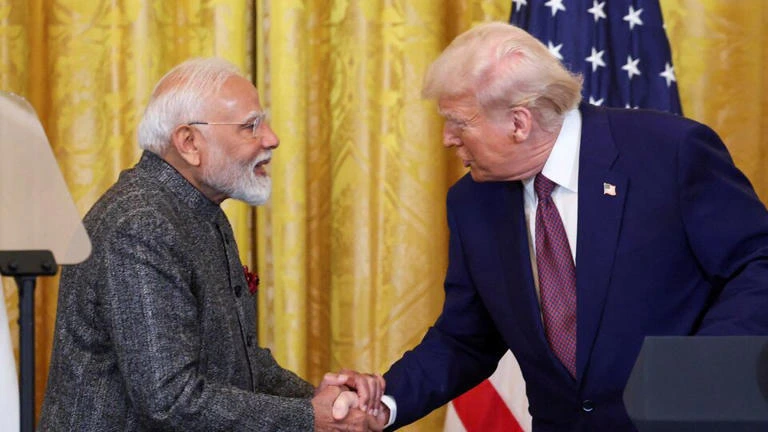
17-feb-2026, 12:34 PM, India and the United States moved forward with a framework for an interim trade agreement in February 2026, with Washington announcing an 18% reciprocal tariff rate on originating goods from India.
The framework was announced on February 6 following discussions between Prime Minister Narendra Modi and U.S. President Donald Trump. It forms part of the broader negotiations for an India-US Bilateral Trade Agreement.
The announcement was significant because the proposed framework would change tariff treatment for several Indian exports while also giving U.S. products greater access to the Indian market.
However, it is important to note that the February announcement was a framework for an Interim Agreement, rather than the final Bilateral Trade Agreement. The two countries said they would continue working toward finalising the arrangement.
What Is the 18% US Tariff on Indian Goods?
One of the main elements of the framework is the U.S. reciprocal tariff rate of 18% on originating goods from India.
The rate covers a range of Indian exports, including textiles and apparel, leather and footwear, plastics and rubber, organic chemicals, home décor, artisanal products and certain machinery.
The White House also said that, subject to the successful conclusion of the Interim Agreement, reciprocal tariffs could be removed on certain products, including generic pharmaceuticals, gems and diamonds, and aircraft parts.
For Indian exporters, lower tariff rates can improve price competitiveness in the U.S. market because tariffs directly affect the cost of imported goods.
However, the actual benefit will differ across industries depending on the product category, existing duties and other trade requirements.
Why Was the Tariff Rate Reduced to 18%?
The U.S. government said the reciprocal tariff on India would be reduced from 25% to 18%.
The White House also announced the removal of an additional 25% tariff that had been imposed on Indian imports, citing India’s commitment to stop purchasing Russian oil.
The change therefore represented a significant reduction compared with the higher tariff burden previously faced by some Indian exports.
For businesses exporting to the United States, the lower rate was expected to provide greater certainty and improve the competitiveness of qualifying Indian products.
However, companies would still need to comply with product-specific tariff rules and other U.S. import requirements.
What Does India Get From the Agreement?
The proposed framework also includes benefits for U.S. businesses seeking access to the Indian market.
India agreed to eliminate or reduce tariffs on U.S. industrial goods and a wide range of American agricultural and food products.
The categories mentioned by the White House include:
- Dried distillers’ grains
- Red sorghum for animal feed
- Tree nuts
- Fresh and processed fruit
- Soybean oil
- Wine and spirits
- Other selected agricultural products
India also agreed to address several non-tariff barriers affecting American products.
These commitments are intended to improve market access and make bilateral trade more predictable.
Key Indian Export Sectors
Several Indian industries could be affected by the new tariff framework.
Textiles and Apparel
Textiles and apparel are important Indian exports to the United States.
A lower tariff rate could improve the competitiveness of Indian clothing and textile products compared with goods from countries facing higher tariff barriers.
The Indian government said the framework would reduce tariffs on significant export categories and highlighted the potential benefits for Indian exporters.
Leather and Footwear
Leather products and footwear are also included among the sectors covered by the reciprocal tariff framework.
Indian manufacturers could potentially benefit from improved price competitiveness in the U.S. market if the lower tariff structure is implemented as outlined.
Machinery
Certain machinery products are also included.
The Indian government said tariff reductions could create additional opportunities for Indian machinery exporters competing in the American market.
Pharmaceuticals
Generic pharmaceuticals received particular attention in the framework.
The U.S. statement said reciprocal tariffs could be removed for generic pharmaceuticals and pharmaceutical ingredients, subject to the outcome of a separate Section 232 investigation and the successful conclusion of the Interim Agreement.
Therefore, pharmaceutical exporters should not interpret the announcement as an unconditional immediate exemption for every product.
Agricultural Products
Agriculture is another important part of the agreement.
The framework provides for India to reduce or eliminate tariffs on several U.S. agricultural products.
At the same time, the Indian government said sensitive sectors such as dairy, meat, poultry and cereals would remain protected.
This distinction is important because agriculture is one of the more sensitive areas of India-US trade negotiations.
The agreement therefore does not mean that all U.S. agricultural products would receive unrestricted access to India.
Instead, tariff changes would apply to specific categories agreed upon by the two countries.
India-US Trade Beyond Tariffs
The framework goes beyond simply changing tariff rates.
Both countries also agreed to work on non-tariff barriers, rules of origin and digital trade.
India agreed to address long-standing trade barriers that have affected U.S. interests, including medical devices and certain information and communication technology products.
The two countries also intend to discuss standards and conformity assessment procedures in selected sectors.
These issues can be important for businesses because market access is affected not only by tariffs but also by regulations, licensing requirements, testing standards and other procedures.
Technology and Digital Trade
Technology is another major component of the framework.
The United States and India agreed to increase trade in technology products, including graphics processing units and other products used in data centers.
The countries also agreed to work toward digital trade rules addressing discriminatory or burdensome practices.
This could become increasingly important as both economies expand their use of artificial intelligence, cloud computing, and data center infrastructure.
India’s Planned Purchases From the US
The White House wording is important here.
It says India “intends to purchase” these products, rather than describing the amount as an unconditional purchase commitment.
This distinction should be retained in news reporting because the wording of the U.S. factsheet itself was subsequently revised from stronger language to “intends to buy.”
Impact on Indian Exporters
The lower tariff framework could provide opportunities for Indian exporters that depend heavily on the U.S. market.
Products facing lower tariffs may become more competitive against goods from countries with higher tariff rates.
The Indian government highlighted textiles, machinery, agriculture, and other sectors as potential beneficiaries.
However, the impact will not be identical across every company.
Businesses will still need to consider exchange rates, shipping costs, U.S. regulations, product standards, and competition from other countries.
A lower tariff can improve competitiveness, but it does not automatically guarantee higher exports.
What About the Broader India-US Trade Agreement?
The February framework is part of a larger negotiation.
The two countries had already begun discussions on a broader Bilateral Trade Agreement, which is intended to address additional market-access commitments and strengthen supply-chain cooperation.
The February framework therefore represents one stage of the wider trade process.
The official U.S. statement said both sides would continue working toward the Interim Agreement and broader BTA negotiations.
This is why headlines describing the February announcement simply as a completely finalized trade agreement can be misleading.
Why the Deal Matters for India
The U.S. remains one of India’s key trading partners, with strong economic and commercial ties between the two nations.
Changes in tariffs can influence the competitiveness of Indian goods in the American market and affect businesses involved in manufacturing, agriculture, technology, and other export sectors.
For India, greater access to the U.S. market could support export growth if businesses are able to take advantage of the revised tariff structure.
The agreement could also encourage greater cooperation in technology, energy, and supply chains.
What Businesses Should Watch
Companies and exporters should pay attention to the final implementation details rather than relying only on the headline tariff rate.
Important issues include:
- Product-specific tariff classifications
- Rules of origin
- Implementation dates
- Non-tariff requirements
- Sector-specific exemptions
- Pharmaceutical tariff decisions
- Digital trade rules
- Future Bilateral Trade Agreement negotiations
These details will determine how individual businesses are affected.
Conclusion
The India-US trade framework announced in February 2026 includes a proposed 18% reciprocal U.S. tariff rate on originating Indian goods, alongside wider commitments on market access, technology, agriculture, digital trade, and non-tariff barriers.
India is also expected to reduce or eliminate tariffs on a range of U.S. industrial and agricultural products while maintaining protections for several sensitive sectors.
The framework could create opportunities for Indian exporters, particularly in sectors such as textiles, machinery, agriculture and selected manufactured goods.
However, the February announcement should be understood as an interim framework, not the final India-US Bilateral Trade Agreement.
The two countries were still working through implementation details and broader negotiations, making the final terms and sector-specific effects important areas to watch.
Sources: White House, Government of India/PIB, and U.S. trade documents.