
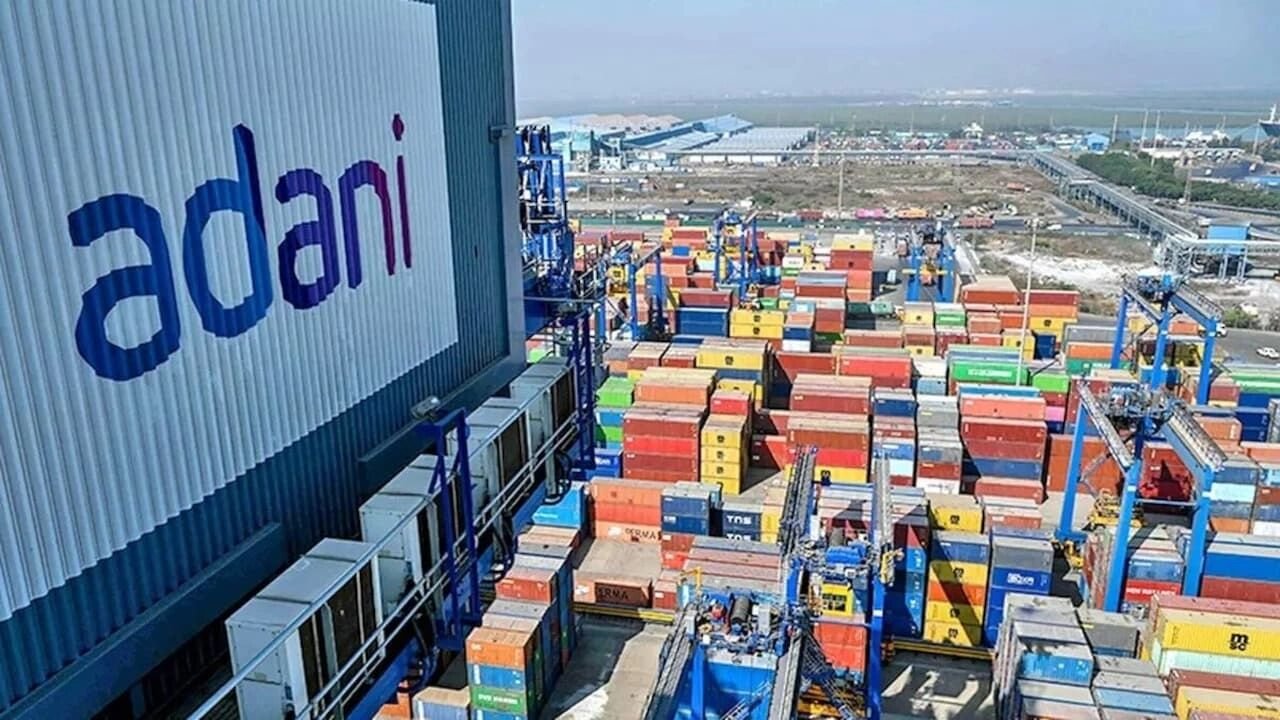
4-APR-2026, 12:13 PM, Adani Ports and Special Economic Zone Ltd. (APSEZ) has crossed the milestone of handling 500 million tonnes of cargo in a financial year, marking a significant development for the company’s ports and logistics business.
The company announced the milestone as it continued to expand its port network and integrated logistics operations. APSEZ has also outlined an ambition to reach 1 billion tonnes of cargo by 2030.
APSEZ Crosses 500 Million Tonnes
APSEZ reported that it handled more than 500 million tonnes of cargo during FY26.
Business Standard reported that the company handled 500.8 million tonnes during the financial year, representing an 11% year-on-year increase. Container volumes grew 19% during the period.
The milestone reflects the scale of APSEZ’s operations across India’s port and logistics network.
March Records Highest Monthly Cargo Volume
The company also recorded strong cargo activity during March.
APSEZ handled 46 million tonnes of cargo during the month, its highest-ever monthly cargo volume. The March figure was 11% higher than the same month a year earlier, while container traffic increased 14%.
The strong monthly performance contributed to the company’s ability to cross the 500-million-tonne threshold for the financial year.
1 Billion Tonnes Target by 2030
Following the milestone, Gautam Adani outlined a longer-term target for APSEZ.
The company aims to handle 1 billion tonnes of cargo by 2030, significantly increasing its scale over the coming years. APSEZ’s official announcement described the target as part of its long-term strategy to support India’s trade and logistics infrastructure.
The target would require continued growth across ports, logistics and related maritime services.
APSEZ’s Port Network
APSEZ has developed a large network of ports and terminals across India’s coastline.
The company operates facilities on India’s western, southern and eastern coasts and has expanded its operations beyond traditional port activities into logistics and marine services.
According to company information, APSEZ has a network of 19 ports and terminals and has developed an integrated transport and logistics platform.
This broader network allows the company to handle different types of cargo and connect port operations with inland logistics.
Growth in Container Cargo
Container traffic has been an important contributor to APSEZ’s recent growth.
The company reported a 19% increase in container volumes during FY26. Its March container volumes also rose 14% year on year.
Higher container volumes can support the company’s overall cargo growth as international and domestic trade activity develops.
The performance also highlights the importance of container terminals within APSEZ’s broader port network.
Logistics Business Expands
APSEZ’s operations extend beyond port cargo handling.
The company has been expanding its logistics business through multimodal transportation, warehouses, trucking and freight services.
Business Standard reported that CWIT handled 1.06 million TEUs during FY26, crossing the one-million-TEU milestone in its first year of operations. It also recorded a monthly record of 134,960 TEUs in March.
The expansion of logistics services gives APSEZ additional sources of business beyond its traditional port operations.
International Operations
APSEZ has also expanded its international port presence.
Its Haifa port operations continued to grow, handling 0.77 million tonnes of cargo in March compared with 0.59 million tonnes in February.
The company’s international operations are part of its broader strategy to build an integrated network connecting Indian trade with international markets.
The expansion also gives APSEZ greater exposure to cargo flows outside India.
Importance for India’s Trade Infrastructure
Ports play an important role in India’s economy because a large share of the country’s international trade moves through maritime routes.
Higher cargo-handling capacity can support the movement of raw materials, manufactured goods, energy products and containers.
APSEZ’s growth therefore forms part of a wider expansion of India’s logistics and transportation infrastructure.
The company’s long-term target of reaching 1 billion tonnes would require additional capacity and continued investment across ports and logistics operations.
Gautam Adani’s Growth Strategy
Gautam Adani has linked APSEZ’s expansion to a broader long-term infrastructure strategy.
Speaking about the company’s growth, Adani said the pace of reaching successive cargo milestones had accelerated over time. According to Business Standard, APSEZ took 16 years to reach its first 100 million tonnes, while later 100-million-tonne milestones were achieved more quickly.
The company’s next major target is therefore considerably larger than its current milestone.
However, reaching 1 billion tonnes will depend on continued investment, capacity expansion and growth across its domestic and international operations.
What the Milestone Means for APSEZ
Crossing 500 million tonnes gives APSEZ a significant operational benchmark.
The company has continued to expand across ports, logistics and marine services, creating an integrated business rather than relying solely on individual port operations.
The combination of higher cargo volumes, growing container traffic and expanding logistics operations provides several areas for future growth.
The company will now focus on maintaining this growth while working toward its longer-term 1-billion-tonne target.
What Comes Next
APSEZ’s next phase will involve expanding cargo capacity and strengthening its logistics network.
The company has stated that its long-term objective is to reach 1 billion tonnes by 2030.
Achieving that target would require growth in both domestic and international cargo. The company has indicated that its broader ambition includes increasing domestic cargo volumes while continuing to develop its international operations.
Further expansion of logistics and marine services could also contribute to the target.
Conclusion
Adani Ports and Special Economic Zone has crossed the 500-million-tonne cargo milestone in FY26, marking an important stage in the company’s growth.
APSEZ handled 500.8 million tonnes during the financial year, with cargo volumes increasing 11% year on year and container volumes rising 19%. March also produced a record monthly cargo volume of 46 million tonnes.
The company has now set its sights on handling 1 billion tonnes by 2030. Its expanding port network, logistics operations and international presence will be important to achieving that goal.
The milestone also highlights the growing scale of India’s port and logistics infrastructure as cargo movement and international trade continue to expand.
Source: APSEZ, Business Standard