27-MAR-2026, 11:13 AM Elections in India are often filled with intense competition, strategic alliances, and dramatic moments. However, the upcoming elections in Kerala have introduced a rather unusual twist—a “battle of namesakes.”
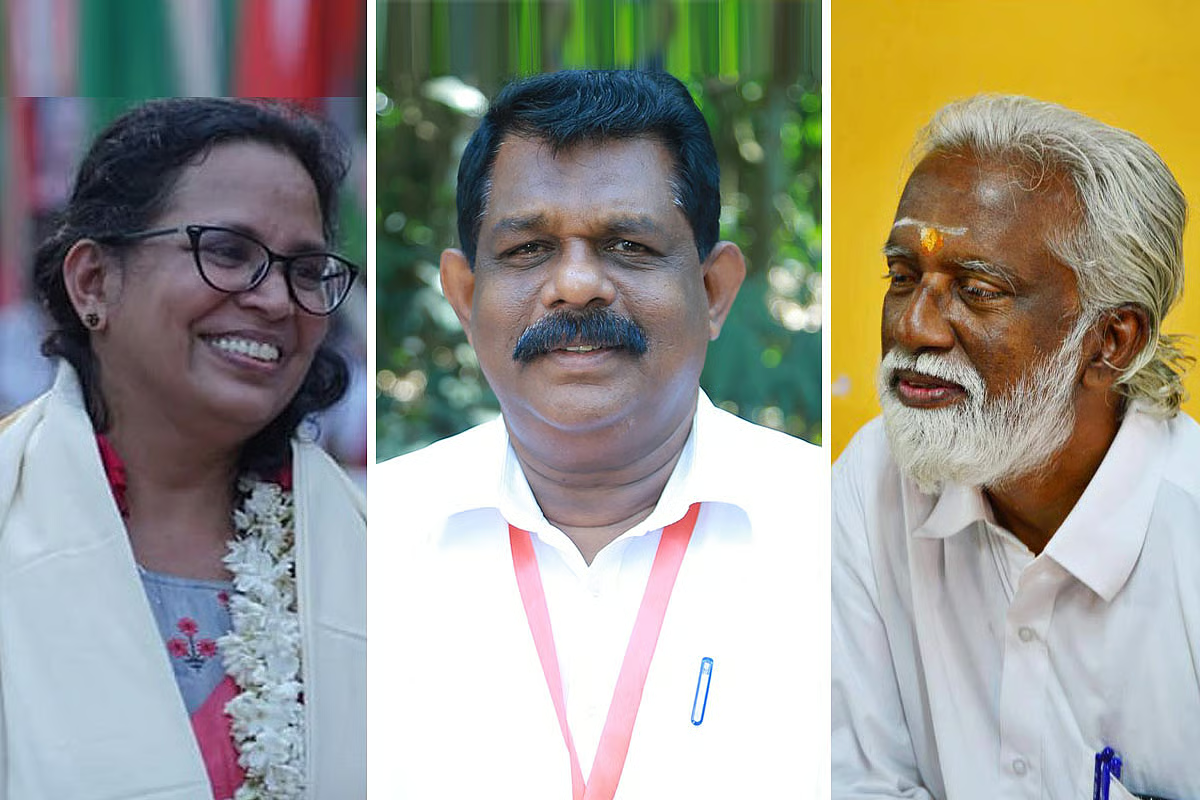
In several key constituencies, candidates with identical or nearly identical names are contesting against each other. From “Pinarayi vs Pinarayi” to “Rajeev vs Rajeev,” this unique situation has caught public attention and sparked debates about voter confusion and electoral strategy.
What Is the ‘Battle of Namesakes’?
The term “battle of namesakes” refers to situations where two or more candidates in the same constituency share the same name. While this may sound coincidental, it can sometimes be strategic.
In the Kerala elections, such cases are being reported in multiple constituencies, making the contest more intriguing.
These scenarios can:
- Confuse voters at polling booths
- Split votes intended for a particular candidate
- Influence election outcomes in close contests
Key Examples: Pinarayi vs Pinarayi, Rajeev vs Rajeev
The most talked-about examples include
- Pinarayi vs Pinarayi
- Rajeev vs Rajeev
These contests have become symbolic of the unusual electoral dynamics this season.
While one candidate may be well-known or affiliated with a major political party, the other may be an independent or lesser-known contender with the same name.
Is It Coincidence or Strategy?
The presence of namesakes in elections raises an important question—is it purely coincidental, or is there a strategy behind it?
Possible Explanations:
1. Genuine Coincidence
India has a large population, and many names are common, especially in specific regions.
2. Political Strategy
In some cases, candidates with similar names are fielded deliberately to:
- Divide votes of a strong opponent
- Create confusion among voters
- Gain an indirect advantage
3. Independent Candidates
Some independent candidates may unknowingly share names with popular leaders, adding to the confusion.
Impact on Voters
The biggest concern in such situations is voter confusion.
Challenges Faced by Voters:
- Difficulty in identifying the correct candidate
- Risk of voting for the wrong person
- Confusion despite party symbols
Although electronic voting machines (EVMs) display symbols alongside names, not all voters rely solely on symbols, especially in areas with lower awareness.
Role of Election Commission
The Election Commission of India plays a crucial role in ensuring free and fair elections.
To address issues related to namesakes, the Commission:
- Displays candidate photos on EVMs
- Uses party symbols for identification
- Provides voter awareness campaigns
These measures help reduce confusion, but challenges may still persist in closely contested seats.
Political Reactions
Political parties have responded differently to the “battle of namesakes”:
Concerns Raised:
- Some parties allege misuse of tactics to confuse voters
- Calls for stricter rules on candidate naming
Defensive Views:
- Others argue that having the same name is not illegal
- Emphasise voter awareness over regulation
The issue has added a new layer of political debate in the election season.
Media and Public Attention
The unusual nature of these contests has captured media attention across the country.
Social media platforms are buzzing with:
- Memes and humorous takes
- Discussions on electoral fairness
- Curiosity about election outcomes
What started as a local phenomenon has now become a national talking point.
Historical Context
The phenomenon of namesake candidates is not entirely new in Indian elections. Similar cases have been reported in the past across different states.
However, the scale and visibility in the current Kerala elections make it particularly noteworthy.
This highlights how even small factors can influence electoral dynamics in a large democracy like India.
Does It Really Affect Results?
The impact of namesake candidates depends on several factors:
- Margin of victory in a constituency
- Voter awareness levels
- Popularity of the main candidate
In closely contested seats, even a small number of diverted votes can change the outcome.
What Voters Should Do
To avoid confusion, voters should:
- Carefully check the candidate’s name and symbol
- Verify details before casting their vote
- Stay informed through official sources
Awareness is the key to ensuring that votes go to the intended candidate.
The Bigger Picture
The “battle of namesakes” reflects the complexity of India’s electoral system. It shows how:
- Democracy allows wide participation
- Even small details can influence outcomes
- Voter awareness is crucial for fair elections
It also raises questions about whether additional safeguards are needed to prevent confusion.
Importance of Candidate Identification
Accurate identification of candidates is an important part of the voting process, particularly when multiple contestants have similar or identical names. Voters need to be able to distinguish between candidates before making their final choice.
Candidate photographs, party symbols, and other official information can help voters make informed decisions. Political parties and candidates can also use public meetings and campaign communication to clearly explain their identities and positions to voters.
Role of Voter Awareness
Voter awareness becomes especially important in constituencies where namesake candidates are contesting. Election authorities can encourage voters to carefully review candidate information before entering the polling booth.
Citizens can also check official election-related information and understand the candidates appearing on the ballot. Taking time to verify the candidate’s name, symbol, and other available details can reduce the possibility of accidental voting.
Campaign Strategies in Close Contests
Namesake contests may also influence campaign strategies. Candidates and political parties may place greater emphasis on making their identity recognisable to voters through rallies, posters, public meetings, and other campaign activities.
In closely contested constituencies, parties may pay particular attention to voter outreach and communication. The presence of a candidate with a similar name could make these efforts even more important.
Importance of Transparent Elections
Free and fair elections depend on voters being able to make their choices without confusion or misinformation. While candidates with similar names can legally participate in elections, maintaining clear information for voters remains important.
Election authorities, political parties, and candidates all have a role in promoting accurate information. Clear communication can help ensure that voters understand the choices available to them.
Digital Tools and Voter Information
Digital platforms have also made election information easier to access. Voters can use official election resources to learn about candidates, constituencies, and polling-related information.
However, social media can also spread misleading claims or incomplete information. Voters should therefore rely on verified sources when checking candidate details rather than depending entirely on viral posts or informal discussions.
Looking Ahead
The namesake contests in Kerala have added an unusual dimension to the election discussion. Whether they ultimately influence electoral results will depend on voter awareness, candidate popularity, campaign strategies, and the final voting margins.
Regardless of the outcome, the situation highlights the importance of informed participation and careful candidate identification in a democratic election.
Conclusion
The upcoming elections in Kerala have introduced a fascinating twist with the “battle of namesakes.” From “Pinarayi vs Pinarayi” to “Rajeev vs Rajeev,” these contests highlight the unpredictable nature of democracy.
While the situation may seem unusual or even amusing, it underscores serious concerns about voter awareness and electoral fairness.
As voters head to the polls, one thing becomes clear—every vote matters, and clarity in choice is essential to uphold the true spirit of democracy.
SOURCE: ABP NEWS