One year after the deadly attack in Pahalgam, the scars of that day remain fresh in the collective memory of Kashmir. The incident not only shook the region’s fragile sense of normalcy but also triggered one of the most intense counter-terror operations in recent years.
As authorities continue their hunt for those responsible, the aftermath of the attack continues to shape security policies, tourism, and the daily lives of people in the Valley.
🚨 The Day That Changed Everything
The attack, which took place in April last year, targeted civilians and security forces in the popular tourist destination of Pahalgam.
- Multiple casualties were reported
- Panic spread across the region
- Tourism activity came to a sudden halt
The timing and location of the attack amplified its impact, as Pahalgam is often seen as a symbol of Kashmir’s peaceful tourism revival.
🔍 The Hunt for the Perpetrators
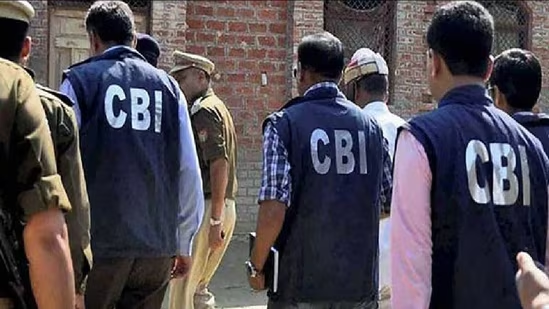
Over the past year, security agencies have carried out extensive operations to track down those involved.
Key Developments:
- Identification of suspects linked to terror networks
- Multiple search operations across South Kashmir
- Arrests of overground workers providing logistical support
Agencies believe that the attackers had local support combined with cross-border links, making the investigation more complex.
Despite progress, some key suspects remain at large, keeping the operation ongoing.
⚔️ Intensified Counter-Terror Operations
In response to the attack, security forces significantly stepped up operations across the region.
Measures Taken:
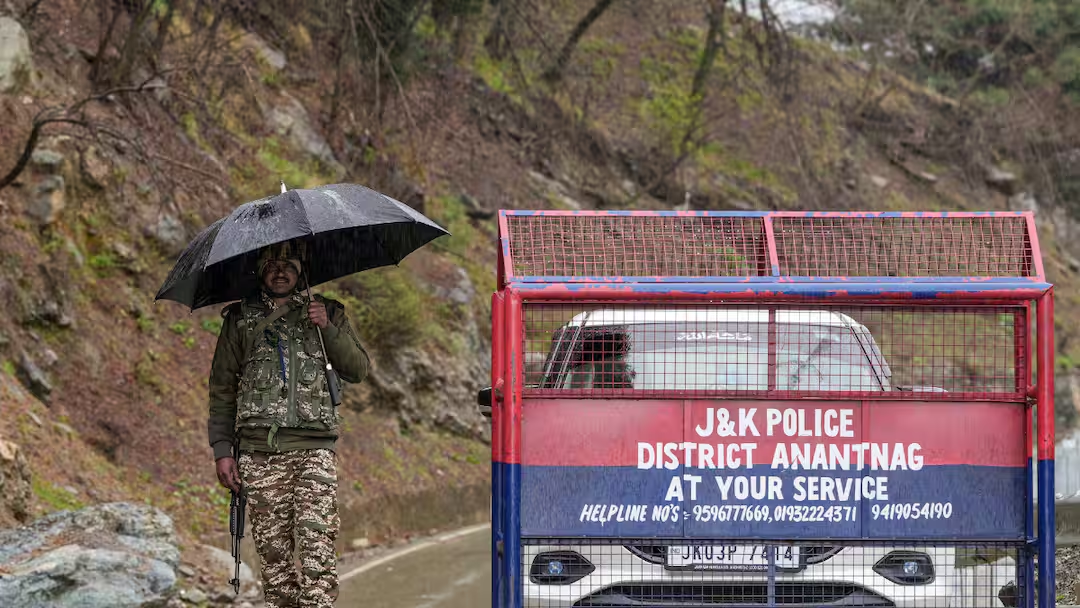
- Increased deployment of forces in sensitive areas
- Night patrols and surveillance expansion
- Crackdown on suspected terror modules
These efforts have led to several encounters and disruptions of planned attacks over the past year.
🛡️ Changes in Security Strategy
The Pahalgam attack led to a reassessment of security protocols, especially in tourist zones.
Major Changes:
- Enhanced security at tourist hotspots
- Better coordination between intelligence agencies
- Use of advanced surveillance technologies
Authorities have focused on ensuring that such incidents do not repeat, particularly in areas vital to Kashmir’s economy.
🧠 Impact on Local Communities
Beyond the security dimension, the attack had a deep psychological and economic impact.
Social Impact:
- Fear and uncertainty among residents
- Trauma for families affected by the violence
Economic Impact:
- Sharp decline in tourism immediately after the attack
- Loss of income for local businesses dependent on visitors
However, over time, efforts have been made to restore confidence and normalcy.
🌄 Tourism: A Gradual Comeback
Tourism, which is the backbone of Pahalgam’s economy, took a major hit after the attack.
But in the months that followed:
- Tourist footfall gradually increased
- Government campaigns promoted Kashmir as safe
- Security presence reassured visitors
Today, Pahalgam is once again witnessing a steady flow of tourists, though caution remains.
🌐 Broader Implications
The attack highlighted several broader concerns:
- Continued threat of militancy in the region
- Challenges in intelligence coordination
- Need for long-term peace and stability
It also reinforced the importance of balancing security measures with normal life in conflict-prone areas.
💬 Voices From the Ground
Residents and stakeholders have mixed feelings one year on:
- Relief that normalcy is returning
- Concern over recurring threats
- Hope for lasting peace
For many, the memory of the attack remains a reminder of how quickly stability can be disrupted.
🔮 What Lies Ahead?
As the investigation continues, authorities are focused on:
- Capturing remaining suspects
- Strengthening intelligence networks
- Preventing future attacks
Long-term strategies are also being discussed to address the root causes of militancy.
🏁 Conclusion
One year after the Pahalgam attack, the region stands at a crossroads—caught between the memory of violence and the hope for peace. While security forces continue their relentless hunt for those responsible, Kashmir has shown resilience in rebuilding and moving forward.
The challenge now is to ensure that such incidents do not recur, and that the Valley can sustain its path toward stability and growth.