
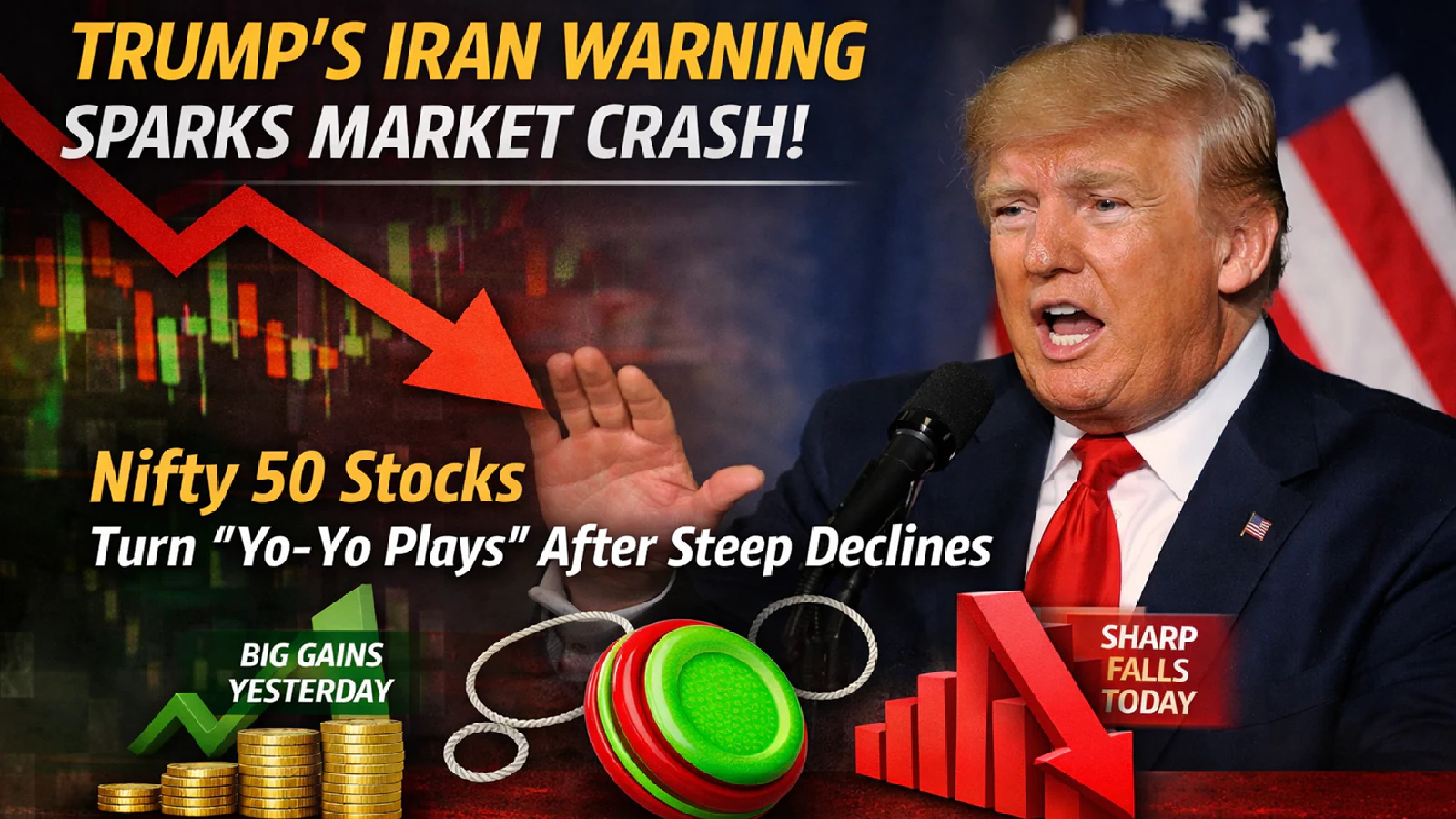
6-Apr-2026, 10:52 AM, Indian stock markets came under pressure as renewed tensions between the United States and Iran affected investor sentiment. The Sensex declined in early trading, while the Nifty 50 tested the 22,700 level as investors assessed the latest developments surrounding the conflict.
The market movement came after US President Donald Trump issued a fresh warning to Iran, adding to concerns about a possible escalation in the Middle East. Higher crude oil prices and uncertainty surrounding the Strait of Hormuz also remained important factors for investors.
Sensex and Nifty Under Pressure
Indian benchmark indices opened cautiously after the market resumed trading following the Good Friday holiday.
The Sensex was down more than 50 points in early trading, while the Nifty 50 tested the 22,700 level. The cautious opening reflected concerns about global geopolitical developments and their potential impact on energy prices and financial markets.
Investors were also assessing several domestic and international factors that could influence the direction of the market during the week.
Trump’s Warning to Iran
Trump’s latest warning to Iran became one of the major factors affecting market sentiment.
The US president warned that Washington could take further military action against Iran if the situation surrounding the Strait of Hormuz was not resolved.
The Strait is a strategically important shipping route and plays a major role in global energy transportation. Any prolonged disruption could create additional pressure on oil prices and increase uncertainty for economies that depend heavily on imported energy.
Crude Oil Prices Remain a Concern
Crude oil prices continued to be closely watched by investors.
The ongoing conflict in West Asia has raised concerns about global energy supplies, particularly because of the importance of the Strait of Hormuz.
Higher crude prices can have a direct impact on India’s economy because the country imports a substantial amount of its oil requirements.
An extended period of elevated oil prices could increase import costs and create additional pressure on inflation and the country’s external finances.
This made developments in the Middle East particularly important for Indian equities.
Global Uncertainty Weighs on Sentiment
The latest geopolitical developments added to an already uncertain global market environment.
Investors were monitoring developments in the US-Iran conflict while also watching international equity markets, currencies and commodities.
Asian markets were also affected by concerns surrounding the conflict and energy prices.
For Indian investors, movements in global markets can influence foreign investment flows and overall market sentiment, particularly when geopolitical risks increase.
RBI Policy Decision in Focus
Apart from geopolitical developments, investors were also looking ahead to the Reserve Bank of India’s monetary policy decision.
The RBI’s policy meeting was expected to be closely watched during the week, with market participants focusing on the central bank’s assessment of inflation and economic growth.
Expectations around interest rates can influence several parts of the Indian market, including banks, financial companies and interest-sensitive sectors.
The central bank’s commentary on the economy was therefore another important factor for investors alongside global developments.
US Inflation Data Also Important
Global economic data was another major focus for investors.
US March Consumer Price Index data was scheduled to be released during the week and was expected to provide additional information about inflation in the world’s largest economy.
Investors were also watching other US economic indicators, including employment and growth-related data.
US economic figures can influence expectations about Federal Reserve policy, which in turn can affect global financial markets and capital flows.
Foreign Investor Outflows
Foreign institutional investor activity remained another concern for Indian equities.
Heavy foreign investor selling during the previous month had put pressure on domestic markets.
Continued selling by overseas investors, combined with geopolitical uncertainty and elevated oil prices, could keep the market sensitive to global developments.
The direction of foreign flows would therefore remain an important factor for the Sensex and Nifty.
Impact on Indian Economy
The developments surrounding Iran and the Strait of Hormuz are important for India because of the country’s dependence on imported crude oil.
A sustained increase in oil prices could raise transportation and production costs across several sectors.
It could also affect inflation expectations and the value of the Indian rupee.
For companies, higher energy and transportation costs could influence operating expenses, particularly in industries that rely heavily on fuel and logistics.
Market Remains Sensitive to Headlines
The Indian market has remained sensitive to headlines related to the Middle East conflict.
Any indication of escalation could increase concerns about crude oil supplies and global economic conditions. Conversely, signs of negotiations or de-escalation could improve investor sentiment.
This has made geopolitical developments an important short-term factor for market direction.
The movement of the Sensex and Nifty is therefore likely to remain closely linked to developments in the conflict alongside domestic economic indicators.
Investors will continue tracking Iran-related developments, crude oil prices and global market movements as geopolitical uncertainty remains high and influences sentiment across Indian financial markets.
What Investors Are Watching
Several factors are likely to remain in focus as the trading week progresses.
These include developments between the United States and Iran, the situation around the Strait of Hormuz, crude oil prices, foreign investment flows and global equity markets.
Domestically, investors will also watch the RBI’s policy decision and economic outlook.
US inflation data and other global economic indicators could provide additional signals about the direction of international markets.
Together, these factors could determine whether Indian equities remain under pressure or recover from their early weakness.
Conclusion
Indian stock markets opened cautiously as renewed tensions between the United States and Iran weighed on investor sentiment.
The Sensex fell more than 50 points in early trading, while the Nifty 50 tested the 22,700 level. Trump’s warning to Iran, concerns surrounding the Strait of Hormuz and elevated crude oil prices remained major sources of uncertainty.
Investors were also watching the RBI’s upcoming policy decision, US inflation data and foreign investment flows.
With geopolitical and economic developments influencing markets at the same time, the Sensex and Nifty could remain sensitive to fresh headlines in the coming sessions.
Source: ABP Live




One thought on “Trump Warning Rattles Markets, Sensex Falls”