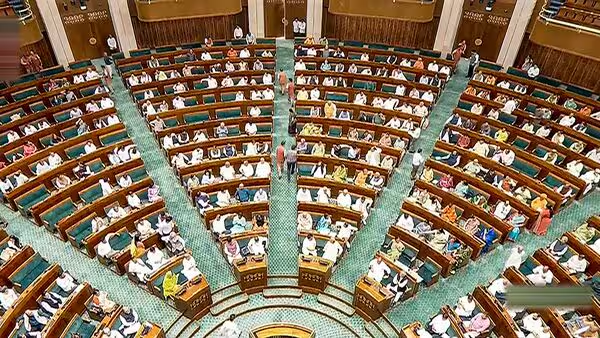
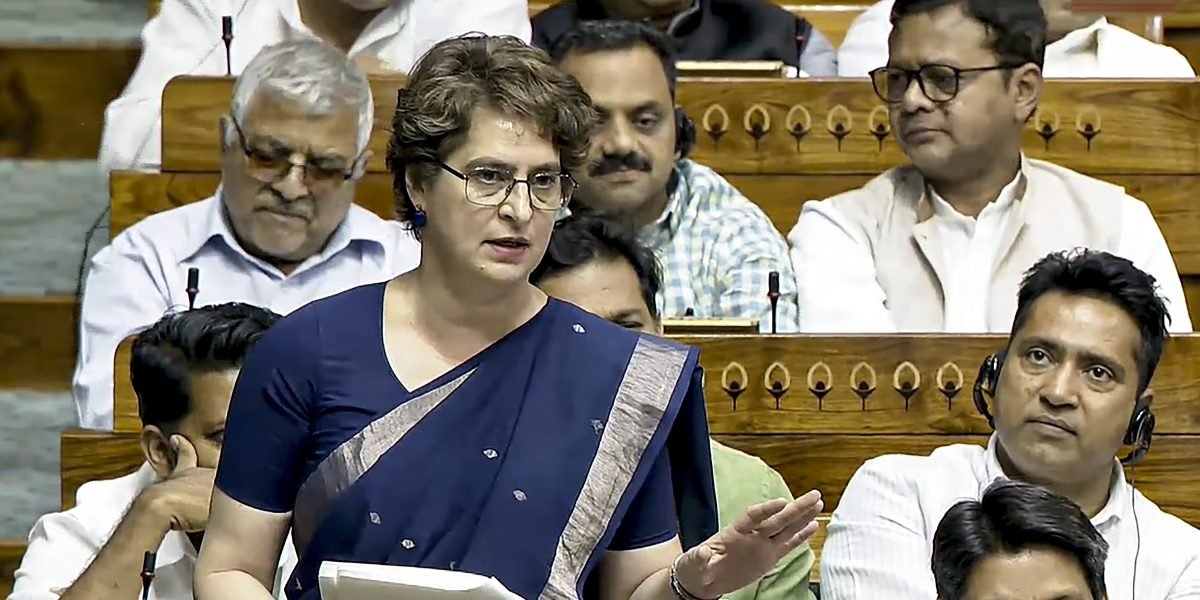
India’s Parliament has witnessed an intense political showdown as the Women’s Reservation Bill and linked delimitation proposals triggered a sharp clash between the government and opposition parties. What was expected to be a historic step toward gender equality has now turned into one of the most heated political debates in recent times.
🔥 What Triggered the Political Row?
The controversy centers around the Constitution (131st Amendment) Bill, 2026, which aimed to reserve 33% of seats for women in Parliament and state assemblies. However, the bill was closely tied to a broader plan of delimitation (redrawing constituencies) and expansion of Lok Sabha seats.
The bill ultimately failed to pass in Lok Sabha, falling short of the required two-thirds majority, with 298 votes in favor and 230 against.
This defeat triggered a political storm, with both sides blaming each other.
🏛️ Government’s Stand
The ruling government defended the bill as a historic reform aimed at empowering women and modernizing India’s electoral system.
Key arguments from the government:
- Women’s reservation is long overdue
- Delimitation is necessary to reflect population changes
- Expansion of Lok Sabha will improve representation
- The reforms were designed for implementation by 2029 elections
Union ministers accused the opposition of blocking a major step toward gender equality, calling it an “anti-women stance.”
The government also argued that delimitation would correct imbalances where MPs represent vastly different population sizes across states.
⚔️ Opposition Hits Back
Opposition parties, while supporting women’s reservation in principle, strongly opposed linking it to delimitation and seat expansion.
Their key concerns:
- The move could shift political power toward northern states
- Southern states fear losing representation due to lower population growth
- Allegations that the bill was a “political strategy” to influence future elections
- Demand for immediate implementation without waiting for delimitation
Several leaders accused the government of trying to “hijack democracy” and using women’s empowerment as a cover for electoral restructuring.
Some opposition figures also raised concerns about lack of representation for OBCs and marginalized groups within the proposed quota.
💥 Why Delimitation Became the Flashpoint
At the heart of the controversy is delimitation—the process of redrawing constituency boundaries based on population.
The proposal includes:
- Increasing Lok Sabha seats from 543 to around 850
- Redistributing seats based on population data
- Linking implementation of women’s reservation to this process
Critics argue this could:
- Reduce influence of southern states
- Reward states with higher population growth
- Create a regional imbalance in power
Supporters, however, say it ensures fair representation per voter.
📊 A Rare Parliamentary Defeat
The failure of the bill marks a significant political moment:
- It is one of the rare legislative setbacks for the current government
- The bill required a special two-thirds majority, which the ruling alliance lacked
- The defeat has intensified political polarization
Even leaders across parties acknowledged that while the intent was important, consensus was missing.
🧭 A Long-Standing Reform Stuck Again
The Women’s Reservation Bill has a long history:
- First introduced in the 1990s
- Repeatedly stalled due to political disagreements
- Passed in principle earlier, but implementation delayed
Experts note that while there is broad agreement on the need for women’s representation, disagreements over method and timing continue to block progress.
🌍 Nationwide Reactions
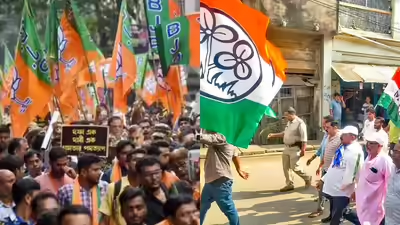
The debate has gone beyond Parliament, sparking reactions across the country:
Supporters say:
- Women deserve equal representation
- Reform should not be delayed further
Critics argue:
- The bill mixes two unrelated issues
- It could disrupt federal balance
Regional parties, especially from southern states, have been particularly vocal about the potential impact on their political influence.
🧠 Bigger Questions Raised
The controversy has raised critical questions about India’s democracy:
👉 Should women’s reservation be implemented immediately, even without delimitation?
👉 How should representation be balanced between population and federal fairness?
👉 Can political consensus be achieved on major constitutional reforms?
These questions remain unresolved.
🔮 What Happens Next?
After the bill’s defeat:
- The government may reintroduce a revised version
- Opposition is likely to demand decoupling from delimitation
- Debate on census, seat expansion, and quotas will continue
With the 2029 elections in focus, the issue is far from over.
🏁 Conclusion
The clash over the Women’s Reservation Bill highlights the complex intersection of gender justice, electoral reform, and political power in India. While all sides agree on the importance of increasing women’s representation, deep divisions over implementation have stalled progress once again.
As the debate continues, the challenge for India’s political system will be to move beyond confrontation and find common ground—because the future of inclusive representation depends on it.