
Daily dose of news Newshots will keep you entertained with daily news and gossips of the film world, sports news and news.
Daily dose of news Newshots will keep you entertained with daily news and gossips of the film world, sports news and news.
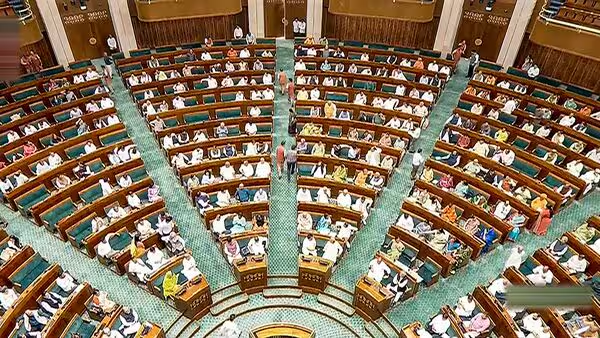
India is witnessing a significant political discussion as Parliament debates two major proposals that could reshape the country’s democratic framework in the coming years. The implementation of the Women’s Reservation Bill and the proposed expansion of Lok Sabha seats have emerged as key topics of national interest, drawing reactions from political parties, policy experts, and citizens across the country.
While the objective of increasing women’s representation in legislative bodies has received widespread support, discussions surrounding constituency restructuring and seat expansion have generated differing opinions among stakeholders. Together, these proposals have sparked a broader debate about representation, governance, and the future direction of India’s parliamentary system.
As lawmakers continue discussions, the outcome could influence the political landscape for years to come.
The current debate revolves around two major ideas that have the potential to significantly alter parliamentary representation.
The first proposal aims to increase women’s representation in elected bodies through reserved seats. The second involves expanding the number of seats in the Lok Sabha to better reflect India’s growing population and changing demographic realities.
Supporters believe these reforms could strengthen democratic participation, while critics argue that several implementation challenges need to be addressed.
Because both proposals are closely connected, discussions around one issue often lead directly into debates about the other.
The proposal to reserve seats for women in legislative bodies has been discussed in Indian politics for many years.
Advocates argue that greater participation by women can help improve representation and ensure a wider range of perspectives in policymaking.
Currently, women remain underrepresented in many elected institutions despite making up nearly half of the country’s population.
Why Supporters Back The Proposal
Many policy experts view increased representation as an important step toward ensuring broader participation in governance.
The proposal has therefore received support from various social groups and organizations advocating greater inclusion in public life.
Alongside discussions on women’s representation, Parliament is also examining proposals related to increasing the number of Lok Sabha seats.
The country’s population has expanded considerably since the most recent major changes to parliamentary seat allocation.
Supporters argue that expanding the House would help improve representation by reducing disparities between population size and the number of elected representatives.
Potential Objectives Of Seat Expansion
Proponents believe such changes would help Parliament adapt to the country’s evolving demographic profile.
One of the most discussed aspects of the debate involves delimitation, which refers to the process of redrawing constituency boundaries.
Delimitation is often carried out to ensure that constituencies reflect population changes over time.
Because representation and constituency boundaries are closely linked, discussions about expanding seats naturally involve questions regarding constituency distribution.
Key Areas Of Discussion
The issue has become a focal point because changes in constituency boundaries can influence political representation across different regions.
As expected with major constitutional and electoral reforms, political parties have expressed varying viewpoints.
Some leaders have strongly supported both proposals, describing them as necessary reforms that reflect India’s changing needs.
Others have argued that broader consultation and consensus-building are essential before implementing significant structural changes.
Concerns Raised During The Debate
Political analysts note that such differences are common when reforms affect representation and electoral structures.
A major theme emerging from the discussion is the relationship between representation and federal balance.
The country’s federal framework is built around managing the diverse priorities of states with varying demographic and economic characteristics.
As a result, any discussion involving parliamentary representation often leads to broader conversations about maintaining fairness across regions.
Issues Being Discussed
These questions are likely to remain central as policymakers continue evaluating future reforms.
Although the discussion is taking place within Parliament, its implications extend beyond political parties.
Changes involving representation affect how citizens engage with democratic institutions and how elected representatives connect with their constituencies.
Experts argue that discussions about representation are ultimately discussions about how democracy functions and adapts over time.
Wider Areas of Impact
For this reason, the debate has attracted attention from academics, legal experts, civil society organizations, and policy researchers.
The proposals have attracted widespread attention and sparked discussions among citizens across different regions of the country.
Many people support measures that increase opportunities for women in politics, viewing such reforms as a positive step toward broader participation.
At the same time, discussions about parliamentary representation have encouraged citizens to engage more actively with questions surrounding governance and electoral systems.
Major Topics Shaping Public Debate
The widespread engagement reflects the importance of the issues being debated.
The future of these proposals will depend on parliamentary discussions, legislative procedures, and broader political consensus.
Major constitutional and electoral reforms typically involve detailed examination and extensive debate before implementation.
Expected Future Actions
Observers expect the conversation to remain active as lawmakers consider the long-term implications of the proposals.
The discussions surrounding the Women’s Reservation Bill and the proposed expansion of Lok Sabha seats have emerged as some of the most significant political debates in India today.
While opinions differ on implementation and structure, there is widespread recognition that representation remains a fundamental aspect of democratic governance.
As Parliament continues deliberations, the focus will remain on finding solutions that strengthen participation, maintain institutional balance, and address the needs of a rapidly evolving nation.
Whatever the eventual outcome, the discussions underway today are likely to influence the future shape of India’s democratic institutions and parliamentary system for many years to come.

Your trusted source for news, updates, and insights from India and around the world.
Copyright © 2020–2026 NEWSHOTS. All Rights Reserved.