19-JULY-2025, 12:30PM
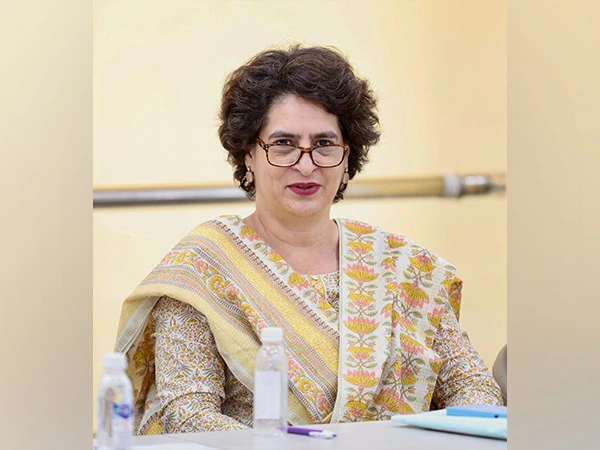
In a strong and pointed statement, senior Congress leader Priyanka Gandhi has accused the central government of using investigative agencies as a tool to harass political opponents, following the arrest of Chhattisgarh former Chief Minister Bhupesh Baghel’s son. Describing the move as a “tactic to oppress opposition,” Gandhi’s remarks have triggered a renewed debate on the misuse of power and political vendetta in Indian democracy.
The controversy has sparked political outcry across party lines, raising questions about the role of central agencies, due process, and the tightening grip of politics over law enforcement mechanisms in India.
Priyanka Gandhi Calls Out Political Vendetta
“Intimidation Through Institutions Cannot Silence Us,” Says Priyanka Gandhi
In a statement issued on social media and later echoed in a press briefing, Priyanka Gandhi alleged that the Bharatiya Janata Party (BJP)-led central government is systematically targeting opposition leaders and their families in an attempt to silence dissent. She termed the arrest of Bhupesh Baghel’s son as an “undemocratic act designed to humiliate and distract.”
“The BJP is using central agencies to carry out political vendettas. The arrest of Bhupesh Baghel ji’s son is not just an attack on one family, but on the entire opposition. We will not be intimidated,” said Priyanka Gandhi.
Her remarks were widely shared by Congress leaders and party supporters, bringing the issue into national limelight.
The Arrest of Bhupesh Baghel’s Son: What We Know So Far
Allegations, Investigation, and Arrest
Bhupesh Baghel’s son was reportedly arrested by a central enforcement agency in connection with an alleged money laundering case linked to state-level contracts during Baghel’s tenure. According to sources, the arrest came after a series of summons and a long-running probe.
However, Congress leaders claim that no substantial evidence has been presented to justify the arrest and that it is timed suspiciously close to upcoming elections in Chhattisgarh.
Priyanka Gandhi’s reaction forms part of a larger Congress strategy to position such actions as evidence of the central government’s attempt to stifle the opposition and discredit regional leaders who pose a political threat.
Priyanka Gandhi Takes Charge of the Narrative
Rallying Party Cadre and Public Sentiment
By speaking out swiftly and sharply, Priyanka Gandhi has taken charge of the Congress party’s narrative on the issue. She urged party workers and the public not to be swayed by “fear tactics” and emphasized the need to protect democratic institutions from being misused for political gains.
Her leadership and presence during times of political turmoil have often been seen as efforts to reinvigorate the Congress base, particularly in Hindi-speaking states. This incident offered her another opportunity to connect with party loyalists while reinforcing her role as a key voice in the Congress leadership.
Political Reactions Across the Spectrum
Congress Stands United Behind Bhupesh Baghel
Several Congress leaders, including Rahul Gandhi, Mallikarjun Kharge, and KC Venugopal, backed Priyanka Gandhi’s statements, echoing concerns over the growing misuse of power. “Democracy is under siege,” tweeted Rahul Gandhi, supporting his sister’s stance and criticizing what he called “institutional bullying.”
On the other hand, BJP leaders defended the action, arguing that the law must take its course, regardless of political affiliations. “No one is above the law. Investigative agencies are doing their job,” said a senior BJP spokesperson.
Priyanka Gandhi: Championing the Opposition’s Voice
A Strategic Political Move?
For Priyanka Gandhi, this episode is more than just a moment of protest—it’s a strategic stand. Her increasing visibility in national matters suggests a deliberate positioning as the protector of democratic rights and institutions.
Analysts observe that such strong positions help consolidate her image as someone who’s unafraid to challenge the establishment. With critical state elections on the horizon and national elections not far off, such interventions also signal her intent to play a bigger role in shaping Congress’s future.
Media Coverage and Public Sentiment
Split Opinions But Rising Engagement
The media reaction has been predictably polarized, with some channels emphasizing the legality of the arrest, while others have highlighted Priyanka Gandhi’s statement as part of a broader fight for democracy.
Social media was abuzz with hashtags like #PriyankaGandhi, #BhupeshBaghel, and #PoliticalVendetta trending for hours. Many netizens expressed concern over what they saw as “selective targeting,” while others called for transparency and accountability on all fronts.
Regardless of the political affiliation, the incident has reignited public discourse on the role of central agencies and their independence.
Priyanka Gandhi and the Congress Strategy Moving Forward
Reinforcing the Party’s Anti-Centralization Stand
Priyanka Gandhi’s latest statement aligns with the Congress party’s broader criticism of “authoritarian governance” and centralization of power. She continues to draw attention to the weakening of federal principles and what the party calls the “dismantling of democratic checks and balances.”
In her recent rallies and interviews, Priyanka has repeatedly mentioned the increasing pressure on opposition parties through legal means. This incident serves as a fresh example to amplify that narrative as Congress gears up for election season.
Conclusion: Priyanka Gandhi’s Voice Grows Stronger Amid Political Turbulence
The arrest of Bhupesh Baghel’s son has triggered a fierce political storm, with Priyanka Gandhi emerging as one of the most vocal and assertive critics of the central government’s tactics. Her statement has not only brought attention to the incident but has also raised broader questions about the sanctity of institutions and the health of India’s democratic framework.
As India moves into a season of high-stakes political battles, leaders like Priyanka Gandhi are becoming increasingly crucial in shaping the public discourse. Whether this moment transforms into a larger political movement or remains a flashpoint depends on how the opposition unites and whether the public resonates with these concerns.
Source : ANI